The Blowout Preventer (BOP) is one of the most critical well control devices in drilling operations. Its core function is to quickly seal the wellhead and prevent uncontrolled oil and gas outflows in the event of abnormal pressure or blowout risk. Therefore, routine inspection and maintenance of the BOP system not only affects the equipment’s lifespan but also directly determines the safety of the entire drilling operation.
Basic Concepts of BOP
Definition and Function of BOP Systems
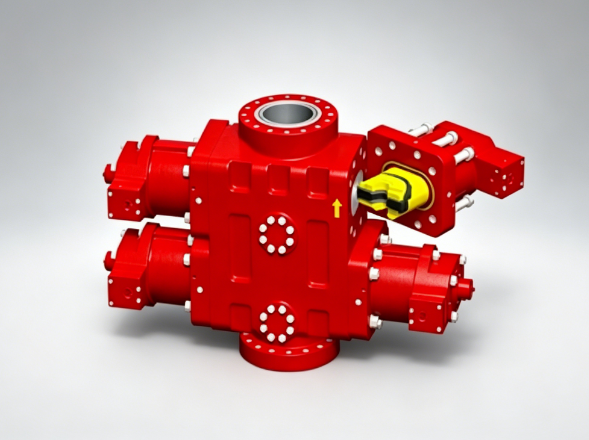
A BOP system is a high-pressure safety control device installed at the wellhead, primarily used to seal the wellbore, control formation pressure, and prevent blowouts during drilling. It typically consists of annular blowout preventers, gate blowout preventers, a control system, and hydraulic systems. The BOP is not merely a mechanical device but a complete well control system, its core task being “instantaneous well sealing” in abnormal situations. In high-pressure oil and gas wells or deep well operations, the reliability of the BOP directly determines whether major safety accidents can be avoided; therefore, its design and maintenance have extremely high standards.
The Position of BOP in the Well Control System
In the entire well control system, the BOP occupies the most crucial “last line of defense” position. When drilling fluid fails to balance formation pressure, or when there is a risk of well overflow or blowout, the first line of defense is mud density control, followed by a choke and kill system. If these measures fail, the BOP (Breakpoint Operating System) must be activated immediately for physical well sealing. Therefore, it is called a “wellhead safety gate.” During operation, the BOP works in conjunction with casing head, tubing head, choke and kill manifold, and other equipment to form a complete well control closed-loop structure, ensuring that downhole pressure remains under control at all times.
Inspection Process
Daily Inspection Process
Daily inspections of the BOP typically include three parts: visual inspection, hydraulic system inspection, and functional pre-inspection. First, it is necessary to confirm that there are no obvious leaks, corrosion, or mechanical damage on the equipment surface; second, check for looseness, leakage, or abnormal pressure in the hydraulic lines; finally, confirm the status of the control panel, including whether the pressure gauge readings are normal and whether the valve positions are correct. During field operations, technicians usually conduct inspections according to shifts and record all abnormal data for subsequent analysis. Although this process seems simple, it effectively identifies potential risks in advance.
Functional Testing Process
Functional testing is a core component of BOP maintenance, primarily including switch-on testing, sealing testing, and pressure testing. During operation, various blowout preventers (BOPs) must be gradually activated under safe conditions to confirm their response time and accuracy. Simultaneously, leaks in the seals are detected by applying specified pressure to the system. Well control procedures must be strictly followed during testing to prevent equipment damage due to misoperation. This test is typically performed before each drilling operation, during working intervals, or after significant changes in operating conditions to ensure the equipment remains in usable condition.
Record and Handover Process
BOP maintenance is not only an operational issue but also a management one. All testing and maintenance records must be completed completely, including test time, pressure data, operator information, and descriptions of any abnormalities. During shift handover, both written and verbal handovers must be conducted to ensure the next shift fully understands the equipment status. Modern oil and gas companies typically employ digital management systems to record and analyze BOP operating data in real time, enabling traceability of equipment status. This process is crucial for long-term safety management.
Pressure Testing and Sealing Inspection
Pressure testing is a key technical means of assessing BOP performance, typically divided into low-pressure testing and high-pressure testing. Low-pressure testing checks the basic sealing performance, while high-pressure testing simulates extreme operating conditions to verify the equipment’s ultimate pressure resistance. During testing, special attention must be paid to the sealing condition of the gate and the annular blowout preventer; any minute leak could be amplified into a serious accident in actual operating conditions. Furthermore, the test pressure must be performed according to the equipment’s rated standards; overpressure operation is strictly prohibited to avoid damaging the internal sealing structure.
Hydraulic System Maintenance
The hydraulic system is the core of the BOP’s power system, responsible for driving the gate’s opening and closing and the annular sealing action. During maintenance, the cleanliness of the hydraulic oil, pressure stability, and pipeline sealing must be carefully checked. Contaminated hydraulic oil can cause valve jamming or delayed action; therefore, filters and hydraulic oil must be replaced regularly. Simultaneously, the accumulator pressure must be monitored for stability, as the accumulator is the key power source for quickly shutting down the BOP in emergency situations; its failure will severely impact system safety.
Critical Component Wear Monitoring
The BOP operates in a high-pressure, high-wear environment for extended periods, causing critical components such as the gate’s rubber core, sealing rings, and shear blades to gradually wear down. Therefore, regular disassembly, inspection, and replacement are essential. Modern inspection technologies, including ultrasonic testing, pressure decay analysis, and visual flaw detection, can identify microcracks or deformation problems in advance. By establishing wear curve models, component lifespan can be predicted, enabling preventative maintenance rather than reactive repairs and significantly improving system reliability.
Materials Selection?
Sealing Material Selection:
BOP sealing materials typically use high-performance rubber composites, such as HNBR (hydrogenated nitrile butadiene rubber) or fluororubber. These materials possess excellent high-temperature resistance, oil resistance, and pressure resistance, maintaining elasticity over long periods in complex downhole environments. In high-sulfur oil and gas wells, specialized materials resistant to hydrogen sulfide corrosion are also required to prevent seal failure. The quality of the sealing material directly determines the sealing reliability of the BOP; therefore, selection must strictly comply with API standards.
Metal Structure Material Selection:
The main structure of the BOP is typically made of high-strength alloy steel, such as low-alloy high-strength steel or nickel-based alloys. These materials not only possess extremely high pressure resistance but also resist downhole corrosive environments. For high-pressure deep well applications, heat-treated forged steel is also used to improve structural toughness and fatigue resistance. Material selection must comprehensively consider pressure rating, well depth conditions, and media corrosivity to ensure the long-term stable operation of the overall structure.
Hydraulic and Corrosion-Resistant Material Selection:
Pipelines and valve bodies in hydraulic systems are typically made of stainless steel or coated with corrosion-resistant materials to reduce the risk of rust during long-term use. Simultaneously, the hydraulic oil must possess stable viscosity and oxidation resistance to ensure the system continues to operate normally under extreme temperatures. In the offshore drilling platform environment, salt spray corrosion must also be considered, making corrosion-resistant coatings and material surface treatment technologies particularly important.
Frequently Asked Questions
Q: How often does the BOP system require a comprehensive inspection?
The BOP system must undergo functional testing before each major operation. Comprehensive pressure testing is typically performed according to API specifications at certain intervals, such as every 14 days or after each change in well conditions. For high-risk or deep well operations, the inspection frequency will be further increased. Companies usually develop more stringent internal maintenance plans based on equipment usage intensity and well condition complexity to ensure the equipment is always in optimal condition.
The maintenance of the BOP system can essentially be understood as “installing a reliable safety gate at the wellhead.” It may appear as just a large piece of equipment in normal times, but in critical moments it serves as the last line of defense against accidents. Routine inspections are not complex, primarily checking for leaks, pressure, and responsiveness. However, every detail is crucial because the underground environment changes rapidly, and even minor issues can escalate into serious risks. In operation, streamlined management is paramount; every step, from inspection and testing to record keeping and handover, is indispensable. Technically, pressure testing, hydraulic system maintenance, and wear monitoring are essential to ensure long-term reliable operation. Furthermore, the selection of materials, whether sealing rubber or high-strength steel, must meet the requirements of high-pressure and highly corrosive environments.