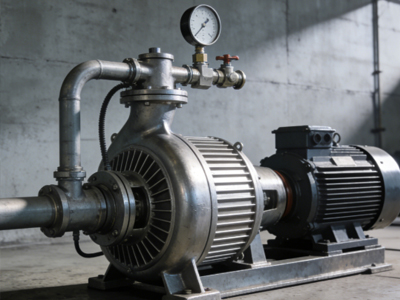
Carbon ring seals are commonly used sealing components in modern industrial equipment, widely applied in water pumps, compressors, chemical pumps, and high-speed rotating equipment. Primarily made of carbon, they possess wear resistance, high-temperature resistance, and self-lubricating properties, making them particularly reliable under high-speed, high-temperature, and high-pressure environments. Although carbon ring seals offer superior performance, improper installation and operation can easily lead to seal failure, leakage, or even equipment downtime. In practice, most carbon ring seal failures are not due to the material itself, but rather to improper installation or unsuitable operating environments. Correct installation and operation specifications can not only extend the service life of carbon ring seals but also improve overall equipment operating efficiency and reduce maintenance costs. For example, a high-speed centrifugal pump may leak within hours if the carbon ring is installed incorrectly or insufficiently lubricated; however, with proper operation and installation, the seal can operate continuously for several years without replacement.
Pre-installation Inspection
Before installation, the carbon ring should be carefully inspected:
• Confirm that the model matches the equipment.
• Check that the sealing ring surface is intact and free of cracks.
• Check that the sealing groove and bushing are clean.
• Prepare special tools, such as a ring presser and rubber sleeves.
For example, if a new carbon ring is found to be deformed during transportation during a maintenance inspection, and is installed directly without inspection, it will cause the sealing surface to fail to fit properly, resulting in leakage.
Cleaning Treatment (Preventing Damage from Foreign Objects)
Carbon ring seals are very precise and extremely sensitive to foreign objects:
① Clean dust and oil from the installation area.
② Clean the bushing and sealing groove.
③ Avoid direct contact with the carbon ring friction surface.
In actual cases, some factories have failed to clean the bushing, allowing tiny particles to enter the carbon ring gaps, resulting in sharp friction noise and rapid wear after operation.
Lubrication Requirements (Reduce Friction Damage)
Carbon ring seals require good lubrication:
· Water or a specified lubricant can be used.
· Wet the carbon ring surface before installation.
· Maintain low speed during initial startup to ensure even lubrication.
For example, a chemical pump started without lubricating the carbon ring, and within a few minutes, slight cracks appeared on the sealing surface, leading to leakage.
Installation Direction
Carbon ring seals have a rotating ring and a stationary ring. Incorrect installation direction will cause failure:
✔ The rotating ring should rotate in the same direction as the shaft.
✔ The stationary ring should be securely fixed to prevent slippage.
✔ Avoid tilting during installation.
During one maintenance, a technician installed the rotating ring upside down. After the pump started, the seal could not fit properly, and leakage occurred immediately, ultimately requiring reinstallation.
Pressing and Positioning (Prevent Eccentric Damage)
Carbon ring seals should be evenly stressed during installation: Use a dedicated ring pressing tool; press the seal into the sealing groove diagonally and evenly; ensure the sealing ring is not warped. Eccentric installation easily leads to uneven friction of the carbon ring, causing localized wear or even cracks. In a water pump repair case, unilateral pressure caused accelerated wear of the sealing surface, reducing the seal life to less than three months.
Springs and Auxiliary Devices (Ensuring Stable Contact)
Most carbon ring seals are equipped with springs or bellows:
—— Check if the spring elasticity is normal.
—— Ensure the spring is evenly stressed.
—— There should be no foreign objects between the spring and the carbon ring. Spring failure can lead to unstable contact at the sealing surface, resulting in vibration and leakage. In the repair of a chemical pump, localized rust on the spring caused the rotating ring to shift, ultimately leading to seal failure.
Start-up and Trial Run (Verifying Installation Effectiveness)
A trial run must be performed after installation: manually and slowly rotate the pump to confirm there is no jamming; run it at low speed for a short time to observe the sealing condition; check for leaks or abnormal noise. For example, immediately starting a pump at full speed after installation causes instantaneous dry friction on the sealing surface, producing a sharp friction sound and accelerating wear. Low-speed trial runs can effectively avoid such problems.
Operational Precautions (Proper Use Ensures Lifespan)
Carbon ring seals also have operational requirements during operation:
✔ Avoid liquid impact and water hammer
✔ Regularly inspect the cooling and lubrication systems
✔ Prevent dry running or sudden shutdown
A factory experienced water hammer during rapid valve closure in its pump system, leading to carbon ring cracks and leakage within a short period. This illustrates the importance of proper operation.
Common Faults and Prevention
Based on long-term usage experience, common faults include: carbon ring cracks, excessive friction noise, spring failure, and seal misalignment.
Preventive measures include proper installation, regular inspection, proper lubrication, and strict operation. For example, in high-speed pumps, regularly checking the springs and lubrication can significantly extend seal life.
Although carbon ring seals have a simple structure, their installation and operation requirements are very strict. From pre-installation inspection, cleaning, and lubrication, to the pressing, positioning, and spring engagement during installation, and then to start-up and daily operation, every step is crucial. Neglecting any step can lead to seal failure, leakage, or equipment damage. Real-world cases show that most carbon ring seal failures are caused by improper human operation, rather than problems with the material itself. Standardized operation not only extends seal life but also reduces maintenance costs and improves equipment reliability. Furthermore, during equipment use, maintenance personnel should establish standardized operating procedures and master correct installation and operation methods to ensure long-term stable operation of carbon ring seals under complex conditions such as high temperature, high pressure, and high speed.