Mechanical seals are the most precise and critical sealing components in rotating equipment. The quality of their repair directly determines whether the equipment can resume operation smoothly, and also affects its subsequent seal life and overall reliability. However, in many industrial and mining sites, it is not uncommon for mechanical seals to be simply ‘reinstalled and considered repaired.’ The lack of systematic testing methods often leads to seals leaking again in a short time, or even failing instantly upon startup. Therefore, scientific, systematic, and standardized testing methods are crucial for ensuring repair effectiveness and reducing repeated downtime. The core objective of the testing process is to confirm that the mechanical seal has reached a safe and stable state in terms of installation accuracy, lubrication conditions, temperature load, pressure adaptability, and auxiliary system operation. From static inspection to dynamic trial operation, and then to observation of operating trends, each step determines whether the seal truly meets the requirements for usability, durability, and stable operation.
Static Inspection
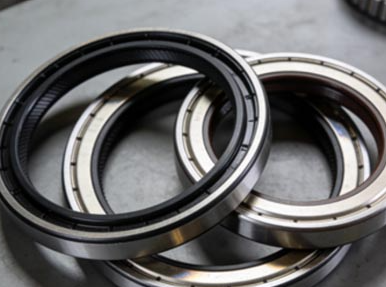
Before the equipment is started, a comprehensive static inspection of the mechanical seal should be performed. Key points include: whether the end faces fit well, without twisting, scratches, or foreign matter residue; whether the installation dimensions meet requirements, such as compression and axial positioning depth; whether the auxiliary sealing ring is in place, without shearing, extrusion, or crushing damage; whether the shaft, end cover, and sealing cavity are clean; and whether axial movement and runout are within allowable ranges.
The purpose of static inspection is to confirm that the seal is in an ideal state when unaffected by pressure and speed, laying the foundation for subsequent startup.
Leakage Test
Before formal startup, a low-pressure or simulated operating condition leakage test can be performed. Check: whether there is ‘leakage’ under static no-pressure conditions; whether the leakage rate is stable within the normal range after pressurization; and whether there are any dripping, linear leaks, or abnormal leakage points. The leakage test can quickly reflect whether the end face fit, O-ring seal, and assembly accuracy meet the standards, and is the most direct verification of maintenance quality.
Trial Run Inspection
Mechanical seals are most prone to failure in the initial stage of startup; therefore, trial run is a critical testing step. Key observations: Observe for abnormal vibrations or friction noises during startup; ensure the sealing cavity is promptly filled with lubricant; check if the flushing/cooling system starts normally; monitor if leakage gradually decreases within the allowable fluctuation range; and ensure the end-face temperature is within a reasonable range. If the mechanical seal remains stable for the first 30 minutes, the installation and lubrication conditions are basically met.
Temperature Monitoring
End-face temperature rise is a key indicator of whether the seal is functioning properly. Key points for detection include: whether the end-face temperature is significantly higher than normal; whether the temperature rises continuously and is unstable; and whether the temperature curve is stable without abnormal fluctuations. If the temperature remains consistently high, it indicates an unstable lubrication film, abnormal specific pressure, or insufficient auxiliary systems, requiring immediate inspection.
Vibration and Shaft Runout Monitoring
The stable operation of the seal after maintenance largely depends on shaft vibration. A vibration meter can detect: whether the horizontal and vertical vibration values are within acceptable ranges; whether the vibration amplifies non-linearly with changes in rotational speed; and whether there are periodic impacts or high-frequency vibrations. If the vibration is too high, the sealing end face cannot maintain stable contact, requiring re-inspection of the bearings, alignment, or seal installation position.
Auxiliary System Operation Testing
If using flushing, cooling, isolation fluid, or shielding gas systems, the following should be carefully checked: whether the flushing fluid flow and pressure are normal; whether the cooling water circulation is smooth; whether the isolation fluid level at both ends of the seal is stable; and whether the nitrogen pressure meets the standard. An unstable auxiliary system will cause the seal to fail within a short period, even if the seal is perfectly installed.
Operational Trends
The true stability of a mechanical seal after maintenance needs to be judged through trend observation over a period of time, including: whether the leakage decreases daily and tends to stabilize; whether temperature changes remain stable; whether there are no abnormal changes in vibration and sound; and whether the equipment experiences periodic impacts or fluctuations. A stable trend indicates a reliable maintenance effect.
The effectiveness of mechanical seal maintenance can be comprehensively assessed by checking end-face fit, installation accuracy, leakage tests, trial operation performance, temperature and vibration data, and the status of auxiliary systems. This allows for a comprehensive judgment of whether the seal is operating under safe and stable conditions. Correct testing methods can not only detect potential problems in a timely manner but also prevent early anomalies from being overlooked, leading to further shutdowns or premature seal failure. For businesses, establishing standardized testing procedures, configuring necessary monitoring equipment, and having professional personnel perform the work are the most effective ways to improve the quality of mechanical seal maintenance.Only when leakage is within a reasonable range, temperature is stable, vibration is normal, auxiliary systems are reliable, and the trend curve remains stable can the mechanical seal maintenance be considered successful. Scientific testing is a crucial guarantee for ensuring reliable seal operation, reducing maintenance costs, and extending equipment lifespan.