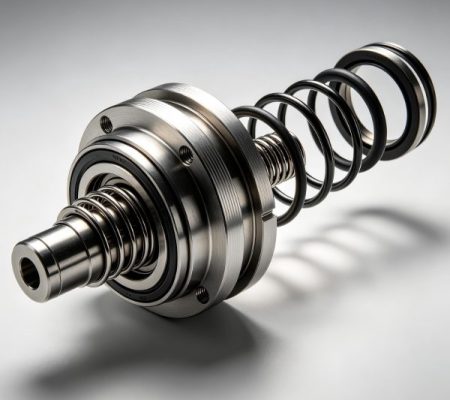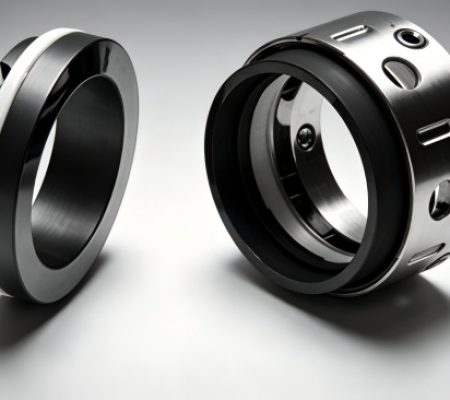

In modern industrial equipment, mechanical seals are crucial components for preventing media leakage and ensuring safe equipment operation. Their performance is highly dependent on the choice of sealing material. As equipment develops towards higher temperatures, higher pressures, higher speeds, and more complex media, traditional sealing materials are gradually showing limitations in terms of wear resistance, stability, and service life. Against this backdrop, silicon carbide mechanical seals, with their superior comprehensive performance, have gradually become one of the important choices for mechanical seal end face materials. As a high-performance engineering ceramic material, silicon carbide possesses high hardness, high strength, and excellent chemical stability, enabling it to maintain stable sealing performance even under harsh operating conditions.
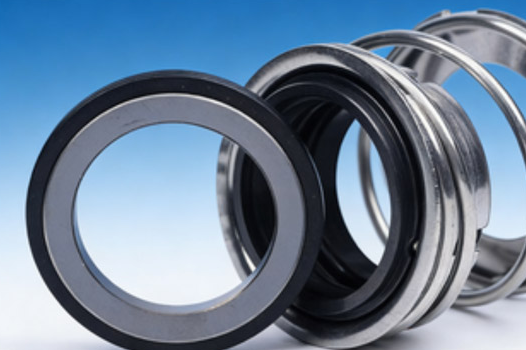
Excellent Hardness and Wear Resistance
One of the most prominent characteristics of silicon carbide mechanical seals is their extremely high hardness. As a high-hardness ceramic material, silicon carbide exhibits excellent wear resistance under long-term frictional contact conditions. During the operation of a mechanical seal, the dynamic and stationary ring end faces are constantly in relative motion, and the material’s wear resistance directly determines the service life of the sealing end face. Silicon carbide mechanical seals effectively resist abrasive and adhesive wear under these conditions, maintaining stable end-face shape and ensuring long-term reliable sealing performance. This characteristic makes them particularly suitable for equipment with high rotational speeds or long operating times.
Good Corrosion Resistance and Chemical Stability
Silicon carbide mechanical seals exhibit excellent stability in a variety of chemical media. Their stable chemical structure makes them resistant to reactions with common media, thus maintaining stable performance in acidic, alkaline, and various corrosive environments. This characteristic makes silicon carbide seals widely applicable in chemical, pharmaceutical, and environmental protection fields. Even under prolonged contact with media, silicon carbide materials are not prone to swelling, corrosion, or performance degradation, helping to maintain the overall reliability of the mechanical seal system.
Excellent High Temperature Resistance and Thermal Stability
Under high-temperature conditions, sealing materials often face risks such as thermal deformation and performance degradation. Silicon carbide mechanical seals possess excellent high-temperature resistance and thermal stability, maintaining structural stability even under operating conditions with large temperature variations. Their low coefficient of thermal expansion helps reduce dimensional fluctuations caused by temperature changes, thereby reducing the risk of deformation of the sealing end face due to thermal stress. This characteristic is particularly important for equipment operating at high temperatures or with frequent temperature fluctuations.
Good Friction and Thermal Conductivity
Silicon carbide mechanical seals also exhibit outstanding tribological properties. Their end-face friction coefficient is relatively stable, maintaining smooth operation under proper lubrication conditions. Simultaneously, silicon carbide possesses good thermal conductivity, rapidly conducting and dissipating heat generated during friction, helping to reduce the risk of localized overheating at the end face. This excellent thermal management capability helps improve the stability of the sealing system under continuous operating conditions, reducing seal failure caused by excessive temperature rise.
Structural Stability Advantage
Compared to some elastic materials, silicon carbide mechanical seals have higher rigidity and structural strength. Under certain mechanical loads, their deformation is minimal, effectively maintaining the flatness of the sealing end face. This structural stability is crucial for maintaining a good fit between the dynamic and static ring end faces. Even under pressure fluctuations or shaft vibration conditions, silicon carbide seals can maintain end-face contact, ensuring that the sealing effect is not easily affected by external interference.
Applicability and Flexibility of Material Combinations
In practical applications, silicon carbide mechanical seals are often used in combination with materials such as graphite and tungsten carbide to achieve complementary performance. Silicon carbide can be used as both the dynamic and static ring materials, flexibly configured according to operating conditions. This excellent material compatibility allows it to play an important role in various types of mechanical seal structures, providing greater flexibility in sealing system design.
Silicon carbide mechanical seals occupy an important position in modern mechanical seal material systems due to their high hardness, high wear resistance, excellent corrosion resistance, and outstanding thermal stability. Their stable frictional properties and good thermal conductivity ensure reliable operation of the sealing face under complex operating conditions. Simultaneously, high rigidity and good structural stability provide a solid guarantee for the long-term operation of the sealing system.