In downhole oil drilling operations, drilling stabilizers are high-frequency, critical tools. Their performance and quality directly affect wellbore trajectory control, drill string stability, and overall drilling costs. Achieving reasonable investment while meeting technical requirements is a common concern for both field engineers and procurement teams. Systematic evaluation of stabilizer cost-effectiveness, combined with downhole-specific purchasing recommendations, helps improve operational efficiency and reduce long-term drilling expenses.
Core Factors in Stabilizer Cost-Effectiveness
Cost-effectiveness should not be judged solely by purchase price. Instead, it reflects a balance of performance, service life, adaptability, and maintenance cost. In downhole environments characterized by high wear and heavy loads, a stabilizer’s overall behavior determines its real economic value.
- Structural strength and overall rigidity
- Blade wear resistance and material grade
- Compatibility with wellbore diameter and bottom hole assembly
- Actual service life and repair intervals
Evaluating these factors together provides a more accurate picture of stabilizer value in downhole applications.
Impact of Stabilizer Design on Cost Performance
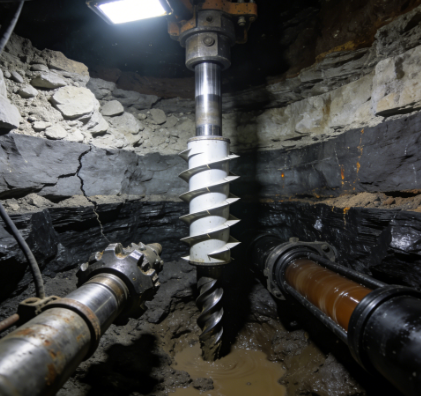
Different stabilizer designs show clear differences in both procurement and operating costs. Integral stabilizers typically have higher manufacturing costs but offer simple structure and strong rigidity, making them suitable for sections requiring high wellbore stability. Replaceable sleeve stabilizers feature lower initial cost and extended usability through sleeve replacement, offering advantages in long-term drilling projects. Spiral stabilizers improve wellbore contact behavior and reduce friction, providing strong value in complex well sections.
Design selection should align with well type, depth, and operational cycle to avoid unnecessary cost from over- or under-specification.
Economic Value of Materials and Wear-Resistant Processes
Stabilizers operate in continuous contact with the wellbore, making wear resistance a decisive factor in service life. High-grade alloy steels, hardfacing, and composite wear-resistant coatings increase manufacturing cost but significantly extend operating life and reduce tripping frequency.
In highly abrasive formations, enhanced wear resistance helps minimize non-productive time and contributes positively to overall drilling economics. Procurement decisions should emphasize material grade and maturity of wear-resistant processes rather than focusing only on unit price.
Influence of Downhole Conditions on Cost Evaluation
Downhole conditions create varying performance demands for stabilizers. In shallow wells or formations with relatively simple conditions, wear and strength requirements are lower, and cost evaluation focuses more on price control. In deep, directional, or horizontal wells, stabilizers endure complex loading, making reliability and stability critical to cost-effectiveness.
- Increased well depth raises stabilizer load levels
- Frequent trajectory changes demand stronger guiding performance
- Formation abrasiveness affects wear-rate progression
In complex wells, selecting higher-performance stabilizers often delivers better economic returns over time.
Relationship Between Service Life and Maintenance Cost
The true cost of a stabilizer is reflected across its entire service cycle. Frequent replacement or repair increases downtime and labor expense. Products with strong wear resistance and stable structure reduce maintenance frequency and support longer continuous runs.
Maintaining detailed usage records—tracking footage drilled, wear condition, and repair history—supports accurate long-term cost-effectiveness comparison across different models or suppliers.
Supplier Capability and Service Considerations
Supplier technical strength and service quality play an important role in stabilizer cost-effectiveness. Manufacturers with downhole experience can offer application-specific guidance, reducing hidden costs caused by improper selection.
- Availability of detailed technical data and inspection reports
- Delivery reliability and on-site support capability
- Repair and remanufacturing services
- Product consistency and batch stability
A strong service system adds measurable long-term value in sustained drilling operations.
Practical Purchasing Recommendations
During procurement, technical evaluation and cost control should be integrated into a structured decision process. Multi-dimensional comparison, rather than simple price ranking, leads to better purchasing outcomes.
- Define downhole conditions and performance objectives
- Compare adaptability of different designs and materials
- Reference field performance data and usage history
- Include maintenance and repair costs in budget planning
Through systematic evaluation, selecting drilling stabilizers that align with downhole operational demands helps balance investment and return, improving the overall economic efficiency of oilfield drilling operations.