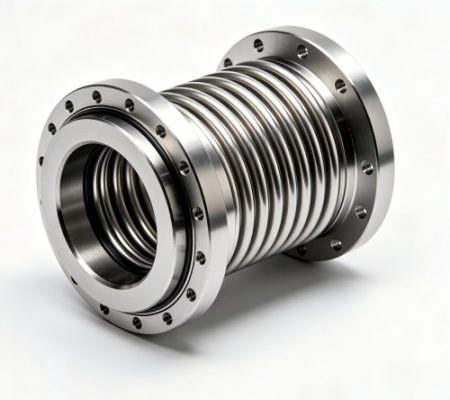
With the continuous development of modern industrial equipment towards higher parameters and higher reliability, mechanical seals, as key components in rotating equipment to prevent media leakage, are receiving increasing attention regarding their structure and performance. Especially under harsh conditions such as high temperature, high pressure, strong corrosion, and frequent start-stop cycles, traditional mechanical seals using rubber or polymer elastic elements often face problems such as rapid aging, loss of elasticity, and limited temperature resistance, making it difficult to meet the requirements for long-term stable operation. Driven by such application needs, metal bellows seals have gradually evolved from “customized solutions” for special working conditions to a representative and mature sealing form in the high-end equipment field. Metal bellows seals replace traditional springs or rubber elastic elements with metal bellows, not only changing the stress and compensation method of the seal but also significantly improving the adaptability of mechanical seals under extreme conditions. With its stable structure, reliable performance, and long service life, it is widely used in petrochemical, energy, metallurgy, and high-end equipment manufacturing industries.
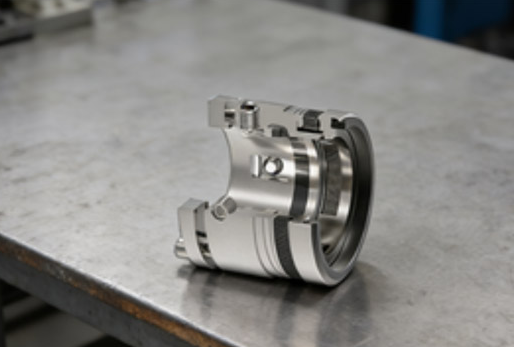
No Auxiliary Elastic Seals Required
One of the most prominent advantages of metal bellows seals is that the metal bellows body simultaneously undertakes the functions of elastic compensation and static sealing. Unlike traditional mechanical seals that rely on rubber O-rings or other non-metallic auxiliary seals, metal bellows can achieve axial compensation and sealing isolation on their own. This structure significantly reduces the number of non-metallic components in the sealing system, avoiding seal failure caused by rubber aging, hardening, or loss of elasticity. For devices operating continuously for extended periods or with limited maintenance conditions, the improved structural reliability is of paramount engineering significance.
Significant High-Temperature Resistance
High-temperature resistance is one of the most typical technical advantages of metal bellows seals. Because its main elastic elements are made of metal, they are less prone to softening, decomposition, or performance degradation at high temperatures. During high-temperature operation, the metal bellows maintains stable elastic characteristics and structural strength, effectively ensuring the contact of the sealing end faces. This results in a significantly longer service life and higher operational safety compared to mechanical seals using rubber elastic elements under high-temperature conditions.
Adaptability to Strong Corrosion and Complex Environments
In highly corrosive media or complex chemical environments, the rubber auxiliary seals in traditional seals often become weak points, easily corroded or swollen by the medium, leading to leakage. Metal bellows seals, through the appropriate selection of corrosion-resistant alloy materials, can significantly improve overall corrosion resistance. The wider range of metal materials available allows for customization to suit different media characteristics, ensuring excellent sealing performance even in acids, alkalis, organic solvents, or special chemical media. This media adaptability gives metal bellows seals a unique competitive advantage in chemical and high-end process systems.
Stable Axial Compensation Performance
Metal bellows possess excellent axial elasticity and fatigue life, continuously compensating for axial displacement, thermal expansion, and wear changes during equipment operation. Compared to traditional spring structures, the bellows provides a more uniform force distribution, avoiding localized stress concentration. Under conditions of frequent start-stop cycles and large pressure and temperature fluctuations, metal bellows seals respond more smoothly to changes in operating conditions, maintaining the stability of the end face stress. This dynamic adaptability helps reduce abnormal end face wear and improves the overall stability of seal operation.
Reduced Risk of Seal Jamming
In environments containing impurities or at high temperatures, the springs and auxiliary seals of traditional spring-type mechanical seals are easily contaminated or scaled by the media, leading to inflexible or even jammed compensation mechanisms. Metal bellows seals employ an integrated compensation structure with few exposed moving parts, significantly reducing the risk of contamination and jamming. The smooth operation of the compensation mechanism ensures that the sealing face maintains optimal contact, thereby reducing the probability of instantaneous leakage or abnormal wear. This advantage is particularly pronounced under high-temperature, high-viscosity, or easily crystallizing media conditions.
Long Service Life
Although metal bellows seals typically have higher initial manufacturing costs than ordinary mechanical seals, their advantages in high reliability, long service life, and low failure rate make them significantly competitive in terms of total life cycle cost. By reducing unplanned downtime, lowering maintenance frequency, and extending replacement cycles, metal bellows seals can significantly reduce the overall cost of equipment operation. This “long-term economic” advantage makes them a widely adopted sealing solution in high-end equipment and critical installations.
Metal bellows seals demonstrate significant advantages in the field of mechanical seals due to their unique structural design and material properties. By replacing traditional elastic elements with metal bellows, they effectively eliminate problems such as rubber aging, limited temperature resistance, and insufficient media adaptability, exhibiting higher reliability and stability under high-temperature, highly corrosive, and complex operating conditions. Meanwhile, metal bellows seals possess stable axial compensation capabilities, strong adaptability to operating conditions, and a low risk of jamming, which not only improves the operational quality of the sealing end face but also significantly extends the overall service life. From a life-cycle perspective, they achieve a good balance between safety, reliability, and economy. For these reasons, metal bellows seals have gradually become an important choice for mechanical seals in demanding operating conditions and are playing an increasingly important role in modern industrial equipment.