In almost all industrial equipment, compressors rely on a high-speed rotating shaft. This shaft connects to the drive unit at one end and extends into the compressor’s interior, driving the impeller or rotor. The problem arises here: for the shaft to rotate, it must pass through the equipment housing; this inevitably leaves a gap. If this gap is not controlled, the compressed gas inside the compressor will continuously leak outwards along the shaft. Many might initially think that a small gas leak is insignificant, but in actual operating conditions, such leakage not only wastes the medium but can also lead to safety risks, environmental problems, and even affect the stable operation of the entire device. Therefore, how to securely seal the gas while the shaft rotates at high speed has become a key challenge in compressor design.
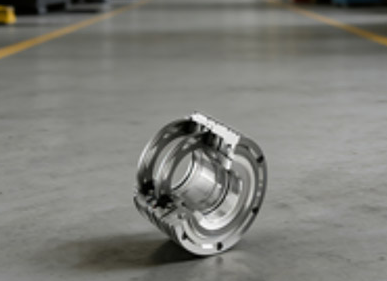
Why is it installed on the shaft?
Inside the compressor, the gas is often under high pressure, while the external environment is at normal pressure. Wherever there is a channel between the two, the gas will naturally leak outwards. The rotating shaft is the crucial channel connecting the internal and external spaces and is also the most prone to leakage. Without an effective sealing device on the shaft, gas inside the compressor will continuously leak out along the gap between the shaft and the housing, affecting compression efficiency and causing instability in the equipment. Therefore, from a basic structural perspective, the shaft’s position dictates that it must be a key area for sealing, and dry gas seals are a specialized solution designed specifically for this location.
Why Use Dry Gas Seals?
Before the advent of dry gas seals, other sealing methods, such as packing seals or oil seals, were used on compressor shafts. While these methods were effective in early equipment, as compressors evolved towards high speed, high pressure, and continuous operation, the shortcomings of traditional sealing methods became increasingly apparent. For example, some seals require frequent maintenance, some easily wear down the shaft surface, and others introduce lubricating oil, causing media contamination. For modern industry, these problems directly impact production continuity and operating costs. In contrast, dry gas seals, employing a non-contact or micro-contact operating method, are more suitable for installation on high-speed rotating shafts, fundamentally reducing wear and the risk of failure.
Advantages of Dry Gas Seals
Compressor shafts often rotate at high speeds. Under such conditions, if the sealing device experiences prolonged and intense friction with the shaft, it is prone to overheating, wear, and even failure. Dry gas seals are applied to shafts to solve this problem. During operation, they utilize an air film to separate the rotating and stationary rings, maintaining a very small gap between the sealing surfaces. This significantly reduces friction while ensuring a good seal. This characteristic makes dry gas seals more stable on high-speed shafts and easier to operate continuously for extended periods.
Necessity of Shaft Seals
Compressors often transport gases with inherent risks. Leaks into the external environment can pose safety hazards or environmental pressures. Once a shaft seal fails, the leakage is often continuous and difficult to ignore. Installing dry gas seals on the compressor shaft effectively controls the leakage point, concentrating the risk within a manageable range. Furthermore, dry gas seals are often used in conjunction with monitoring and protection systems, allowing for timely detection and handling of any abnormalities, which is one of the key reasons for their widespread adoption.
The installation of a dry gas seal on the compressor shaft is not an ‘upgrade’ decision, but rather an inevitable choice determined by the equipment structure and operational requirements. The rotating shaft is the connection point between the compressor’s internal and external spaces and also the most vulnerable channel for gas leakage. If the seal here is inadequate, the safety and stability of the entire unit will be affected. Traditional sealing methods are no longer sufficient to meet the requirements of high-speed, high-pressure, and long-cycle operation in modern conditions. Dry gas seals, with their low wear, low leakage, and stable operation, are perfectly suited for installation on the compressor shaft, a critical location. They maintain a good seal even during high-speed shaft rotation, while also reducing maintenance frequency and operational risks.