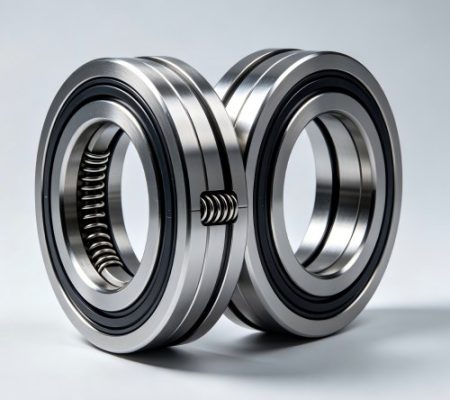

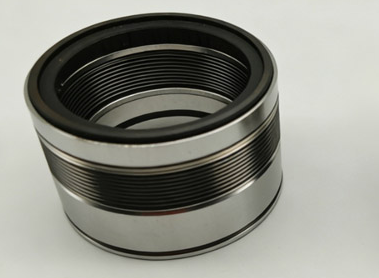
Bellows seals are a common component in many industrial devices, such as pumps, valves, and compressors. Their function is to prevent liquids or gases from escaping, while also being resistant to high temperatures, corrosion, and pressure. However, as equipment becomes more advanced, the requirements for seals become increasingly stringent, especially regarding leakage limits. Knowing the leakage limit standards for bellows seals not only helps engineers design safer equipment but also facilitates maintenance and routine inspections, avoiding potential problems. The leakage limit is the amount of liquid or gas the seal can tolerate; exceeding this limit is considered unacceptable. Setting the standard too leniently may lead to equipment malfunctions after a short period; setting it too strictly increases costs and maintenance difficulty.
What is Leakage?
The definition of ‘leak’: it’s the medium leaking out where it shouldn’t. Depending on the amount, it can be divided into three categories:
Micro-leakage: Only a small amount seeps in; it doesn’t affect equipment operation and can be considered normal.
Controllable leakage: Within the design limits, it’s not a major concern, but it’s best to check it periodically.
Controllable leakage: Within the design limits, it’s not a significant issue, but it’s best to check it regularly. Failure to Leak: This exceeds design standards. The seal must be repaired or replaced immediately, otherwise safety issues may arise.
Understanding these categories is crucial, as the tolerance for leakage varies significantly depending on the situation, and therefore the standards differ.
How to Measure Bellows Seal Leakage
We typically use several indicators to determine if a seal meets standards:
Leakage Rate: This is the amount of medium leaked per unit time, expressed in milliliters, grams, or pressure change. The allowable leakage varies depending on the pressure, temperature, and medium.
Pressure Rating: Sealing requirements are stricter under high pressure; they are slightly more lenient under low pressure.
Temperature Range: Temperature affects the bellows’ elasticity and expansion, thus affecting leakage. Standards provide an allowable temperature range.
Medium Type: Different media have different effects on the seal. For example, volatile liquids pose a high risk if leaked, resulting in lower allowable values; ordinary liquids are relatively more lenient.
Combining these indicators allows for a comprehensive evaluation of the seal’s performance.
Design and Manufacturing Requirements
For bellows seals to operate within standard ranges, proper design and manufacturing are crucial:
Materials: Reliable materials: Elastic, corrosion-resistant, high-temperature resistant, and unlikely to crack over long-term use.
Structure: Properly designed bellows thickness, height, and pitch ensure both sealing and durability.
Precise Interfaces: A tight fit between the seal and the equipment interface minimizes leakage.
Surface Treatment: Polishing or coating makes the sealing surface smoother and reduces leakage.
In short, every aspect of design and manufacturing affects the final leakage rate.
How to Test Leakage
To ensure compliance, several common methods exist:
Airtightness Test: Pressurizing with gas to check for micro-leakage; gas is highly sensitive.
Hydraulic Test: Filling with liquid and pressurizing; observing for liquid leakage.
Life Test: Simulating prolonged operation to check for slow leaks.
Furthermore, domestic and international standards (ISO, ASME, GB, etc.) provide allowable leakage rates under different pressures, temperatures, and media. These standards serve as the benchmarks for evaluating quality.
The leakage limit standard for bellows seals is a crucial reference for ensuring the safe operation of equipment. It not only tells us how much leakage is normal under different operating conditions, but also considers multiple factors such as pressure, temperature, medium, and design and manufacturing. By selecting the right materials, optimizing the structure, ensuring proper machining precision, and conducting scientific testing, the seal can remain reliable under high pressure, high temperature, or corrosive environments. Engineers need to select seals based on standards and actual operating conditions, and conduct regular inspections and maintenance to ensure they don’t silently ‘leak.’ With a clearly defined leakage limit, equipment operation is safer, maintenance is easier, and service life is extended. For industrial equipment, this is not only a technical requirement, but also a guarantee of safety and efficiency.