In the routine operation and maintenance of centrifugal pumps, even when the mechanical seal model is correctly selected and the material is suitable, the installed seals often exhibit either leakage or short lifespan—sometimes failing immediately after startup. The root cause is usually not the seal’s poor quality, but rather improper positioning.’ Positioning the mechanical seal’ refers to determining its installation height and relative position on the pump shaft, ensuring the dynamic and static rings maintain optimal contact and avoid abnormal stress during operation. Proper positioning ensures stable pump performance, minimal leakage, and extended service life; incorrect positioning, however, may prematurely degrade even the highest-quality mechanical seals.
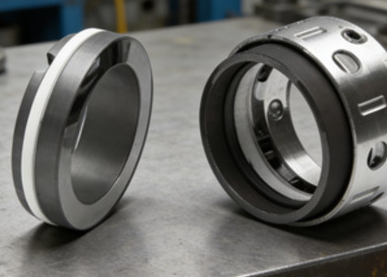
Why is it essential to ‘position’ a mechanical seal?
Ensuring a tight seal: Mechanical seals rely on the tight fit between the rotating and stationary ring end faces to achieve a seal. Incorrect positioning leads to uneven stress on the contact surfaces, easily causing leaks.
Controlling Spring Compression: The mechanical seal contains a spring, and its position determines the spring’s working compression. Too much compression will cause heat and wear, while too little will result in a poor seal.
Avoiding Axial Movement: The pump shaft will experience slight movement during operation. A proper position provides a safety margin for the mechanical seal.
Extending Service Life: A suitable position and reasonable stress result in less frictional heat, extending the mechanical seal’s lifespan.
Basic Principles for Determining Mechanical Seal Position
Based on Design Dimensions: Mechanical seals have an installation length or working height, which is the primary reference for positioning. Using the Stationary Ring as a Reference Surface: In most cases, the stationary ring is installed in a fixed position within the sealing cavity, while the rotating ring rotates with the shaft. Ensuring the Spring is Within its Working Range: The spring should neither be fully compressed nor in a ‘free state.’ Matching the Pump Structure: The depth of the sealing cavity, the position of the shaft shoulder, and the gland structure all affect the mechanical seal position.
Common Methods for Determining Mechanical Seal Position
Using the Shaft Shoulder or Positioning Step as a Reference: Many centrifugal pumps have shaft shoulders or retaining rings designed on the shaft; these are natural positioning points.
Mount and Secure: The most common and reliable method is to position the rotating ring against the designated shoulder and then finetune its position according to the mechanical seal dimensions.
Using the Inner End Face of the Sealing Gland as a Reference: When there is no clearly defined shoulder, the position can be determined using the inner end face of the sealing gland. First, install the stationary ring and gland, then adjust the rotating ring’s position on the shaft to achieve the designed installation height.
Measure According to the Working Length: Manufacturers usually provide the working length or installation dimensions of the mechanical seal. During installation, use calipers to measure the distance from the shaft end to the rotating ring’s end face, ensuring it is within the allowable range.
Precompression Method: When onsite conditions are limited, experienced maintenance personnel will first gently compress the mechanical seal to the recommended precompression amount before tightening the set screws. However, this method relies more on experience and is suitable for skilled workers.
Easily Overlooked Details During Installation
Axial Joints Must Be Clean and Smooth: Burrs or rust on the shaft will affect the rotating ring’s positioning.
Set Screws Must Be Tightened Evenly: Uneven tightening of the rotating ring will cause uneven wear.
Note the rotation direction: Some mechanical seals have specific rotation direction requirements; even if the position is correct, incorrect direction can cause problems.
Cooling and flushing channels: Ensure that the flushing holes and cooling holes are not blocked when positioning.
Common Manifestations of Improper Mechanical Seal Positioning
Leaking immediately upon startup, or leaking at high speeds but not at low speeds.
High temperature and abnormal noise after a period of operation.
Uneven wear and burn marks appear on the end faces of the dynamic and stationary rings.
Spring deformation or failure.
‘Positioning the mechanical seal of a centrifugal pump’ is not a highly complex task, but it requires meticulous and standardized operation. Use the design dimensions as the standard and the stationary ring as the reference to ensure the spring is within its reasonable operating range. Most mechanical seal problems can be avoided by understanding the pump structure and the mechanical seal’s installation dimensions before installation, and by carefully measuring and repeatedly verifying them during installation. For onsite maintenance personnel, less reliance on intuition and more adherence to dimensions and principles will significantly improve the stability and service life of the mechanical seal. The accuracy of the mechanical seal position directly affects whether the centrifugal pump can operate safely and stably for a long time. This step is definitely worth taking the time to do carefully.