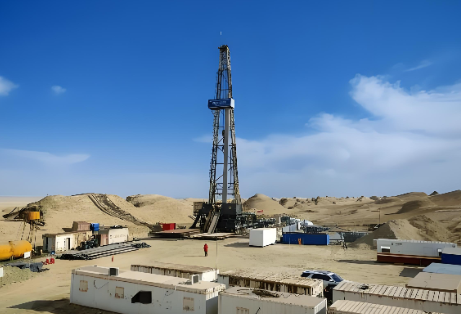
In oil and gas drilling projects, cost control is a core factor determining project profitability. Industry data shows that drilling fluid maintenance costs account for over 30% of the total cost of a single well, with 75% of that cost spent on treating solids contamination. Solids control systems, by precisely controlling the content of harmful solids in the drilling fluid, can not only improve drilling efficiency but also reduce costs across multiple dimensions, including material consumption, equipment wear and tear, and environmental compliance.
Technological Optimization
The solids content in the drilling fluid is a key factor affecting the rate of penetration (ROP). Experiments show that a 1% reduction in the content of harmful solids can increase the drilling speed by 10%, and the smaller the solid particles, the more significant the impact on the drilling speed. Solids control systems, through multi-stage separation technology, can achieve the following efficiency improvements:
Staged purification, reducing ineffective operations
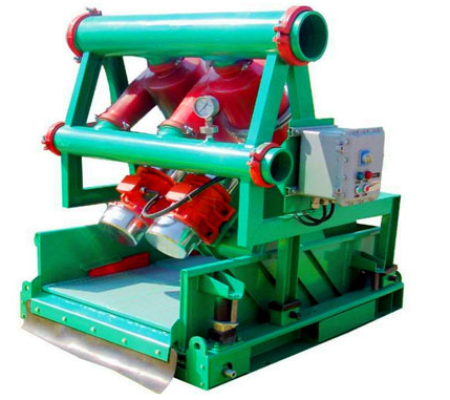
The solids control system employs a four-stage separation process: vibrating screen + desander + desilter + centrifuge. The vibrating screen intercepts coarse particles >40 mesh, preventing them from entering subsequent equipment; the desander/desilter separates fine sand of 15-74μm, reducing drill bit wear; the centrifuge further removes ultrafine particles<15μm, preventing them from clogging formation pores. For example, after applying this system in an oilfield, the drilling cycle for a single well was shortened by 15%, and the number of trips in and out of the well was reduced by 20%, directly saving over one million yuan in labor and equipment operating costs.
Intelligent control, adapting to geological conditions
Modern solids control systems integrate intelligent sensors and data analysis modules, which can adjust separation parameters in real time according to formation lithology and drilling fluid properties. For example, at the Changning H31-S platform in the Southwest Oil and Gas Field, by dynamically optimizing centrifuge speed and screen mesh size, the drilling cycle for a single well was reduced to 44.7 days, a 11% reduction in investment compared to the initial estimate, achieving ‘maximum cost control.’
Resource Recycling
The cost of materials such as barite and bentonite in drilling fluid accounts for more than 75% of the total cost. Solids control systems, through closed-loop recycling technology, can significantly reduce material consumption:
Drilling fluid recycling saves water resources and additives
Drilling fluid purified by the solids control system can be recycled 5-10 times, saving 300-500 cubic meters of water per well. Simultaneously, chemical additives in the liquid phase (such as filtration reducers and anti-collapse agents) are separated by centrifuges, achieving a recovery rate of over 90%. After applying this technology, a drilling company reduced its single-well chemical additive usage by 40%, resulting in a cost reduction of 250,000 yuan.
Solid Waste Utilization, Reducing Landfill Costs
Separated drill cuttings and rock powder, after dehydration and solidification, can be used as roadbed materials or landfill material. For example, in one gas field, the landfill volume of solid waste from a single well was reduced from 500 tons to 150 tons, saving 3 acres of land and avoiding fines for secondary pollution caused by landfilling.
Risk Mitigation
Drilling accidents are a ‘hidden killer’ of cost overruns. Solids control systems reduce risks in the following ways:
Preventing Complex Downhole Conditions, Reducing Unplanned Downtime
The accumulation of solid particles can easily lead to wellbore collapse, stuck drill bits, and other accidents. Solids control systems control the solid content of drilling fluid to below 5%, which can reduce the accident rate by more than 30%. Statistics from an oil field show that after applying a solids control system, unplanned downtime per well was reduced by 50 hours, resulting in direct cost savings of over 800,000 yuan based on equipment shift costs.
Comply with Environmental Regulations and Avoid Hefty Fines
Chemical additives in drilling fluids can seep into groundwater with waste fluids, potentially leading to penalties from environmental authorities. Solids control systems, through deep purification, increase the compliance rate of waste fluid indicators such as COD and BOD to 98%, helping companies mitigate compliance risks.
From technology optimization to resource recycling and risk avoidance, solids control systems create a closed-loop system of cost reduction and efficiency improvement for drilling projects through full-chain cost control. Data shows that drilling projects with properly configured solids control systems can reduce overall costs by 15%-25% and shorten the investment payback period to 1-2 years. In today’s increasingly competitive industry, solids control systems are not only environmental protection equipment but also a ‘strategic weapon’ for drilling companies to improve profitability and gain a market advantage.