In industrial equipment systems, high-pressure vessels are a critical type of pressure-bearing equipment. They are typically used to store gases or liquids or participate in high-pressure reactions, such as chemical reactors, pressure tanks, and high-pressure pipeline systems. A common characteristic of these devices is that their internal pressure is far higher than that of the atmospheric pressure environment, thus requiring extremely high structural safety. The most crucial aspect of this is the “sealing method.” The sealing method involves structural design and material selection to ensure that the vessel’s connections remain completely leak-proof under high pressure.
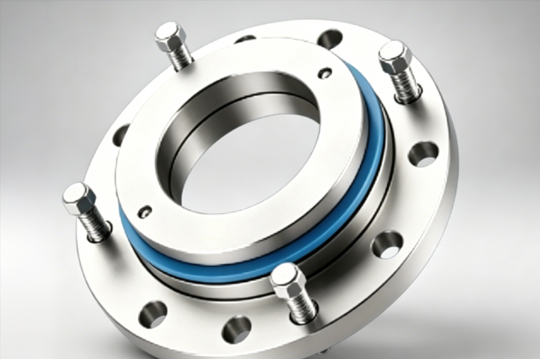
The stringent sealing requirements for high-pressure vessels stem from the fact that leakage can lead not only to material loss but also to serious problems such as explosions, pollution, or equipment damage. Therefore, sealing design typically needs to comprehensively consider factors such as pressure rating, temperature variations, media corrosiveness, and equipment disassembly and assembly frequency. Common high-pressure vessel sealing methods include gasket seals, metal seals, self-tightening seals, and elastic seals. While these methods differ in principle, their core objective is to achieve a tight seal between contact surfaces through pressure or material deformation, thereby preventing media leakage.
Classification of Common Sealing Methods for High-Pressure Vessels
Basic Flexible Sealing: Gasket Compression Structure
Gasket sealing is the most common sealing method for high-pressure vessels, widely used in medium and low-pressure equipment. Its principle involves placing a flexible gasket material, such as a graphite gasket, rubber gasket, or metal composite gasket, between two flanges or connecting surfaces, and then compressing it with bolt preload to form a sealing layer. This method is simple in structure, low in cost, and easy to install, making it one of the most basic sealing methods in industry. However, it has high requirements for installation technology; if the bolts are not subjected to uneven force or the gasket is aged, leakage problems can easily occur. Therefore, this sealing method is generally suitable for equipment with less extreme pressure and higher maintenance frequency.
High-Strength Sealing: Metal Ring Embedded Structure
Metal sealing methods are mainly used in high-pressure or ultra-high-pressure conditions, such as high-pressure reactors or petrochemical plants. Its structure typically uses a metal ring (such as an RTJ ring) embedded in the flange groove. High preload causes slight plastic deformation of the metal, achieving a complete fit to the sealing surface. This method has extremely strong pressure resistance and high-temperature resistance, making it very suitable for harsh operating conditions. However, the disadvantages include high precision requirements, high cost, and the fact that metal rings are generally not reusable, resulting in high maintenance costs.
Pressure-Enhanced Seals: Self-Tightening Structure Systems
Self-tightening seals utilize internal pressure to enhance the sealing effect. As the internal pressure of the container increases, the sealing area experiences greater pressure, further enhancing the sealing performance. This method is commonly used in high-pressure reaction equipment or special experimental devices. Its advantage is that the higher the pressure, the more stable the seal. However, the structural design is complex, requiring high material strength, structural calculations, and machining precision, making it unsuitable for simple equipment.
Elastic Auxiliary Seals: O-rings and Combined Seals
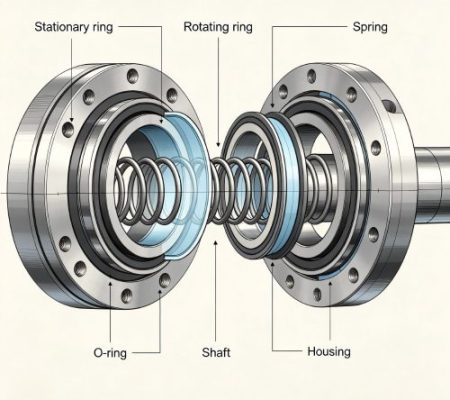
O-ring seals are a type of elastic seal, typically made of rubber or fluororubber, achieving a sealing effect through compression deformation. This method is simple to install, low-cost, and offers good sealing performance, suitable for medium- and low-pressure or auxiliary sealing systems. However, because elastic materials are affected by temperature, medium, and time, they are prone to aging and are generally not used alone for high-pressure main seals, but rather in combination with other sealing structures to improve overall reliability.
Characteristics of Different Sealing Methods
Gasket seals are a basic solution, suitable for general industrial environments, but their stability is limited under high pressure conditions. Metal seals are suitable for extreme high-pressure environments, offering high safety but at a higher cost. Self-tightening seals perform better under high pressure, exhibiting “increasing stability with higher pressure,” but their design is complex. O-ring seals are more of an auxiliary solution and cannot be used as the primary pressure-bearing structure. However, many devices do not use only a single sealing method but employ a combination design. For example, in high-pressure reaction equipment, the main seal uses a metal ring structure, while the auxiliary seal uses an O-ring to form a dual protection mechanism. This combination effectively reduces the risk of single-point failure, improves overall operational safety, and better meets the practical needs of modern industrial design.
Common Misconceptions about High-Pressure Vessel Seals
Q: Must high-pressure vessels use metal seals?
No. Metal seals are only necessary under ultra-high pressure or extreme conditions. General industrial equipment can still use gaskets or composite sealing structures.
Q: Why do some devices repeatedly experience leakage problems? Most issues are related to installation quality, uneven bolt preload, gasket aging, or material incompatibility, rather than simply the sealing structure itself.
Q: Are self-tightening seals safer than traditional seals?
Under high pressure conditions, self-tightening seals are indeed more stable, but they have high design requirements. If the design is inadequate, failure can still occur.
Engineering Application Cases of Different Sealing Methods
In the chemical industry, high-pressure reactors typically use metal ring seals to ensure no leakage during high-temperature, high-pressure reactions. This equipment often involves hazardous chemical reactions, thus requiring extremely high sealing standards. In oil pipeline systems, gasket-sealed flanges are commonly used because they are easy to maintain, allowing for quick gasket replacement during maintenance and reducing downtime. Self-tightening seals are widely used in laboratory high-pressure testing equipment because the experimental pressure varies significantly; this structure automatically enhances the sealing effect with pressure changes, improving test safety. In some auxiliary equipment or low-pressure control systems, O-ring seals are widely used due to their low cost and ease of installation. These application examples illustrate that high-pressure vessel sealing methods are not fixed but rather flexibly selected based on industry needs, with different structural solutions corresponding to different operating conditions.
The sealing method of a high-pressure vessel is essentially a “safety control system,” whose core objective is to ensure the long-term stable operation of the equipment under high-pressure environments, preventing leakage or structural failure. Whether it’s a gasket seal, metal seal, self-tightening seal, or O-ring seal, the design philosophy revolves around a basic principle: achieving a tight fit through pressure or material deformation. For example, low-pressure systems can choose gasket seals, while high-pressure systems must use metal or self-tightening structures. Simultaneously, combined sealing methods are becoming increasingly common, improving overall reliability through the cooperation of primary and auxiliary seals.