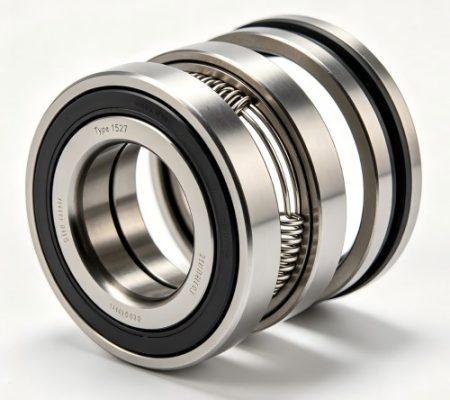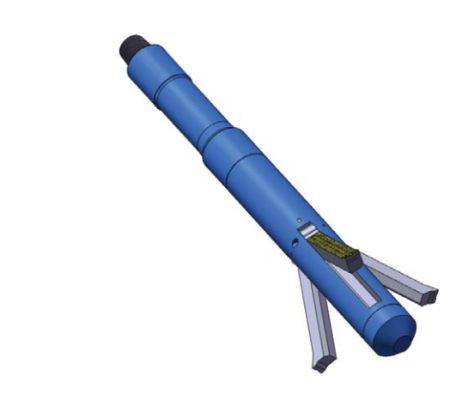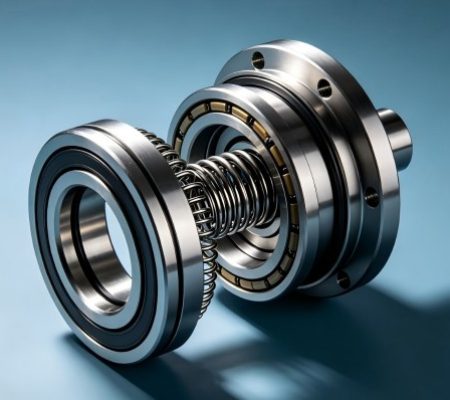

In pump equipment sealing technology, traditional sealing methods usually refer to packing seals (gland packing seals) or simple soft packing structures, while mechanical seals are high-precision dynamic sealing devices that rely on the precise contact between a rotating ring and a stationary ring, operating under an extremely thin liquid film condition. Traditional packing seals achieve sealing by compressing the packing against the shaft, relying on “contact friction” to create a sealing effect. In essence, this is a “wear-for-sealing” approach. Their sealing performance depends on the compression level, which means a certain amount of leakage must be tolerated or the gland must be periodically adjusted. Mechanical seals, however, are different. They form a micron-level liquid film between highly polished sealing faces and operate in an almost zero-leakage condition, achieving true dynamic sealing. Their “reliability” does not only refer to the absence of leakage, but also to long-term operational stability, low maintenance frequency, and adaptability to changing operating conditions. Mechanical seals are generally superior to traditional packing seals in these aspects and have therefore become the mainstream solution in modern chemical, petrochemical, power, and pharmaceutical industries.
Operating Principle of Mechanical Seal Reliability
Compared with traditional seals that rely on manual adjustment experience, mechanical seals depend more on standardized process control.
Standardized Installation Process
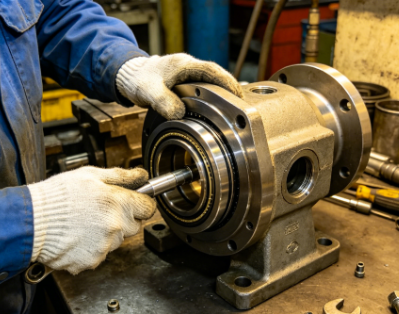
Mechanical seals are typically designed and assembled in a standardized manner. During installation, only the specified compression amount and positioning dimensions need to be followed, without repeated tightening adjustments like packing seals. This standardized process greatly reduces instability caused by human operation differences, improving reliability from the source.
Pre-Operation System Preparation Process
Before startup, mechanical seals require flushing system inspection, sealing chamber filling, and shaft alignment confirmation. Once these conditions are met, the seal can quickly form a stable liquid film at startup, avoiding the frequent leakage issues common in traditional seals during the starting phase.
Operational Monitoring Process
Mechanical seals are usually operated together with flushing systems or auxiliary systems, which continuously remove heat and stabilize the seal face condition. In contrast, traditional packing seals rely mainly on manual gland adjustment during operation—over-tightening causes heat buildup, while loosening leads to leakage, resulting in poor stability. Mechanical seals operate in a more “self-balanced” state with minimal human intervention.
Maintenance Cycle Process
Under normal operating conditions, mechanical seals can run for long periods without frequent adjustments, while traditional packing seals require periodic tightening or replacement of packing rings. This difference results in higher stability and lower maintenance costs over the full lifecycle of mechanical seals.
Core Advantages Behind Mechanical Seal Reliability
Reduced Root Cause of Wear
Traditional packing seals rely on linear friction between the shaft and packing. This contact method has a large friction area, concentrated heat generation, and continuous wear. Mechanical seals, however, use a face-sealing structure where a micron-scale liquid film forms between the rotating and stationary rings. Most of the time, they operate under fluid lubrication, with only a small portion of energy converted into frictional heat. This “face contact replacing line contact” structure fundamentally reduces wear rate and significantly extends service life.
Low-Wear Operation Capability
The core of mechanical seal reliability lies in the liquid film. During normal operation, the medium enters the sealing interface under high-speed rotation, forming a stable hydrodynamic film. This film not only prevents direct solid contact but also removes frictional heat. In contrast, traditional packing seals lack such an active lubrication mechanism and are therefore more prone to dry friction and overheating. The presence of the liquid film gives mechanical seals a “self-stabilizing” capability, which is a key foundation of reliability.
Reduced Sensitivity to Operating Conditions
Modern mechanical seals often adopt balanced designs that optimize force distribution, reducing the closing force generated by medium pressure on the sealing faces and lowering friction load. This design makes mechanical seals less sensitive to pressure fluctuations and allows them to maintain relatively stable sealing performance even when operating conditions change. Traditional packing seals, however, rely entirely on manual tightening and cannot achieve automatic balance.
Improved System-Level Reliability
Mechanical seals are typically equipped with flushing systems, cooling systems, or external circulation systems to maintain cleanliness and stable temperature in the sealing chamber. These auxiliary systems effectively prevent particles from entering the sealing faces and reduce temperature rise, thereby extending service life. Traditional packing seals generally lack such system-level support, and their reliability depends more on operator experience.
Common Questions
Q: Are mechanical seals always less prone to failure than packing seals?
Under standard operating conditions, yes—but only if installation is correct and the flushing system works properly. If the system design is improper, mechanical seals can still fail.
Q: Do mechanical seals have lower maintenance costs?
In the long term, usually yes, because they do not require frequent adjustment or replacement of packing. However, initial cost is slightly higher.
Q: Why do some older equipment still use packing seals?
Because they are simple, low-cost, and highly adaptable, making them suitable for low-speed, low-pressure, or non-critical applications.
The reason mechanical seals are more reliable than traditional seals is not that they are “tighter” or “more complex,” but that they solve sealing problems in a more stable way. Traditional packing seals rely on compression and friction to achieve sealing. While simple, this method continuously wears the shaft and requires frequent adjustment. If not properly controlled, it easily leads to leakage or overheating. Mechanical seals are fundamentally different. They rely on two highly polished sealing faces that form an extremely thin liquid film during operation. This film acts like an “invisible lubrication layer,” separating the two friction surfaces while also removing heat, allowing the equipment to remain stable under high-speed operation. In addition, their more standardized structure reduces installation errors, and they can work together with flushing systems to continuously optimize operating conditions. As a result, they offer higher overall stability and lower maintenance frequency. Packing seals are more like a “manual experience-based solution,” while mechanical seals are a “controllable modern engineering solution.” In most industrial applications, they provide longer service life and more stable performance.