Cement plugs primarily serve a sealing and isolation function in oil and gas well construction. The sealing performance directly impacts downhole safety and the quality of subsequent construction. Unstable sealing can easily lead to problems such as flow channeling, leakage, or pressure imbalance. Therefore, it is necessary to improve the overall sealing capacity through reasonable design and standardized operation during construction. Factors affecting sealing performance include cement slurry properties, construction parameters, and the downhole environment.
Optimizing Cement Slurry Properties to Enhance Sealing Capacity
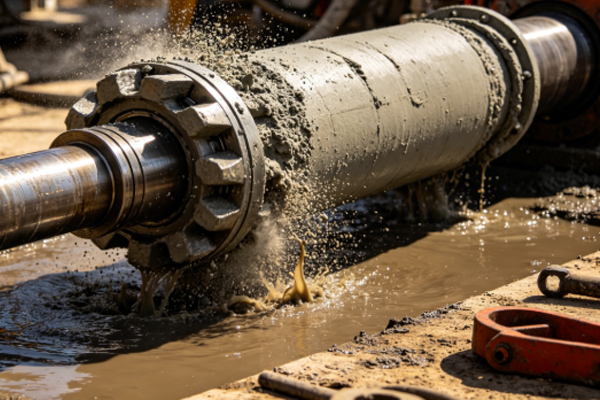
The properties of cement slurry are a crucial factor determining sealing performance. Fluidity, setting time, and compressive strength all directly affect the stability of the cement plug after formation. Insufficient cement slurry fluidity may prevent uniform filling of the downhole space, resulting in voids; an unreasonable setting time can easily disrupt the construction schedule.
In actual construction, the formula is adjusted according to downhole temperature and pressure to ensure a more stable structure after the cement slurry hardens. Improving compressive strength and bonding ability also helps enhance the bond between the cement plug and the wellbore, thereby reducing the risk of fluid flow channeling.
Controlling Construction Parameters to Reduce Sealing Defects
Controlling construction parameters significantly impacts the sealing quality of cement plugs.
- Excessive discharge volume can easily cause downhole disturbance.
- Unstable pressure can affect cement distribution.
- Excessive pumping speed may create voids.
- Insufficient circulation reduces wellbore cleanliness.
- Parameter fluctuations can affect curing effects.
Reasonable control of the construction rhythm allows cement slurry to enter the target well section more evenly, improving overall sealing stability.
Improving Wellbore Cleanliness to Enhance Bonding Effect
The condition of the wellbore directly affects the bonding ability between the cement plug and the formation. If a large amount of drill cuttings, oil, or mud filter cake remains in the well, it may reduce the adhesion effect of the cement slurry, leading to incomplete sealing.
Before construction, thorough circulation and well washing are usually required to remove as much impurity as possible from the wellbore, making the downhole environment cleaner. The cleaner the wellbore, the easier it is for the cement slurry to form a stable contact with the wellbore, thereby improving the overall sealing effect and reducing the risk of later failure.
Properly Selecting Cement Plug Locations to Improve Stability
The placement of cement plugs also affects the sealing effect, and different well sections have different sealing requirements.
- High-pressure layers require stronger sealing capabilities.
- Leakage zones require focused sealing.
- Unstable well sections require enhanced support.
- Deep well environments require consideration of temperature and pressure changes.
- Wells with complex structures require precise positioning.
Accurately selecting the construction location allows cement plugs to better perform their isolation function while improving overall construction safety.
Curing Time and Post-Construction Testing are Equally Important
After the cement plug construction is completed, sufficient curing time is required. Continuing subsequent work when the strength is insufficient can easily lead to damage to the sealing layer, thus affecting the overall effect. Properly arranging the waiting time according to the downhole environment allows the cement plug to reach a more stable state.
After construction, pressure tests or downhole inspections are usually conducted to confirm whether the sealing quality meets the requirements. Inspections can promptly identify potential problems, preventing crossflow or sealing failure during subsequent construction, thereby improving the overall stability of downhole operations.