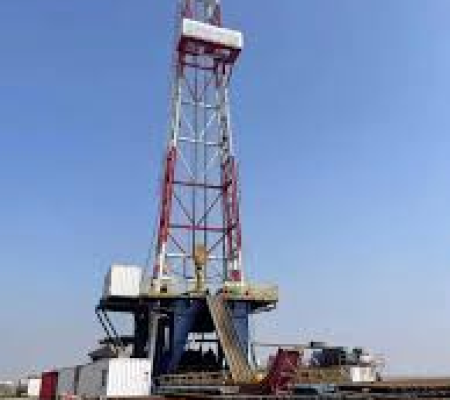
As core equipment in fields such as oil drilling and geological exploration, the relocation and installation of drilling rigs involves high-risk aspects such as high-altitude operations, heavy machinery hoisting, and precision component assembly. Improper operation can not only damage equipment but also lead to personnel injuries or fatalities. This article systematically describes the safety procedures for drilling rig relocation and installation, covering four stages: preliminary preparation, relocation implementation, installation and commissioning, and final acceptance, providing practitioners with a practical operational guide.

Preliminary Preparation: Risk Prevention and Resource Integration
The cornerstone of safe drilling rig relocation and installation lies in meticulous preliminary preparation. First, a site survey is necessary to assess the geological conditions, spatial layout, and surrounding environment of both the old and new well sites. For example, if the new well site is near high-voltage power lines, the crane’s operating radius must be planned in advance to ensure a safe distance between the crane boom and overhead lines; if the ground bearing capacity is insufficient, steel plates or brickwork must be laid for reinforcement to prevent transport vehicles from sinking. One drilling team suffered a drilling rig foundation subsidence and equipment tilting accident due to failure to test the soil pressure resistance at the well site, resulting in direct economic losses exceeding 500,000 yuan.
Equipment inspection is another crucial step. Before relocation, a comprehensive inspection of all components of the drilling rig is necessary, with a focus on checking the hydraulic system’s sealing, electrical wiring insulation, and the integrity of structural welds. For example, in one project, excessive wear was found in the drilling pump cylinder liners before relocation; timely replacement prevented hydraulic oil contamination accidents caused by leaks during transportation. Simultaneously, specialized tools must be prepared, such as wire rope slings matched to the equipment’s weight, anti-slip pry bars, and explosion-proof lighting equipment, ensuring that tool performance meets safety standards.
Personnel division of labor and training are equally crucial. A company-wide safety meeting is required to clarify the responsibilities of commanders, hoisting operators, safety supervisors, etc., and to standardize command hand signals or flag signals. In one drilling team, chaotic command signals led to a synchronization deviation between two cranes, resulting in a collision. Furthermore, specialized safety training must be provided to operators, focusing on fall prevention during high-altitude operations, crush prevention during hoisting operations, and emergency escape procedures, ensuring that all personnel master safe operating procedures.
Relocation Implementation: Standardized Operation and Dynamic Monitoring
The core principles of the relocation phase are ‘stability, accuracy, and speed.’ Equipment dismantling must adhere to the principle of ‘lifting before dismantling.’ For example, winches dismantled before lifting must be pre-secured at the center of the turntable to prevent slippage during transport. Dismantled oil and gas pipes must be sealed with special plugs to prevent debris from entering. In one project, failure to seal the high-pressure riser led to mud backflow damaging the hydraulic valve assembly, increasing repair costs by 120,000 yuan.
Lifting operations are the riskiest part of relocation. A crane matching the equipment weight must be selected, and the jacks must be securely anchored and the outrigger pads stable. For example, when lifting a drilling pump, the pump body must be secured to the flatbed truck with four strands of Φ8mm iron wire, and a 5t chain hoist must be added for double safety. Before lifting, the rope sling’s stress point must be checked to avoid placing the sling on pressure-sensitive parts. During lifting, personnel are strictly prohibited from standing under the load or within the range of the boom’s rotation. In one drilling team, a violation of operating procedures resulted in a broken wire rope, causing the load to fall and damage the control room.
During transportation, special attention must be paid to managing equipment exceeding weight limits. Equipment exceeding width, length, or height requirements requires approval procedures and must display warning signs on the vehicle. Hazard lights must be activated at night. For example, when transporting drilling rigs, red flags must be attached to both sides, and a dedicated person must escort the transport, promptly removing any obstacles along the route. In one project, due to insecure securing, the drilling rig slipped during transport, causing a 6-hour traffic disruption.
Installation and Commissioning: Precise Connection and Performance Verification
The installation phase must strictly adhere to design drawings and technical specifications. Foundation construction is crucial. For example, the foundation for a ZJ20 drilling rig must be excavated to a soil pressure resistance ≥0.15MPa, and concrete must be poured to ensure a levelness deviation ≤3mm. Specialized tools must be used during equipment assembly. For instance, when installing drilling pumps, a torque wrench must be used to tighten bolts to prevent leaks due to loose connections. In one drilling team, loose bolts caused excessive pump vibration, damaging bearing components.
The commissioning phase requires multi-dimensional performance testing. First, a no-load test run is conducted to check if the equipment operates smoothly and without abnormal noise. Then, a load test is performed to simulate actual working conditions and verify the equipment’s pressure resistance. For example, the drilling fluid circulation system needs to be tested to ensure the mud pump discharge reaches the design value, and the blowout preventer (BOP) needs to undergo a 35MPa pressure holding test to ensure its sealing performance meets standards. In one project, a blowout preventer gate seal failure was discovered during commissioning; timely replacement of the seal prevented a blowout accident.
Post-Acceptance: Document Archiving and Continuous Improvement
Complete documentation is required during the acceptance phase, including equipment inspection reports, hoisting operation records, performance test data, and a problem rectification list. These documents not only serve as the basis for compliant equipment operation but also as important references for subsequent maintenance. For example, a drilling team, through analysis of historical acceptance data, found that the hydraulic system of a certain drilling rig had a high failure rate; after targeted optimization of the maintenance cycle, the equipment availability increased by 20%.
Safety management of drilling rig relocation and installation is a dynamic optimization process. Regular safety debriefing meetings need to be organized to summarize lessons learned and update operating procedures. For example, one company incorporated the ‘Ten Prohibitions for Lifting Operations’ into its safety manual and strengthened employee safety awareness through VR simulation training, resulting in a 65% reduction in the rate of violations.
From initial preparation to final acceptance, every step of drilling rig relocation and installation is crucial to personnel safety and equipment lifespan. Through systematic risk prevention and control, standardized operating procedures, and continuous improvement mechanisms, the probability of accidents can be minimized, building a solid safety barrier for industrial production.