In oil and gas well drilling, workover, and completion operations, the correct sizing of wellhead tools directly affects operational efficiency and safety. Different well depths, tubular specifications, and working conditions impose strict requirements on slips, elevators, tongs, and casing tongs. To help field personnel quickly identify tool specifications and reduce downtime caused by mismatched sizes, this article systematically reviews the standard sizes of commonly used wellhead tools and summarizes selection principles for quick reference in the field.
1. Common Sizes of Slips
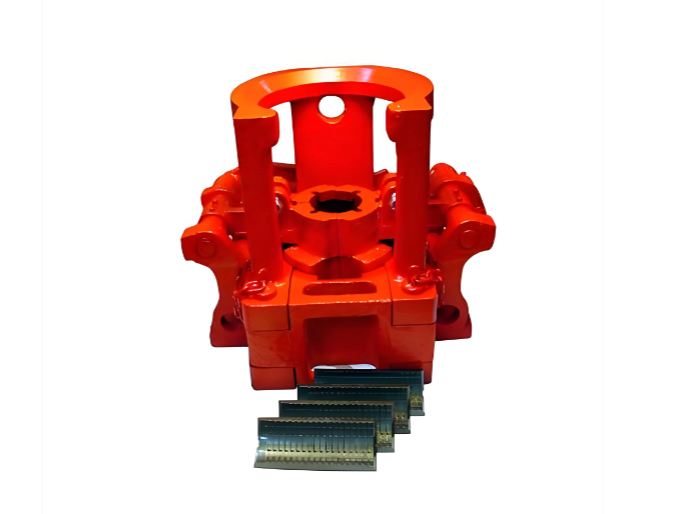
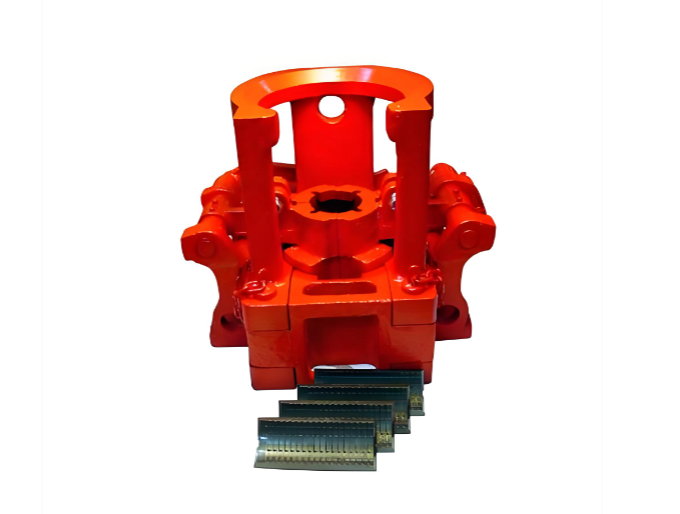
Slips are mainly used to hold drill pipes, casing, or tubing in place, and their size depends on the outer diameter of the pipe. Drill pipe slips typically cover the 2 7/8’–5′ range, while casing slips come in larger sizes from 4 1/2′, 5 1/2′ up to 13 3/8′. Tubing slips are commonly available in 1.9′, 2 3/8′, and 2 7/8′. In practice, the wedge surface of the slip should match the pipe’s outer diameter, and wear on the slip dies must remain within allowable limits to avoid reduced holding power or slippage incidents.
2. Common Sizes of Elevators
Elevators bear the full weight of tubulars during handling and are critical for wellhead safety. Common tubing elevator sizes range from 1.9′, 2 3/8′, 2 7/8′ to 3 1/2′; casing elevators are generally used for 4 1/2′, 5 1/2′, 7′, 9 5/8′, and 13 3/8′. Drill pipe elevators are often sized 3 1/2′, 4′, and 4 1/2′. When selecting, it is necessary to match both the outer diameter and the rated load, such as 65t, 100t, or 150t, to ensure sufficient lifting capacity on site.
3. Common Sizes of Elevator Links
Elevator links connect elevators to the traveling block hook, and their length and load capacity are key parameters. Standard lengths include 22′, 24′, 36′, and 42′, suitable for different rig heights. Load ratings are typically 75t, 100t, or 150t. Although elevator links are simple components, they must match the elevator and hook specifications; otherwise, uneven loading, wear, or dangerous swinging may occur.
4. Common Sizes of Manual and Casing Tongs
Manual tongs are primarily used for make-up and break-out operations, with selection based on pipe outer diameter and torque requirements. Common manual tongs cover ranges such as 1.05’–2 7/8′, 2 3/8’–4 1/2′, and 4 1/2’–7′. Casing tongs are used for larger casing sizes, generally covering 4 1/2’–13 3/8′, and often come with interchangeable dies or liners. For high-torque operations, such as large casing or complex well sections, tongs with higher rated torque should be chosen.
5. Common Sizes of Power Tongs
Power tongs are used for high-efficiency make-up operations and provide stable torque with higher automation. Common working ranges include:
Casing power tongs: 4 1/2’–13 3/8′
Tubing power tongs: 2 3/8’–4 1/2′
Drill pipe power tongs: 3 1/2’–5′
In addition to diameter compatibility, power tong selection must consider maximum torque, jaw opening size, and spare dies to prevent operational issues.
6. On-Site Selection Considerations
First, verify pipe outer diameter, wall thickness, and thread type to ensure slips, elevators, and tongs fit perfectly. Second, inspect tool wear before operation, particularly slip dies, elevator latches, and tong liners. Third, for deep wells, high-pressure wells, or large casing operations, prepare spare tools of different sizes in advance to minimize downtime. Fourth, all tools must meet rated load and torque standards; exceeding these limits is strictly prohibited.
Conclusion
Accurate sizing of wellhead tools is crucial for construction quality and operational safety. By understanding standard ranges for commonly used tools, field personnel can select and prepare tools more efficiently, avoiding safety hazards caused by mismatched specifications. As well operations become more complex, proper planning of slip, elevator, link, manual tong, and power tong sizes will play an important role in improving operational efficiency. This guide aims to provide practical and efficient size references for field personnel.