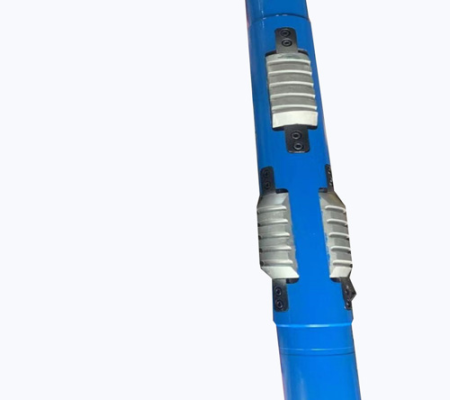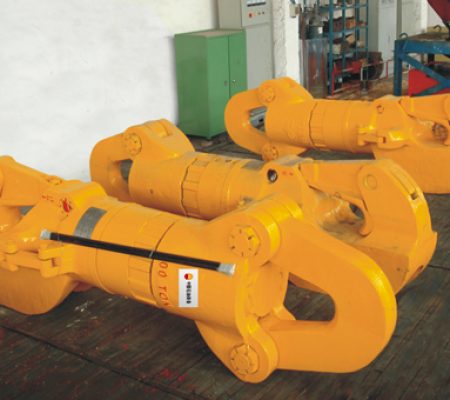

In oil and gas well operations and equipment maintenance, lifting rings are a critical component of wellhead tooling, responsible for lifting, installing, and positioning equipment. Different types of wellhead equipment vary in structure, weight, and operational environment, so the applications and selection criteria of lifting rings also differ. This article analyzes typical application scenarios of lifting rings across common equipment types, providing guidance to improve safety and efficiency during operations.
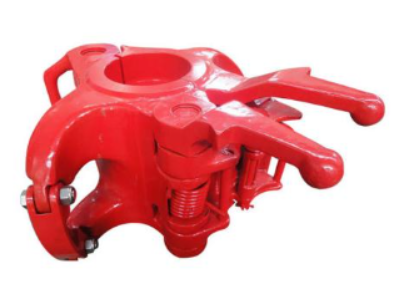
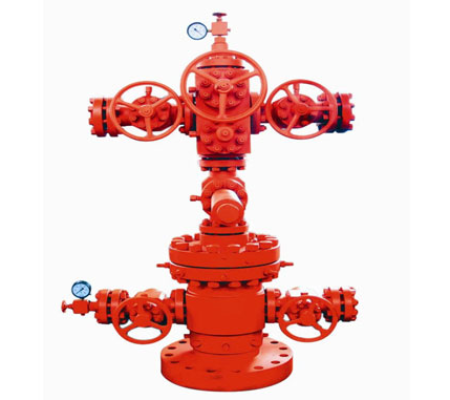
1. Lifting Casing Heads and Christmas Trees
Casing heads and Christmas trees are core wellhead components, characterized by large weight and complex structure. Lifting rings are primarily used for:
Installation and removal: During new well construction or old well retrofits, lifting rings bear the entire weight of casing heads and Christmas trees, ensuring safe lifting to the wellhead.
Maintenance and replacement: When servicing valves or internal components of a Christmas tree, lifting rings enable partial removal or short-distance relocation, minimizing manual handling risks.
In these scenarios, lifting rings are usually made of high-strength steel, clearly marked with rated load, and matched precisely with equipment connection points to ensure safe multi-point load distribution.
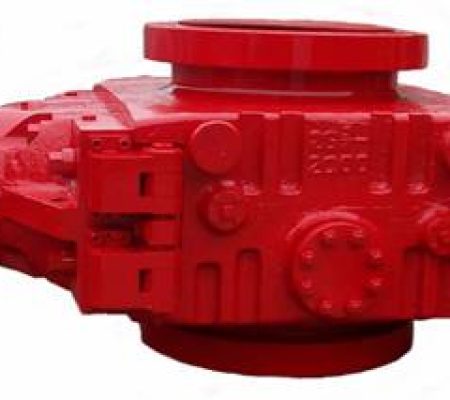
2. Blowout Preventers and Safety Valve Operations
Blowout preventers (BOPs) and safety valves are critical for wellhead safety, and their lifting operations often occur under high-pressure conditions. Lifting rings are used for:
Handling and positioning: Lifting rings assist in rapid installation or removal of BOPs while preventing uneven load distribution caused by tilting or off-center lifting.
Deep well operations: In deepwater or old-well retrofits, lifting rings work with hoisting tools to perform multi-angle lifts, maintaining center-of-gravity control and reducing operational risk.
In high-pressure, high-temperature, or corrosive environments, lifting rings with corrosion-resistant coatings or reinforced surfaces should be selected and regularly inspected.
3. Wellhead Auxiliary Components and Valves
During retrofits and maintenance, auxiliary components such as tubing fittings and flow control valves also require lifting rings for handling. Although lighter in weight, the lifting environment is often complex. Applications include:
Precise positioning: Lifting rings allow fine adjustments to safely and smoothly place smaller components.
Multi-angle operation: In confined spaces or densely routed wellhead systems, lifting rings combined with hoisting tools enable lifting at non-vertical angles.
For small components, compact high-strength lifting rings are recommended to ensure repeated use does not damage equipment or threaded holes.
4. Retrofits and Specialized Equipment
Old or custom wellhead equipment often has complex shapes and uneven weight distribution, making lifting rings especially important:
Handling irregular equipment: Lifting rings can be used with multi-point lifting setups to keep equipment balanced during tilting or rotation.
Safety redundancy: Older equipment may have worn or corroded threads, so lifting rings should be selected with additional safety factors to prevent operational accidents.
In retrofit operations, lifting ring material, strength grade, and angular adaptability must all be considered to ensure safe use under complex load conditions.
Conclusion
Lifting rings have wide-ranging applications across wellhead equipment—from casing heads and Christmas trees to blowout preventers, auxiliary components, and retrofit projects. Different equipment types impose varying requirements on lifting ring load capacity, structure, material, and connection compatibility. By carefully assessing equipment weight, lifting methods, and field conditions, and selecting lifting rings appropriately, operational safety and efficiency can be significantly improved. Proper lifting ring use is a key factor in ensuring safe and successful wellhead operations.