In the complex engineering of oil and gas extraction, ‘blowouts’ and ‘well control’ are like two sides of the same coin, both contradictory and unified. The former is the catastrophic release of uncontrolled formation pressure, while the latter is the active restraint of underground energy by humans through technological means. From deep-sea drilling platforms in the Gulf of Mexico to desert drilling rigs in the Tarim Basin, these two concepts have always permeated the safety chain of the oil and gas industry, jointly constructing a line of defense to protect life and resources.

Blowouts: The Uncontrolled Surge of Underground Energy
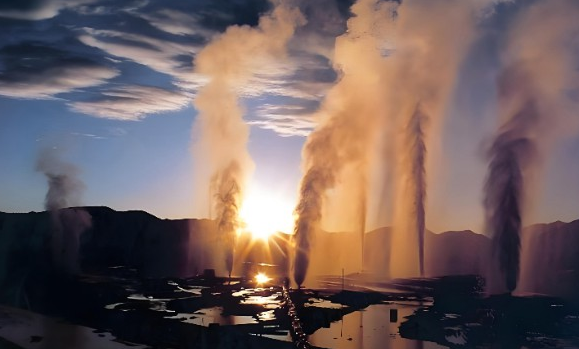
The essence of a blowout is the uncontrolled outflow of formation fluids (oil, gas, water) under the drive of pressure differentials, breaking through the wellbore barrier. When the drilling fluid column pressure is insufficient to balance the formation pressure, high-pressure fluid rushes to the surface at a flow rate of several tons per second, forming a ‘black fountain’ tens of meters high. In the 2003 accident at the Luojia 16H well in Kaixian County, Chongqing, hydrogen sulfide gas, carrying crude oil, erupted from the wellhead, resulting in 243 deaths and over 4,000 poisonings, becoming one of the most tragic lessons in the history of my country’s petroleum industry.
The evolution of a blowout follows a progressive path of ‘well invasion – overflow – well kick – blowout’:
- Well invasion stage: When formation pressure exceeds bottomhole pressure, fluid begins to seep into the wellbore. At this stage, drilling fluid density decreases and air bubbles increase, but the wellhead is not yet affected.
- Overflow stage: The amount of intruding fluid exceeds the drilling fluid circulation volume, and the amount returning from the wellhead is greater than the pumped-in volume. If the well is shut in promptly, the situation can still be controlled.
- Well kick stage: Fluid gushes out of the overflow preventer, forming a visible wellhead jet. The blowout preventer assembly must be activated immediately.
Blowout stage: Wellhead equipment malfunctions or operations are delayed, resulting in uncontrolled eruption of formation fluid. If the fluid contains toxic gases such as hydrogen sulfide, it will trigger secondary disasters.
Well Control: A Dual Defense Line of Technology and Management
Well control is a systematic engineering approach that uses technological means to maintain wellbore pressure balance. Its core lies in constructing a three-tiered defense system of ‘prevention-monitoring-control’:
Level 1 Well Control: Proactive Defense with Foresight
By accurately calculating the formation pressure gradient, a reasonable drilling fluid density window is designed. For example, in ultra-deep wells in the Tarim Oilfield, ‘near-balanced drilling’ technology is used to control the difference between drilling fluid pressure and formation pressure within the range of 1.5-3.5 MPa. Simultaneously, specialized equipment such as rotary blowout preventers and underbalanced drilling rigs are equipped to achieve ‘drilling while controlling.’ Changqing Oilfield has improved the accuracy of formation pressure prediction to 92% by establishing an integrated geological engineering platform, reducing well invasion risk from the source.
Level 2 Well Control: Emergency Response with Every Second Required
When a blowout occurs, the well must be shut in within 2 minutes. Modern drilling rigs are equipped with automated blowout preventer (BOP) systems, which can shut down the wellhead within 30 seconds via a remote control console. The ‘Intelligent Well Control Expert System’ developed by Sichuan Qingchuan Drilling Company can calculate parameters such as formation pressure and casing pressure in real time and automatically generate well control plans. In a well blowout accident on a platform in the Bohai Sea, this system reduced the well control time from 4 hours using traditional methods to 47 minutes, preventing the situation from escalating.
Three-Tier Well Control: The Ultimate Solution for a Last Stand
When a blowout becomes uncontrollable, a comprehensive ‘firefighting-rescue-sealing’ plan must be activated. In the 2010 Deepwater Horizon incident in the Gulf of Mexico, the rescue team successfully sealed the leak 87 days later by drilling two rescue wells. my country’s ‘bridge plug + cement slurry’ sealing technology can permanently seal the wellbore within 72 hours after a blowout. Simultaneously, specialized equipment such as drone monitoring and robotic firefighting are deployed to construct a three-dimensional emergency response system.
From Confrontation to Symbiosis: The Evolution of Well Control Technology
As oil and gas exploration expands into ultra-deep and ultra-high-pressure areas, well control technology is undergoing revolutionary changes:
- Intelligent Well Control Systems: The EISC system, integrating IoT and big data analytics, can monitor over 200 parameters in real time and provide early warnings of well control risks up to 48 hours in advance.
- Precision Pressure Control Drilling: By dynamically adjusting drilling fluid density, bottom hole pressure fluctuations are controlled within ±0.5 MPa, achieving ‘zero pressure differential’ drilling.
- Green Well Control Technology: Developing biodegradable drilling fluids and bio-based sealing materials to reduce the environmental impact of accidents. The environmentally friendly kill fluid used on CNOOC’s ‘Deep Sea No. 1’ platform has a biodegradability rate of 98%.
The struggle between blowouts and well control is essentially a contest of humanity’s conquest and awe of underground energy. From the ‘Three Olds and Four Stricts’ work style inherited from Daqing Oilfield to the technological empowerment of intelligent drilling platforms, China’s petroleum industry has reduced the blowout accident rate to below 0.02‰ in 60 years. But safety is a never-ending battle. As the development of ‘deep-sea, deep-layer, and unconventional’ oil and gas advances, this war to protect life and resources will continue.