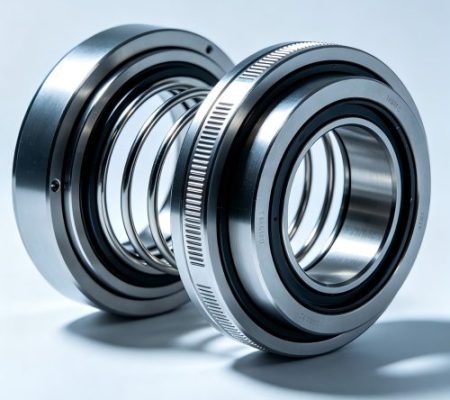
In pump equipment, traditional sealing methods usually refer to packing seals (gland packing), oil seals, or simple soft packing structures, whereas mechanical seals are high-precision dynamic sealing structures that rely on a micron-level liquid film formed between rotating and stationary seal faces. The core principle of traditional sealing is “contact sealing,” which prevents medium leakage through compression friction between the packing and the shaft, essentially relying on a certain degree of leakage or wear to maintain operation. Mechanical seals, on the other hand, belong to “non-leakage or ultra-low leakage sealing,” achieving almost complete isolation through the liquid film on the sealing faces.
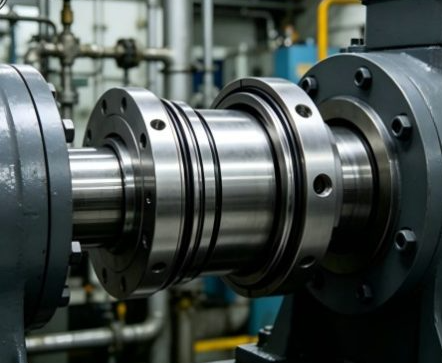
The two are not a simple substitution relationship, but exist at different technical levels:
Traditional sealing: simple structure, low cost, strong adaptability
Mechanical sealing: high precision, low leakage, high system requirements
Therefore, “whether it can still be replaced” is not an absolute question, but depends on the working conditions and application scenarios. In low-pressure, low-speed, non-critical medium transport conditions, traditional sealing can still be used; however, in modern chemical, petrochemical, pharmaceutical, and other high-demand industries, mechanical seals have become the mainstream or even standard configuration.
Selection process between traditional seals and mechanical seals
· Whether traditional sealing can be used
First, it is necessary to evaluate the properties of the medium, pressure, temperature, and rotational speed. If it is low-pressure clean water, low speed, and non-toxic or harmless media, traditional packing seals can still meet basic requirements. However, if the medium involves high temperature, high pressure, corrosiveness, or volatility, the applicability of traditional seals will significantly decrease, because they rely on “permissible leakage” for lubrication, which does not meet high-standard operating conditions.
· Whether technical upgrading is required
In modern industry, safety and environmental standards are becoming increasingly strict. If the medium poses environmental pollution or safety risks, traditional seals are generally not allowed even if they can operate. For example, chemical solvents, petroleum products, or toxic media must use mechanical seals to achieve low-leakage or even zero-leakage control.
· Long-term cost structure
Traditional seals require frequent gland adjustments and periodic replacement of packing, making them a “continuous maintenance” structure. Mechanical seals, under normal operating conditions, can run for long periods with lower maintenance frequency. Therefore, in long operating cycles or labor-cost-intensive scenarios, mechanical seals are often more economically advantageous.
· Comprehensive judgment
The final selection must be based on pump structure, shaft diameter, operational stability, and flushing conditions. If the system is simple and not sensitive to leakage, traditional sealing can be used; if the system is complex or requires high reliability, mechanical seals should be prioritized.
Replacement boundaries between traditional seals and mechanical seals
Whether traditional seals can replace mechanical seals depends mainly on three technical aspects: leakage control capability, friction mode, and system dependency.
· Leakage control capability
Traditional packing seals fundamentally operate by “allowing slight leakage in exchange for lubrication,” so they cannot achieve complete sealing and can only control leakage volume. Mechanical seals achieve isolation through a liquid film on the sealing faces, resulting in extremely low leakage. In applications requiring strict leakage control, traditional seals cannot replace mechanical seals, such as toxic media or high-value liquid transport scenarios. This is the most fundamental technical boundary between the two.
· Energy consumption and lifespan issues
Traditional sealing involves direct contact friction between the shaft and packing, which leads to shaft wear over long-term operation and generates significant friction heat, reducing efficiency. Mechanical seals, however, rely on liquid film lubrication on the sealing faces and operate mostly under fluid friction conditions, resulting in less wear and higher efficiency. Therefore, in high-speed or continuous operation equipment, mechanical seals have clear advantages, while traditional seals require frequent replacement due to wear.
· System dependency
Mechanical seals have higher system requirements, such as flushing systems, proper alignment, and stable operating conditions. Traditional seals, in contrast, have a simple structure and strong adaptability to operating environments, and can still function under fluctuating conditions. This is one reason why traditional seals still exist. However, this “high adaptability” comes at the cost of lower performance.
· Maintenance and lifecycle cost
Although traditional seals have lower initial cost, they require frequent tightening or replacement of packing, resulting in higher long-term maintenance costs. Mechanical seals have higher initial costs but stable operation and lower maintenance frequency. From a full lifecycle cost perspective, mechanical seals are often more economical in medium- and high-end applications.
Frequently Asked Questions
Q: Can traditional seals completely replace mechanical seals?
Yes, in low-pressure, low-speed, and non-critical conditions, but they cannot fully replace them in most mainstream industrial applications.
Q: Why are some factories still using packing seals?
Because they are low-cost, simple in structure, and easy to maintain, making them suitable for applications where leakage is not critical.
Q: Are mechanical seals always better?
Not absolutely. It depends on operating conditions. Improper selection can also lead to mechanical seal failure.
Traditional seals and mechanical seals are not simply a matter of “one replacing the other,” but represent two different technological approaches. Traditional seals achieve sealing through compression friction between packing and the shaft; they are simple and low-cost but involve some leakage and require frequent maintenance and adjustment. Mechanical seals, however, achieve sealing by forming an extremely thin liquid film between two very flat sealing faces during operation, resulting in very low leakage and more stable performance, but they require higher installation and operating conditions. Therefore, traditional seals have not been completely phased out and are still suitable for low-demand, low-cost applications. However, in modern industry—especially in chemical, petroleum, and pharmaceutical sectors—mechanical seals have become the mainstream choice because they are more stable, safer, and better aligned with environmental requirements.