In the grand narrative of energy extraction, drilling equipment acts like a giant steel arm, delving deep underground to explore for black gold. In this battle against formation pressure and complex geology, sealing technology, as an invisible line of defense ensuring drilling safety and efficiency, is writing its own technological legend with its precise design and innovative materials.
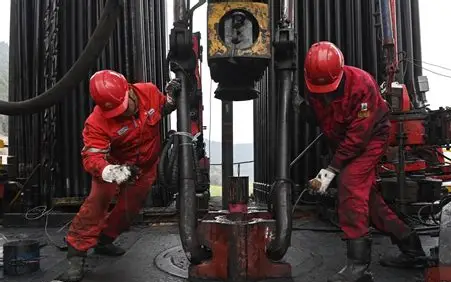
Sealing Technology: The Lifeline of Drilling Equipment
During drilling, equipment must withstand extreme conditions: high-pressure fluid impact, high-temperature environmental corrosion, and mechanical vibration wear. If the seal fails, it can lead to drilling fluid leakage, affecting operational efficiency, or even catastrophic accidents such as blowouts and well collapses, threatening personnel safety and the ecological environment. Taking coalbed methane exploration in the Ordos Basin as an example, its coalbed methane reservoirs are like “brittle sponges filled with gas,” where the gas easily escapes. The pressure-maintaining coring tool developed by the Daqing Drilling Team, through optimizing the self-locking ball valve sealing structure, successfully solved the problem of sealing high-pressure formations, setting an industry record of 95.77 meters of cumulative coring footage and a core recovery rate of 98.38% in a single well, providing crucial technical support for unconventional oil and gas exploration.
Diverse Application Scenarios of Sealing Technology
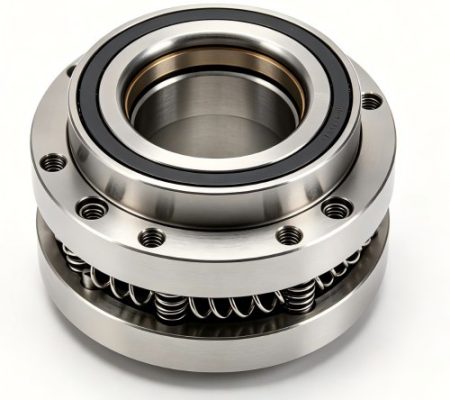
The sealing requirements of drilling equipment vary depending on the function of the components, forming two major technical systems: static sealing and dynamic sealing. Static sealing is mainly used in relatively stationary parts such as flange connections and pipe joints. For example, spiral wound gaskets achieve reliable sealing under high temperature and pressure through alternating winding of metal and non-metal components. Dynamic sealing, on the other hand, is applied to moving parts such as rotating shafts and reciprocating rods. For instance, mechanical seals achieve micro-leakage control in equipment such as pumps and compressors through the tight fit between elastic elements and sealing faces.
Under special operating conditions, composite sealing technology exhibits unique advantages. To address the annular pressure problem caused by repeated injection and production in gas storage wellbores, Great Wall Drilling Probe developed a combined process: “curable elastic sealing grease + laser welding-assisted sealing + tough anti-channeling cement slurry.” The curable sealing grease strengthens threaded seals, increasing the gas seal inspection pass rate from 99% to 100%. Laser welding technology addresses near-wellhead vibration conditions, achieving zero leakage under alternating pressure. The self-healing cement slurry system repairs micro-defects in the cement annulus through its micro-expansion properties, achieving a cementing quality rate exceeding 92%. This technological combination successfully solved an industry challenge, setting a benchmark for safe gas storage development.
Material Innovation: A Breakthrough in Sealing Performance
The performance of sealing materials directly determines the sealing effect. Traditional rubber seals, while possessing excellent elasticity, have limited high-temperature resistance; metal seals, despite their high strength, struggle to adapt to complex downhole deformations. The emergence of composite materials has broken this deadlock: nanocomposite materials, through molecular-level structural optimization, simultaneously improve sealing performance, wear resistance, and corrosion resistance; the composite design of graphite plates and metal skeletons ensures the stability of seals under high-temperature and high-pressure environments. Great Wall Drilling’s self-curing elastic sealing grease achieves long-lasting sealing across a wide temperature range of 40℃ to 100℃ through the synergistic effect of special tackifiers and anti-corrosion additives, becoming a “liquid armor” for gas storage wellbores.
Intelligent Monitoring: The Future Direction of Sealing Technology
With the development of IoT technology, intelligent sealing systems are beginning to emerge. By embedding sensors in the seals, parameters such as pressure, temperature, and wear are monitored in real time, allowing the system to provide early warnings of seal failure risks. For example, in screw pump oil production systems, combined sealing devices not only prevent oil leaks but also optimize maintenance cycles and reduce operating costs through data feedback. This “proactive defense” mode is driving the upgrade of sealing technology from passive repair to proactive maintenance.
From deep well coring to gas storage development, from material innovation to intelligent monitoring, drilling equipment sealing technology is constantly breaking through barriers, safeguarding every stage of energy extraction. It is not only a contest of technology but also a deep reflection on safety, efficiency, and environmental protection. On this invisible line of defense, every precise seal engagement injects strong momentum into the sustainable development of the energy industry.