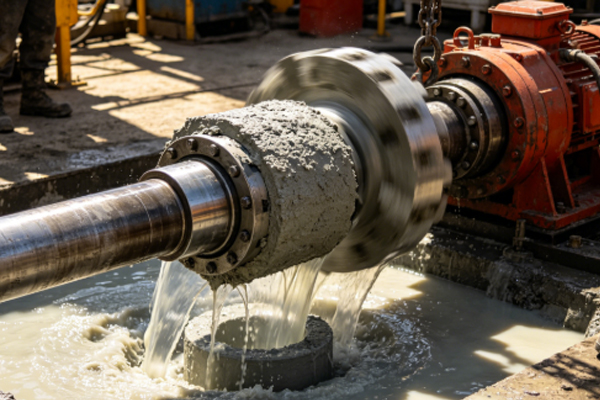
Cement plug drilling is a crucial step in oil well construction, primarily used to remove hardened cement plugs from the well, creating a pathway for subsequent drilling, completion, or work over operations. During drilling, it’s essential to maintain down hole stability while controlling drilling pressure, rotation speed, and circulation parameters to prevent stuck pipe, uneven wear, or well bore damage. A standardized procedure improves efficiency and helps ensure well bore safety.
Down hole Preparation Before Drilling
Before drilling cement plugs, the hoedown environment must be inspected, including well depth, casing condition, and cement plug location. Personnel typically use logging data and drilling records to confirm the cement plug thickness and hardening status, thus developing a suitable drilling plan.
The drill string assembly also needs to be pre-matched. Appropriate drill bits and stabilizers should be selected based on the cement plug hardness to avoid inefficiencies during drilling. Simultaneously, the circulation system and mud properties must be checked to ensure stable downhole proppant carrying capacity, providing favorable conditions for subsequent drilling.
Improving Efficiency Through Reasonable Control of Drill Pressure and Rotation Speed
Drill pressure and rotation speed are crucial parameters affecting efficiency during drilling.
- Excessive drill pressure increases drill bit wear.
- Excessive rotation speed easily leads to uneven wear.
- Unstable parameters may cause stuck drill bit.
- Reasonable discharge rate helps remove cuttings.
- Stable operation reduces equipment load.
During construction, parameters are usually adjusted in real time according to the sand return situation and torque changes to maintain a stable drilling process.
Stable Circulation System Helps Clean Cuttings
During drilling, cement plugs continuously generate cuttings. Insufficient circulation capacity can easily lead to accumulation at the bottom of the well, affecting drilling efficiency. Maintaining stable circulation can promptly remove cuttings from the wellhead, reducing downhole deposition.
Drill mud properties are also critical in this process; appropriate viscosity and carrying capacity can improve sand return. A stable circulation system not only helps keep the bottom of the well clean but also reduces the risk of drill string wear, making the entire drilling process smoother.
Real-time Monitoring of Downhole Conditions to Avoid Abnormalities
During drilling operations, continuous monitoring of downhole parameters is necessary, including pump pressure, torque, drilling speed, and sand return. Abnormal fluctuations in these parameters usually indicate increased resistance or debris accumulation in the well.
- Increased pump pressure may indicate blockage.
- Abnormal torque may indicate uneven wear.
- Decreased drilling speed indicates changes in drilling efficiency.
- Reduced sand return may indicate poor circulation.
- Increased vibration may affect wellbore stability.
Real-time monitoring and timely adjustment of construction parameters can effectively reduce the probability of downhole accidents.
Wellbore Treatment After Drilling Completion
After cement plug drilling is completed, the wellbore needs to be cleaned and inspected to confirm the absence of residual blockages. Debris is usually further removed through circulation flushing to ensure unobstructed wellbore flow.
If further drilling is required, the drill bit wear and drill string condition must be checked, and equipment replaced as necessary. For well sections that have met design requirements, pressure tests or caliper checks will be conducted to ensure smooth subsequent construction. Proper finishing touches can improve overall operational safety and reduce risks in subsequent construction.