In oil and gas field development, well control equipment is a core component ensuring the safety of drilling, completion, and workover operations. Its reliability directly impacts personnel safety, environmental safety, and the protection of oil and gas resources. However, the long-term effects of extreme operating conditions such as high pressure, high temperature, and corrosive media make it difficult to avoid problems such as aging of seals and metal fatigue in well control equipment. Therefore, a scientifically reasonable inspection cycle is crucial for preventing blowouts and extending equipment life.
Routine Inspection Cycle
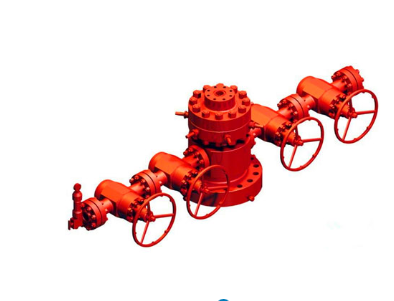
According to the Chinese petroleum and natural gas industry standard ‘Inspection and Maintenance of Blowout Preventers’ (SY/T 6160), the routine inspection cycle for well control equipment is one year. This cycle is based on the wear patterns of the equipment under normal operating conditions and is applicable to most oil and gas wells. For example, critical equipment such as blowout preventers, choke manifolds, and kill manifolds need to be sent to a professional well control workshop for comprehensive inspection annually. The inspection includes appearance quality, dimensional accuracy, non-destructive testing, and pressure integrity testing.
Special Operating Conditions
In special operating conditions such as high-pressure oil and gas reservoirs (pressure coefficient ≥ 1.8) or hydrogen sulfide-containing environments (H₂S content ≥ 20 ppm), the inspection cycle for well control equipment needs to be shortened to 8 months. This is because high-pressure environments accelerate metal fatigue, and the corrosiveness of hydrogen sulfide causes a sharp decline in material properties. For example, in a sulfur-containing well operation on an offshore platform, the failure to shorten the inspection cycle led to hydrogen sulfide stress corrosion cracking of the blowout preventer seal after 9 months, causing a well control hazard. Furthermore, the API standard ‘Drilling Well Control Equipment Systems’ (RP 53) explicitly requires that under extreme operating conditions, equipment must undergo more stringent pressure tests (e.g., the hydrostatic strength test pressure must reach 1.5 times the rated operating pressure) to ensure safety redundancy.
Equipment Types
The inspection cycle for different well control equipment varies depending on their function: High-pressure critical equipment, such as blowout preventers and perforation gate valves, which directly bear wellhead pressure and have strict sealing requirements, need to be inspected every six months. For example, after a semi-annual inspection of blowout preventers (BOPs) in an oilfield, 32% of the worn gate valves were discovered and replaced, avoiding a potential blowout risk.
Auxiliary control systems: such as remote control consoles, choke and kill manifolds, and internal BOPs, are subject to annual inspections due to their relatively stable operating pressures. However, it is important to note that if the equipment is frequently opened and closed or subjected to impact loads during operation, it needs to be inspected in advance. For example, a well workover team failed to promptly inspect the valve sealing of the choke manifold, resulting in a leak during kill operations and delaying the well shut-in time by 2 hours.
Management Standards
Under special circumstances, well control devices may apply for an extension of their service life, but strict conditions must be met: Extension Limit: According to SY/T 6160, after comprehensive inspection and strict approval, the maximum extension of equipment service life shall not exceed 3 years. For example, in a deep well operation, because the equipment condition was confirmed to be stable by professional assessment and no alternative equipment was available, the BOP was approved for a 2-year extension of service life, during which real-time monitoring was strengthened.
Dynamic Adjustment: If the equipment experiences leakage, abnormal pressure, or other problems during operation, it must be immediately stopped and repaired in advance. For example, a drilling team discovered a leak in the hydraulic control line of the blowout preventer during drilling. They immediately activated the emergency procedure, replaced the line, and resumed operations, preventing the accident from escalating.
The inspection cycle for well control equipment is not fixed but needs to be dynamically adjusted according to operating conditions, equipment type, and management regulations. From annual routine inspections to a short 8-month cycle for high-pressure wells, from semi-annual inspections of critical equipment to a 3-year extension limit, each regulation reflects the industry’s profound understanding of safety.