Mechanical seals are crucial components in industrial equipment, preventing liquid or gas leaks, much like weatherstripping on a door protects against wind and rain. While the name sounds technical, its function is actually very practical—protecting equipment operation, preventing resource waste and environmental pollution. Choosing the right mechanical seal can improve machine safety, durability, and reduce maintenance costs.
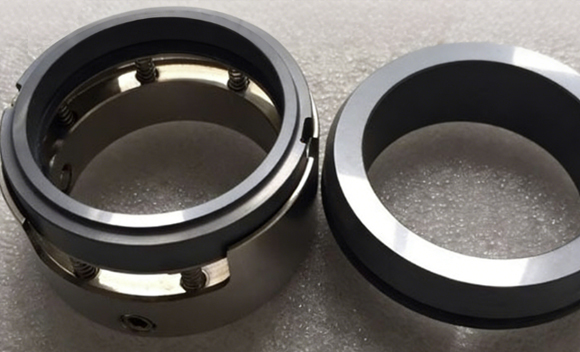
Selecting a mechanical seal requires understanding its “operating environment.” For example, is the equipment installed outdoors or indoors? Are there corrosive gases or high-temperature environments nearby? If the equipment frequently comes into contact with acidic or alkaline liquids, the sealing material must be corrosion-resistant; if temperatures frequently reach hundreds of degrees Celsius, high-temperature resistant materials must be chosen. Different machines operate at different speeds and pressures, thus requiring different seals. High-speed equipment needs tighter seals to prevent loosening; high-pressure equipment needs more pressure-resistant seals to prevent bursting. This is like choosing shoes for people of different sizes: people with large feet wear larger shoes, and people with small feet wear smaller shoes—the right size is crucial for comfort.
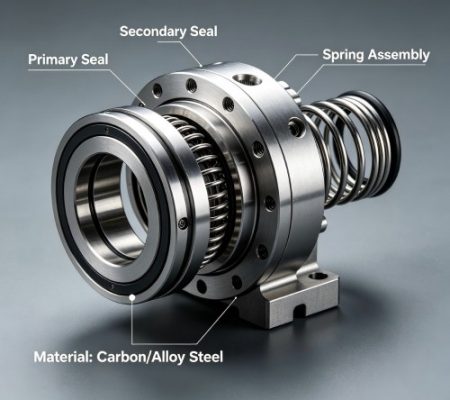
Some seals are like a “sandwich,” with a spring sandwiched between two layers of material, allowing for automatic adjustment of tightness; others are like a “bellows,” relying on elastic deformation to conform to the equipment. The choice of structure depends on the specific needs of the equipment. For example, spring-loaded seals are better suited for applications requiring frequent adjustments; bellows-type seals may be more suitable if space is limited. This is like choosing furniture: a folding table is suitable for a small apartment, while a large dining table is suitable for large gatherings. There is no absolute good or bad, only suitability. Installation and maintenance are also crucial. Even the best seals are useless if improperly installed. During installation, ensure the sealing surfaces are clean and aligned, fitting perfectly like a jigsaw puzzle. Regular maintenance is also essential, periodically checking for wear and aging, and replacing damaged parts promptly.
Expensive seals are not necessarily the best, and inexpensive ones are not necessarily bad. The key is whether they meet your needs. Some high-performance seals are expensive but have a longer lifespan, making them more cost-effective in the long run; some basic models are cheaper but still meet basic needs and are also good choices. It’s like buying groceries: organic vegetables are healthy but expensive, while regular vegetables are affordable and sufficient. Choose according to your budget and needs. Selecting a mechanical seal isn’t complicated. Just like choosing anything else in life, first consider the environment, then your own needs, and finally practicality and cost. Careful selection and comparison will help you find the most suitable one. After all, what’s suitable is best, isn’t it?