In pumps, mixing equipment, and various types of rotating machinery, the reliability of the sealing system directly determines operational safety and maintenance costs. When a single mechanical seal can no longer meet operating requirements, upgrading to a double mechanical seal often becomes a key option. However, this upgrade is not a case of “the more complex, the better,” but must be evaluated based on operating conditions, medium properties, and safety requirements.
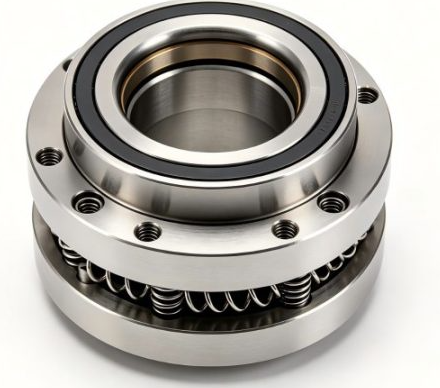
Fundamental differences between single and double mechanical seals
Before determining whether an upgrade is needed, it is essential to understand the fundamental differences between the two sealing structures.
Basic principle of single mechanical seal
A single mechanical seal consists of a pair of rotating and stationary rings. It achieves sealing by forming an extremely thin liquid film between the end faces. It has a simple structure, low cost, and easy maintenance, making it the most common industrial sealing form. However, it relies on lubrication provided by the sealed medium itself. Once the medium becomes unstable, issues such as dry running, leakage, or even burn-out may occur. In low-pressure, clean media, or non-hazardous applications, single seals are often sufficient, such as clean water circulation pumps or standard cooling systems.
Basic principle of double mechanical seal
A double mechanical seal consists of two sets of sealing faces, with an isolation chamber between them (typically filled with barrier or buffer fluid). This structure creates a “dual safety barrier,” meaning that even if the inner seal fails, the outer seal can still prevent medium leakage.
Its core advantages are: medium isolation + near-zero or zero leakage capability.
Typical applications include toxic media, flammable and explosive fluids, high-temperature and high-pressure conditions, and systems with strict environmental emission requirements.
Steps for determining whether an upgrade is required
Operating condition data collection stage
This stage involves a comprehensive review of operating conditions, including medium properties, pressure, temperature, rotational speed, and operational stability. It is important to assess whether the medium contains particles, is volatile, toxic, or corrosive. The following conditions should be marked as high priority: high hazard level media, large system pressure fluctuations, or frequent dry-run risks.
Failure mode analysis stage
Analyze the current failure modes of the single mechanical seal, such as excessive wear, frequent leakage, or structural damage caused by mismatched operating conditions. If failures are systematic rather than occasional, it indicates that the single seal is no longer suitable. For example: frequent carbonization due to dry friction, spring failure, or seal face cracking.
Risk level assessment stage
Classify leakage consequences according to severity:
·Whether it affects personnel safety
·Whether it causes environmental pollution
·Whether it leads to production downtime
·Whether it involves legal or regulatory compliance risks
If any of these risks are high, a double mechanical seal should be considered.
Feasibility analysis stage
Not all equipment can be directly upgraded to a double seal. It is necessary to evaluate whether there is sufficient space, whether a flushing/barrier fluid system can be implemented, and whether modification costs are acceptable. If space is limited but risk is high, a customized structure or seal chamber redesign may be required.
Key evaluation indicators
This section represents the core criteria for determining whether an upgrade is necessary.
Medium characteristics as the primary factor:
When the medium has the following properties, the risk of single seal failure increases significantly:
·Volatile (e.g., light hydrocarbons, organic solvents)
·Strongly corrosive (acids, alkalis, etc.)
·Toxic or hazardous gases
·Contains fine particles or is prone to crystallization
Leakage of such media may not only damage equipment but also cause serious safety incidents. Therefore, double mechanical seals are often the preferred solution.
Impact of pressure and temperature fluctuations:
Under high pressure or severe temperature fluctuations, the liquid film of a single seal can break, leading to instantaneous leakage. This is especially critical in frequent start-stop conditions, where thermal stress may cause cracking or uneven wear. Double seals stabilize the environment through barrier fluid, significantly reducing thermal shock and pressure fluctuation effects.
Dry-running risk assessment:
Dry running is one of the primary causes of mechanical seal failure. If the pump experiences cavitation, suction loss, or unstable liquid levels, a single seal can burn out quickly. A double seal provides a stable lubrication environment through an external fluid system, effectively preventing dry friction.
Environmental and zero-leakage requirements:
In industries with strict environmental regulations such as chemical, pharmaceutical, and food processing, where leakage is tightly controlled or even prohibited, single seals are often insufficient. Double seals achieve controlled leakage or near-zero leakage through the isolation chamber, making them compliant with environmental standards.
Long-term maintenance cost comparison:
Although double mechanical seals have higher initial costs, they may be more economical over the full lifecycle. Frequent replacement of single seals can lead to downtime losses and higher maintenance labor costs. In high-duty applications, double seals are often more cost-effective.
Frequently asked questions
Q1: Is a double mechanical seal always better than a single seal?
Not necessarily. It is more suitable for high-risk or high-demand applications. For clean water or low-pressure systems, single seals remain more economical and practical.
Q2: Is a flushing system required after upgrading?
In most cases, yes. A barrier or flushing fluid system is required; otherwise, the double seal cannot operate properly.
Q3: Is the retrofit cost high?
It depends on the equipment structure. If the seal chamber is standardized, costs are relatively low. If redesign of the seal chamber or auxiliary systems is required, costs will increase significantly.
Q4: Does maintenance become more complicated after upgrading?
The system is structurally more complex, but maintenance frequency is usually lower, resulting in reduced overall maintenance burden.
Therefore, the decision to upgrade to a double mechanical seal is not about “whether you want to change it,” but rather “whether you must change it.” If the equipment only handles safe media such as clean water or lubricating oil, operates stably, and has low pressure, a single mechanical seal is fully sufficient and more cost-effective. However, if the medium is hazardous—flammable, explosive, toxic, or highly corrosive—or if the equipment frequently experiences dry running, leakage, or seal failure, then a single seal is already approaching its operational limit. In such cases, upgrading to a double mechanical seal is not an optimization but a necessary safety measure. The double-seal structure, with its “inner and outer barriers + barrier fluid protection,” acts like an additional layer of insurance for the sealing system. Even if one layer fails, the other can still provide protection, significantly reducing leakage risk and accident probability.