In oil drilling and completion operations, the perforating gun, as a core tool for penetrating casing, cement sheaths, and formation rock, is crucial for operational efficiency and personnel safety. Whether it’s tubing-delivered perforation (TCP) or cable-delivered perforation, precise use and risk control of the perforating gun are essential throughout the entire operation. This article systematically explains the key points of safe use of perforating guns from four dimensions: pre-operation preparation, operational procedures, equipment maintenance, and emergency handling, helping oilfield professionals master core skills and reduce operational risks.

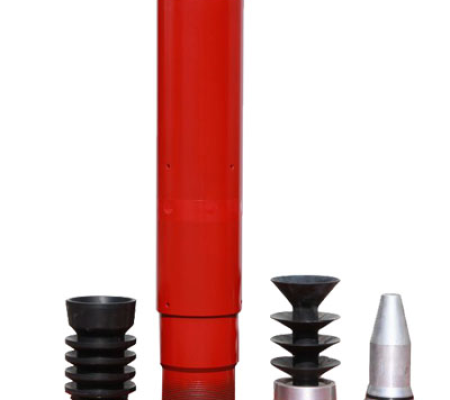
A thorough pre-operation inspection is the first line of defense for safety. The perforating gun body, nozzle, nozzle tail, and seals must be checked one by one, focusing on whether there are cracks, wear, or deformation. For example, if there are minor cracks in the gun body, it may break under high-pressure jets, leading to a jamming accident; aging seals can cause well fluid leakage, polluting the environment and even posing well control risks. Furthermore, the appropriate perforating gun model must be selected based on the downhole casing size. For example, the 89DP25R16-70 gun is suitable for casings with an outer diameter of 89 mm. If the model is incompatible, excessive clearance between the gun and casing may cause misalignment, while insufficient clearance may lead to jamming. The inspection of the detonation device and shaped charge perforating ammunition is equally crucial. It must be confirmed that the ammunition type, quantity, and perforation pattern meet design requirements—73 mm guns typically have a perforation density of 19 holes/meter, and the phase angle needs to be adjusted according to the horizontal well’s directional requirements to ensure uniform jet coverage of the target layer. The safety of the working environment is also paramount. Flammable materials must be removed from the wellhead area, the ventilation system must be kept unobstructed, and fire-fighting equipment such as fire extinguishers and sandboxes must be placed in prominent locations and their effectiveness checked regularly.
Standardized operation during the operation is the core of risk control. Depth calibration and positioning are prerequisites for accurate perforation. The casing coupling position is measured using radioactive or magnetic positioning techniques, and the perforating gun’s insertion position is determined in conjunction with the design depth. For example, in tubing-delivered perforation, the perforator needs to be connected in series at the end of the tubing string. After being lowered into the well, the depth is calibrated by measuring the radiometric curve, and the error must be controlled within ±0.2 meters to avoid ineffective perforation or accidental penetration of water layers due to positioning deviation. The choice of detonation method must be combined with the well conditions. For negative pressure perforation, the fluid column pressure in the well section must be reduced before detonation, so that the formation pressure is higher than the fluid column pressure, forming “pressure backflow” to protect the perforated oil and gas layer from well fluid contamination. For highly deviated or horizontal wells, tubing-delivered perforation is required, with a rigid connection tubing string to ensure stable lowering of the perforator and avoid cable breakage due to friction against the well wall. Personnel protection is just as important as positioning. Operators must wear anti-static work clothes, safety helmets, and goggles. It is strictly forbidden to stand directly in front of the perforating gun or in the danger zone around the wellhead—the high-pressure jet velocity generated by perforation can reach thousands of meters per second, and the splashing rock fragments or metal debris may cause serious injury. During detonation, all personnel should evacuate to a safe distance (usually more than 50 meters) and observe the operation through a remote monitoring system.
Regular equipment maintenance is fundamental to extending service life and ensuring safe operation. After each operation, the nozzle must be cleaned of any residue, especially metal powder and rock debris left after the shaped charge perforating projectiles explode, as these substances can corrode the nozzle or clog the jet channels. Seals must be replaced regularly, especially easily aging components such as O-rings; special grease should be applied before replacement to ensure a tight seal. Rust-preventive oil should be applied to the threaded connections between the nozzle head and tail to prevent corrosion that could lead to seal failure or difficulty in disassembly. Furthermore, equipment records should be maintained, documenting parameters for each operation (entry depth, perforation layer, detonation method), maintenance time, and replaced parts. This provides a reference for subsequent operations—for example, if a particular nozzle model frequently experiences jamming under specific well conditions, data analysis can be used to optimize the perforation density or adjust the perforating projectile type.
Emergency response capabilities are crucial for minimizing accident losses. In the event of a nozzle jamming incident, operations should be stopped immediately. The cause of the jamming (e.g., casing deformation, nozzle bending) should be analyzed. Attempts to release the jamming should be made by lifting, lowering, or rotating the tubing string. Forcible pulling is strictly prohibited as it may break the equipment. If the casing is severely deformed, the nozzle must be removed and a shaping tool lowered to repair the casing. If the perforating gun fails to detonate, a specified time (e.g., 15 minutes) must be waited before a qualified professional wearing explosion-proof clothing enters the well site for inspection. Unexploded ordnance must not be handled without authorization—it may detonate unexpectedly due to vibration or temperature changes, causing injury or death. Furthermore, emergency communication equipment must be provided at the work site to ensure timely contact with rescue forces in case of an emergency.
Safe operation and use of the perforating gun must be implemented throughout the entire operation process, from meticulous pre-operation checks to standardized operation during operation, from regular equipment maintenance to improving emergency response capabilities. Each step must be strictly controlled. Only by integrating safety awareness into daily operations can operational risks be minimized, personnel safety and operational efficiency ensured, and a solid foundation laid for the smooth progress of oil drilling and completion operations.