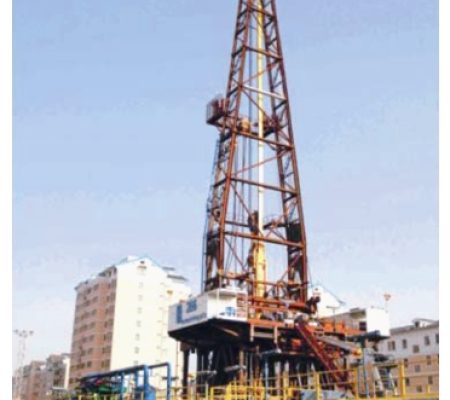
In oil drilling operations, drilling fluid is hailed as the ‘blood’ of the drilling project. It not only undertakes crucial tasks such as carrying cuttings, cooling the drill bit, and balancing formation pressure, but also has a profound impact on drilling safety, efficiency, and cost. However, during the recycling process, drilling fluid inevitably becomes contaminated by solid substances such as cuttings and sand particles, leading to a decline in its performance and increased loss. This not only increases drilling costs but may also cause complex downhole conditions, affecting drilling progress. Therefore, how to effectively reduce drilling fluid loss has become a critical issue that urgently needs to be addressed in drilling engineering, and efficient solids control is the core of solving this problem.
Optimized Configuration of Efficient Solids Control Equipment
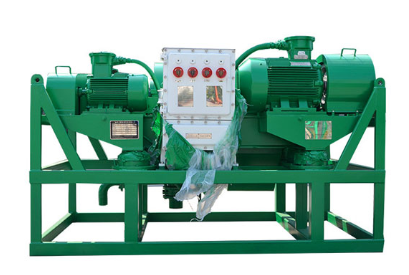
Solids control equipment is a key tool for removing solid particles from drilling fluid. The rational configuration and optimization of this equipment is the foundation of efficient solids control. As the first line of defense in the solids control system, the performance of the vibrating screen directly affects the workload of subsequent equipment and the treatment effect of the drilling fluid. High-performance vibrating screens, such as those with suitable amplitude, frequency, and screen mesh size, can efficiently separate large rock cuttings, reducing the solid content entering subsequent equipment. Simultaneously, based on drilling conditions and drilling fluid properties, desanders, desilters, and centrifuges can be rationally combined to form a multi-stage solids control system. For example, in deep and ultra-deep well drilling, due to complex formations and a wide distribution of rock cuttings size, using a multi-stage series solids control equipment combination can more thoroughly remove solid particles of different sizes, improving drilling fluid cleanliness and reducing losses.
Precise Control of Solids Control Equipment Parameters
The operating parameters of solids control equipment directly affect its processing effect and drilling fluid losses. The amplitude and frequency of the vibrating screen should be adjusted according to the viscosity, density, and rock cuttings size of the drilling fluid. Excessive amplitude and frequency, while improving screening efficiency, accelerate screen wear, increase equipment failure rate, and may cause some useful drilling fluid to be thrown out, resulting in waste. Conversely, excessively low parameters fail to effectively separate solid particles, allowing a large amount of cuttings to enter subsequent equipment, increasing processing difficulty and drilling fluid loss. The throughput and separation factor of desanders, desilters, and centrifuges also require precise control. By real-time monitoring of drilling fluid flow rate, solids content, and other parameters, combined with drilling conditions, the parameters of solids control equipment are dynamically adjusted to ensure optimal operation, effectively removing solid particles while minimizing drilling fluid loss.
Strengthening Solids Control Equipment Maintenance and Management
The normal operation of solids control equipment is crucial for efficient solids control; therefore, strengthening equipment maintenance and management is essential. A comprehensive equipment maintenance system should be established, and key components such as the screens of vibrating screens, desanders, hydrocyclones of desilters, and centrifuge drums should be regularly inspected, cleaned, and replaced. For example, clogging or damage to the vibrating screen can lead to decreased screening efficiency, allowing a large amount of solid particles to enter the drilling fluid circulation system and increasing drilling fluid loss. Timely cleaning of the screen blockage and replacement of damaged screens can restore normal equipment operation. Simultaneously, regular maintenance of the equipment’s lubrication and electrical systems is crucial to ensure proper lubrication of all components and normal electrical connections, reducing equipment failures and avoiding prolonged drilling fluid circulation due to equipment downtime for maintenance, thus minimizing losses.
Optimizing Drilling Fluid Performance Management
The performance of drilling fluid has a significant impact on solids control effectiveness and losses. A reasonable drilling fluid formulation design is key. Based on formation characteristics and drilling process requirements, appropriate drilling fluid types and additives should be selected, and performance parameters such as viscosity, density, and filtration loss should be adjusted to ensure good cuttings carrying capacity and suspension stability. For example, when drilling in easily collapsible formations, appropriately increasing the drilling fluid viscosity and shear strength enhances its cuttings carrying capacity, reduces cuttings accumulation on the wellbore, lowers the processing load on solids control equipment, and thus reduces drilling fluid loss. Simultaneously, strengthen the daily maintenance and management of drilling fluids, regularly test their performance parameters, and adjust the drilling fluid formula and treatment measures promptly based on the test results to maintain stable drilling fluid performance, improve solids control, and reduce losses.
Improve the skill level of operators
The skill level of operators directly affects the operational effectiveness of solids control equipment and the quality of drilling fluid management. Strengthen operator training to improve their understanding of the principles, operating methods, and maintenance knowledge of solids control equipment, enabling them to operate the equipment proficiently, accurately judge its operating status, and promptly identify and handle equipment malfunctions. At the same time, train operators to master drilling fluid performance testing and adjustment methods, enabling them to take appropriate measures in a timely manner based on changes in drilling fluid performance to optimize solids control. For example, operators can rationally adjust the parameters of the vibrating screen based on the screening conditions and the solid content of the drilling fluid to improve screening efficiency and reduce drilling fluid loss.
Reducing drilling fluid loss is a crucial aspect of reducing costs, improving efficiency, and ensuring safety in drilling engineering, and efficient solids control is key to achieving this goal. By optimizing the configuration of solids control equipment, precisely controlling equipment parameters, strengthening equipment maintenance and management, optimizing drilling fluid performance management, and improving the skills of operators, the solids control effect can be effectively improved, the content of solid particles in the drilling fluid can be reduced, and the loss of drilling fluid can be reduced, thus providing a strong guarantee for the smooth progress of drilling projects.