In industrial equipment, mechanical seals are the core component preventing media leakage, and double mechanical seals are the ‘safety net’ for many demanding operating conditions. Many companies tend to focus on pumps, containers, pressure, and materials when selecting seals, neglecting the critical importance of this small structure. Once the seal fails, it’s not just a simple matter of media leakage; it can lead to downtime, pollution, corrosion, personnel safety risks, and even trigger regulatory and environmental issues. Therefore, understanding when to choose a double mechanical seal is not only a professional judgment for engineers but also an essential skill for companies to ensure stable operation, reduce accident rates, and lower maintenance costs.
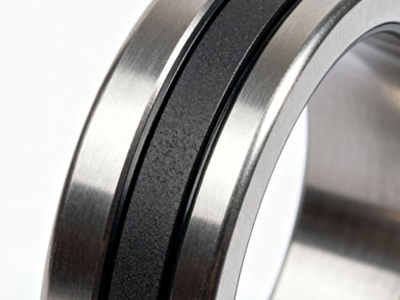
Modern industry places increasingly higher demands on seals, requiring not only ‘whether it can seal,’ but also ‘a stable seal, a long-lasting seal, and a safe seal,’ while simultaneously meeting environmental regulations, media compatibility, and production efficiency. Single-end seals are sufficient for many ordinary operating conditions, but when the media is toxic, flammable, highly volatile, under high pressure, or highly corrosive, single-end seals can no longer provide an adequate safety margin. Double-end seals add an extra barrier, creating a stable pressure difference through an external barrier fluid, ensuring reliable operation even in harsh environments.
Toxic or Hazardous Media
Double-end seals are essentially mandatory when the transported medium poses a significant hazard to personnel, the environment, or equipment.
These include: toxic gases, volatile organic compounds (VOCs), carcinogenic or highly corrosive liquids, etc.
Double-end seals create a pressure difference between the inner and outer seals using the barrier fluid, preventing media leakage. Even if the inner end face wears, it will not directly leak into the atmosphere, giving the entire system a higher safety standard.
Flammable and Explosive Media
In petrochemical, refining, solvent, and oil transportation equipment, double-end seals are a standard industry configuration if the medium is flammable, explosive, or has a high vapor pressure. The reason is simple: in the event of a leak, the vapor coming into contact with air could immediately pose a fire or explosion risk.
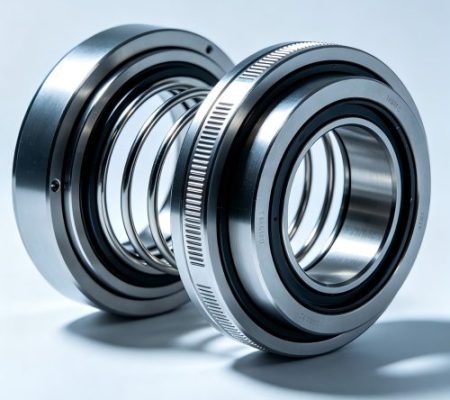
Double-end seals, with two overlapping seals (inner and outer), combined with API specifications (such as Plan 53), ensure the sealed cavity is always under controlled conditions, preventing sudden leakage even with pressure fluctuations.
Dirty, Solid-Containing, High-Viscosity Media
Single-end seals are extremely sensitive to particles, crystals, and gels, easily leading to scratches, sintering, or vibration of the friction pair.
If the medium itself is not a ‘clean liquid,’ such as:
Slurry, liquids containing crystals, dusty slurries
High-viscosity oils, resins
Polymers, semi-solid media
Then double-end seals can use a barrier fluid to keep the inner end face in a ‘clean liquid’ environment, thus avoiding particle wear.
Vacuum or Easily Vaporizable Scenarios
In systems such as vacuum pumps, vacuum vessels, and low-pressure distillation columns, the medium is more prone to vaporization. Single-end seals can experience dry friction due to abnormal pressure differences. Double-end seals maintain a stable sealing cavity through an externally pressurized barrier fluid, preventing sealing surface failure due to vaporization or cavitation. This is crucial in fine chemical, reaction vessel, and distillation equipment.
High Temperature, High Pressure, and Intense Operating Conditions
When equipment operates at temperatures exceeding 150–180℃ and pressures exceeding 1.6MPa or even higher, single-end seals often cannot withstand prolonged thermal stress or fluid pressure. Double-end seals allow the sealing surface to operate in a relatively mild, controlled barrier fluid, reducing end-face thermal deformation and improving stability. This is especially necessary in scenarios with frequent pressure and temperature fluctuations.
Stringent Environmental and Regulatory Requirements
Some countries and industries explicitly require: ‘Double-end seals must be used whenever the medium is a hazardous chemical, high-VOC, greenhouse gas, or water pollution source.’ Common industries include:
Petrochemicals
Pharmaceuticals
Fine Chemicals
Food and Life Sciences (requiring zero pollution)
In these industries, double-end seals are not only a technical decision but also a fundamental requirement for compliance with regulations.
Double-end seals are not a ‘high-end’ feature, but a critical safety baseline.
In many operating conditions, double-end mechanical seals are not about pursuing high-end features, but about ensuring equipment operates without accidents, production continues uninterrupted, personnel are unharmed, and the environment is not polluted. They provide not just an extra layer of sealing, but an extra layer of safety assurance. When the medium is hazardous, the operating conditions are complex, and control requirements are stringent, it is an essential option for stable system operation.
Over the past decade, more and more industries have shifted from a ‘good enough’ mentality to a focus on ‘safety, stability, and long-term controllability.’ While traditional single-end seals are simple in structure and low in cost, they can no longer meet regulatory and corporate safety standards in many high-risk scenarios. Double-end seals enable equipment to have a longer lifespan, lower leakage rates, and higher reliability, helping companies avoid downtime losses and hidden risks, and manage critical equipment in a more scientific way.
Ultimately, the choice of double-end seals was not about pursuing excessive configuration, but rather a clear judgment: ‘In these scenarios, it is not an option, but the only solution that can ensure safety and compliance.’ When we look at sealing from a systems perspective, we understand that the one-millimeter-thick sealing surface actually bears the safety bottom line of the entire industrial system.