In the fields of oil drilling, geological exploration, and engineering construction, drilling rig wire ropes are key components that bear heavy loads and transmit power; their performance directly affects operational efficiency and personnel safety. However, due to complex working conditions, frequent friction, and environmental corrosion, wire ropes are prone to wear, corrosion, and wire breakage. Improper maintenance can not only shorten their service life but also lead to rope breakage accidents with serious consequences. This article systematically elaborates on the key points of drilling rig wire rope maintenance from four dimensions: daily inspection, cleaning and maintenance, lubrication maintenance, and storage management, helping practitioners to scientifically maintain equipment and ensure safe and efficient operations.
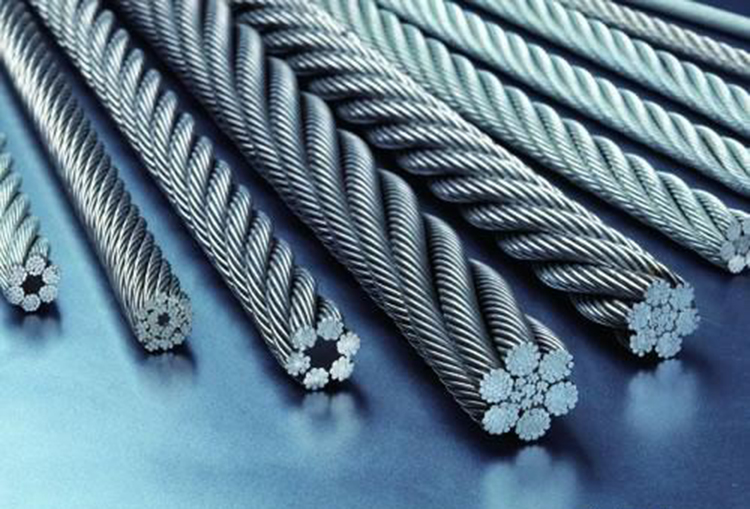
Daily Inspection: Preventing Problems Before They Arise, Eliminating Hidden Dangers in Time
Daily inspection is the foundation of wire rope maintenance and must adhere to the principles of “comprehensiveness, meticulousness, and timeliness.” Before daily operations, operators should inspect the entire length of the wire rope, focusing on the following areas: 1) the curved sections in contact with pulleys and drums, where repeated bending can easily lead to fatigue-induced wire breakage; 2) the fixed sections passing through balance pulleys and fixed ends, where stress concentration can easily cause localized damage; and 3) exposed sections, which are susceptible to corrosion due to environmental erosion. During inspection, a magnifying glass or specialized testing tools should be used to observe the wire surface for cracks, rust, and broken wires. If more than 10% of a single strand is broken or the overall rope diameter is reduced by more than 7%, the rope should be replaced immediately. Simultaneously, it is necessary to confirm that the wire rope is securely connected to the equipment and that the end fixing devices (such as wedge joints and pressure plates) are not loose to prevent falls caused by connection failures.
Cleaning and Maintenance: Removing Dirt and Reducing Wear and Corrosion
Drilling rigs operate in complex environments, and wire ropes often become contaminated with mud, sand, grease, and other dirt. Failure to clean them promptly will accelerate wear and corrosion. Cleaning and maintenance should be carried out using appropriate methods depending on the type of dirt: For solid dirt such as mud and sand, a soft brush or compressed air can be used to blow it away, avoiding the use of hard tools to scrape and damage the steel wire surface; for liquid dirt such as grease and lubricating oil, it is necessary to soak it in a special cleaning agent (such as diesel or kerosene) and then wipe it dry with a dry cloth. When cleaning, it is important to note that acidic or alkaline cleaning agents should not be used, as they may corrode the steel wire; at the same time, avoid cleaning in high-temperature environments to prevent the cleaning agent from evaporating and leaving residues that could cause the steel wire to become brittle. After cleaning, a comprehensive inspection of the steel wire rope is necessary to ensure that there is no residual dirt before putting it back into use.
Lubrication Maintenance: Reducing Friction and Delaying Fatigue Damage
Lubrication is the core aspect of steel wire rope maintenance. Its function is to reduce friction between the steel wire and pulleys and drums, reduce the wear rate, and at the same time form a protective film to isolate air and moisture, delaying the corrosion process. Lubrication maintenance should follow the principles of “regular, appropriate, and uniform”: the lubrication cycle should be determined based on the intensity of operation and environmental conditions, generally at least once every 50-100 hours of operation or once a month; the amount of lubricant should be moderate, too much will cause grease to accumulate and attract dust, while too little will not provide effective protection; lubrication can be done manually or with an automatic lubrication device, ensuring that the grease penetrates into the wire rope, especially the gaps between strands and wires. The selection of lubricating grease is equally crucial; special greases (such as lithium-based grease or calcium-based grease) should be selected according to the operating temperature and load type. Avoid using ordinary machine oil or waste oil, as substandard performance will accelerate wire rope damage.
Storage Management: Scientific Storage to Avoid Environmental Damage
During drilling rig downtime, the storage management of the wire rope directly affects its service life. The storage environment must meet the conditions of “dryness, ventilation, and protection from light”: the warehouse temperature should be controlled between 5-30℃, and the relative humidity should not exceed 60%, to avoid high temperatures causing grease loss or low temperatures causing the wire to become brittle; it should also be kept away from corrosive gases (such as acid mist, alkaline mist) and chemicals to prevent corrosion of the wire surface. When storing, the wire rope should be coiled on a special rack or wooden tray, with a coiling diameter not less than 20 times the diameter of the wire rope to avoid internal stress concentration due to an excessively small bending radius; the coiling direction should be consistent with the wire rope’s lay direction to prevent loosening or kinking. Wire ropes stored for long periods should be inspected regularly, rotated 1/4 turn every 3 months, and re-lubricated to prevent localized deformation or corrosion due to prolonged inactivity.
Maintenance of drilling rig wire ropes is a systematic project, requiring attention to four key aspects: daily inspection, cleaning and maintenance, lubrication maintenance, and storage management. Scientific maintenance extends service life, reduces replacement costs, and ensures operational safety. Practitioners need to establish the concept of “prevention first, maintenance first”, integrate maintenance work into daily operation procedures, and form a standardized and regulated management mechanism to provide a solid guarantee for the efficient operation of drilling rigs.