Mechanical seals play a crucial role in controlling leakage and ensuring safe and stable operation in rotating equipment such as pumps, compressors, and agitators. However, in actual operation, many companies find that even with seemingly ‘suitable specifications and high-end materials’ mechanical seals, problems such as leakage, excessive temperature rise, and insufficient lifespan still recur. This often leads to the misconception that the problem lies with the seal itself, neglecting the fact that mechanical seals are inherently highly dependent on system conditions. In fact, the effectiveness of a mechanical seal is not simply determined by the ‘quality of the seal,’ but rather by the combined effects of equipment condition, seal selection, installation quality, operating methods, and auxiliary systems. Investing in only one aspect while ignoring other key conditions will often result in limited improvement in sealing performance. Conversely, optimizing seemingly basic but easily overlooked aspects can quickly improve the seal’s operating condition and achieve immediate results.
Inspecting the Equipment Foundation
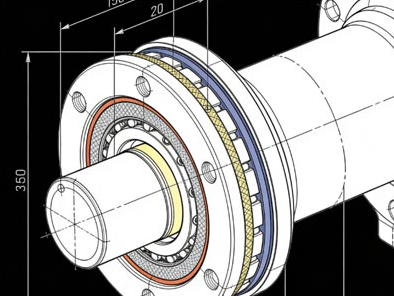
Of all the influencing factors, the condition of the equipment itself is the foundation of the mechanical seal’s effectiveness. Excessive shaft runout, misalignment, or high vibration will directly disrupt the stable contact of the sealing face. Even with the best sealing material, it will be difficult to operate for extended periods under unstable shaft conditions. Therefore, the most effective first step in improving mechanical seal performance is often not replacing the seal, but rather checking and improving bearing condition, alignment accuracy, and vibration levels. When the shaft system runs more smoothly, the impact and off-center load on the sealing face will be significantly reduced, leading to a decrease in leakage and abnormal wear.
Optimizing Seal Selection
There is no universal solution for mechanical seals. The sealing structure, balancing method, face material, and auxiliary sealing method must all be matched to the actual operating conditions. The key to improving sealing performance lies in: selecting a suitable balancing structure and controlling the face pressure; selecting appropriate face material and sealing ring material based on the media properties; and considering the requirements of speed, pressure, and temperature on the seal compensation capability. Avoiding ‘over-design’ or ‘under-configuration’ during the selection phase can often significantly improve seal stability and service life.
Improving Installation Quality
Among the many influencing factors, installation quality is often the area with the least investment and the fastest improvement. End face contamination, inaccurate compression control, uneven bolt tightening, or damaged sealing rings can all weaken the sealing effect in a short period. Standardizing installation procedures, strengthening cleaning management, using specialized tools, and strictly adhering to installation dimensional requirements can often significantly reduce the probability of initial leakage and early failure. Improvements in this area usually show results within a short period.
Focus on Operating Modes
Mechanical seals are highly sensitive to operating conditions, especially during startup, shutdown, and periods of fluctuating operating conditions. Frequent starts and stops, rapid temperature increases, or operation outside the design range can repeatedly damage the end face lubrication film. Optimizing operating procedures, such as smooth start-ups and shutdowns, avoiding prolonged low-flow operation, and reducing sudden pressure and temperature changes, can significantly improve the operational stability of the seal. These improvements often require no additional hardware investment but are frequently effective.
Improve Auxiliary Systems
Auxiliary systems such as flushing, cooling, and isolation fluids are crucial for the stable operation of mechanical seals. If the auxiliary systems are unstable, even if the seal itself is intact, it will be difficult to perform at its proper level. Improving sealing performance often requires: ensuring the cleanliness and stable flow of the flushing medium; controlling the temperature of the sealing cavity to avoid overheating; and maintaining the pressure and level of the sealing fluid within a reasonable range. These measures directly improve the lubrication conditions of the sealing face and are key to enhancing sealing performance.
Establishing a Monitoring Mechanism
Continuous monitoring of leakage, temperature, vibration, and auxiliary system status can detect trend changes before the seal enters an abnormal state. Timely adjustments or maintenance can prevent problems from accumulating to the point of failure. Compared to post-construction repairs, early intervention is not only less costly but also more conducive to maintaining the long-term effectiveness of the mechanical seal.
Improving mechanical seal performance does not necessarily rely on expensive new products or complex modifications, but often stems from the systematic optimization of key fundamental conditions. From equipment shaft stability, seal selection and matching, and installation quality control to operational management and auxiliary system improvement, each link can potentially act as an ‘amplifier’ affecting seal performance. In practical engineering, the most effective improvement paths usually focus on improving equipment condition, standardizing installation, and optimizing operational management. These measures have relatively controllable costs but can quickly improve the working environment of the sealing face, significantly reducing the risk of leakage and abnormal wear.