In oil and gas drilling operations, the well control system is the core equipment system for ensuring wellbore safety and preventing blowouts. Its functions cover the entire process from pressure monitoring and wellhead sealing to emergency response, achieving closed-loop management of ‘prevention-control-treatment’ through multi-level equipment collaboration. The following analyzes the core components of a well control system from a functional classification perspective.
Monitoring and Early Warning System
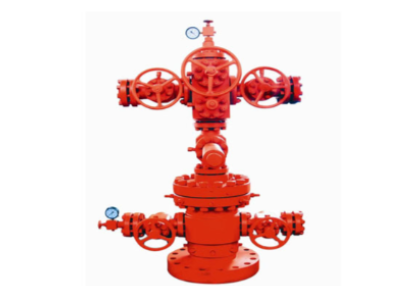
Monitoring equipment is the front-end of the well control system, providing a basis for risk assessment through real-time data acquisition. Fluid level alarms can identify abnormal fluctuations in drilling fluid tank levels, automatically triggering an alarm when the fluid volume change exceeds 1 cubic meter, reducing response time by 90% compared to manual observation. Pressure monitoring instruments (such as digital pressure transmitters) have an accuracy of 0.1%FS, capable of capturing pressure changes at the 0.01MPa level, forming a dual early warning mechanism in conjunction with combustible gas detectors (detection range 0-100%LEL). In shale gas wells in the Sichuan Basin, this system detected abnormal methane concentrations 15 minutes in advance, gaining crucial time for emergency response.
Wellhead Sealing Devices
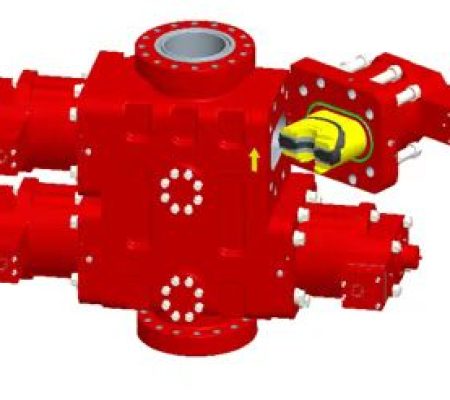
Wellhead sealing equipment is the last physical line of defense in well control, and its sealing performance directly determines the effectiveness of accident control. The annular blowout preventer (BOP) uses a rubber core structure, capable of fully sealing the wellhead within 30 seconds, with a pressure rating of 105 MPa, suitable for drill string rotation. The gate BOP achieves hard sealing by shearing the drill string with a metal gate; the dual-gate design (full seal + partial seal) balances sealing performance and operational efficiency, with mainstream domestic models achieving a shearing force of up to 4000 kN. The rotating blowout preventer (RBOP) overcomes the limitations of traditional static sealing equipment, maintaining a dynamic seal of 70 MPa even when the drill string is rotating, reducing the kick rate in underbalanced drilling by 72%.
Pressure Regulation System
Pressure regulation equipment precisely controls wellbore pressure through a manifold network. Its core components include the choke manifold and the kill manifold. The choke manifold is equipped with a manual/hydraulic choke valve with an adjustment range of 0-10 MPa, which can quickly reduce wellhead back pressure in the event of a kick. The kill manifold injects weighted drilling fluid via a high-pressure pump to restore bottomhole pressure balance, achieving a pressure resistance rating of 140 MPa. In ultra-deep well operations in the Tarim Basin, this system, combined with an intelligent kill algorithm, shortened the kill cycle from the traditional 12 hours to 4 hours, reducing drilling fluid consumption by 60%.
Emergency Response Equipment
The emergency equipment is designed for sudden operating conditions, featuring rapid response and efficient handling. The liquid-gas separator employs cyclone separation technology, with a processing capacity of 500 m³/h, separating over 99% of free gas. The remote ignition device is equipped with an electronic ignition system, achieving a 100% ignition success rate and ensuring the safe combustion of toxic gases. Internal blowout preventers (such as kerb valves) can close the internal channels of the drill string within 3 seconds, preventing blowout propagation. Similar devices successfully prevented secondary explosions and averted escalation of the disaster during a deepwater drilling accident in the Gulf of Mexico.
Intelligent Control System
The intelligent control system utilizes digital technology to achieve equipment linkage and remote control. The blowout preventer (BOP) control system employs a dual-redundant hydraulic circuit, with an operation response time of ≤2 seconds, supporting operation from the driller’s platform, remote control console, and emergency control console. The well control parameter monitoring platform integrates a SCADA system, capable of simultaneously monitoring over 200 pressure, level, and flow parameters. It uses AI algorithms to predict well control risks, achieving a 95% accuracy rate in early warnings. On deepwater drilling platforms in the South China Sea, this system achieves fully automated linkage between the BOP assembly, manifold system, and monitoring equipment, reducing the number of well control operators from 6 to 2.
From mechanical blowout preventers to intelligent well control systems, the evolution of well control devices reflects the industry’s profound understanding of the essence of safety. Currently, with the advancement of ‘deep-sea, deep-layer, and unconventional’ oil and gas development, well control technology is making breakthroughs towards ‘ultra-high pressure (>140MPa), ultra-high temperature (>200℃), and ultra-deep wells (>9000m)’.