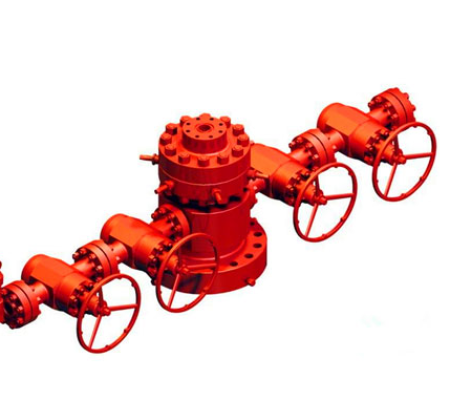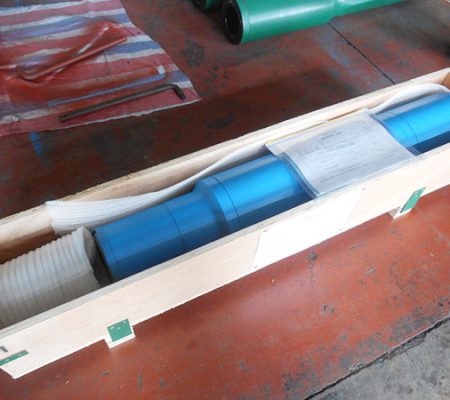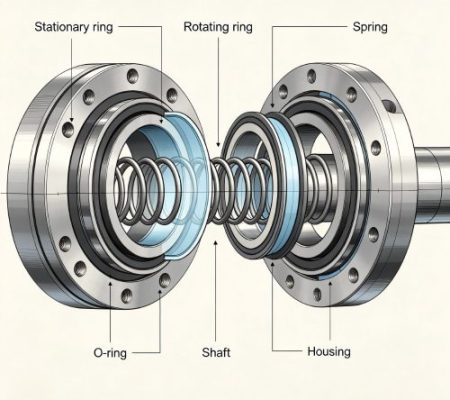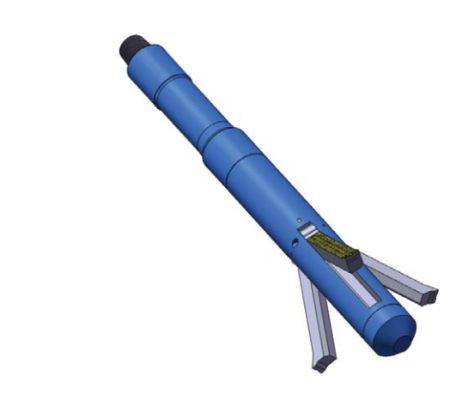
As a key facility for oil and gas resource development, offshore drilling platforms operate in a complex and ever-changing marine environment, facing multiple challenges from waves, tides, corrosive media, and extreme weather conditions. Well control equipment, as the core system ensuring drilling operation safety, must meet a series of special requirements in its design, configuration, and maintenance to address the unique risks of offshore operations.

Seismic Resistance
During operation, offshore drilling platforms are subjected to continuous dynamic loads due to the influence of waves, tides, and the platform’s own heave. For example, when a jack-up drilling platform raises or lowers its legs, the derrick vibrates due to the additional load; semi-submersible platforms are prone to fatigue damage at the connection points between their floating structure and the well control system under wave action. Therefore, well control equipment must possess high-strength seismic resistance:
Structural Reinforcement: The derrick adopts a tower-shaped design and undergoes anti-corrosion hot-dip galvanizing treatment, while being secured with tension ropes to enhance stability. For example, a semi-submersible platform derrick incorporates a lateral support structure in its design, enabling it to maintain structural integrity even in force 10 waves.
Dynamic Compensation: Floating drilling rigs are equipped with heave compensation systems that use hydraulic or mechanical devices to counteract the impact of platform movement on the drill string, ensuring precise closure of the blowout preventer (BOP) assembly under dynamic conditions. The compensation system on a deepwater drilling vessel can control drill string displacement within ±0.1 meters even in waves up to 3 meters high.
Corrosion Resistance
Chloride ions, hydrogen sulfide, and oil contamination in seawater accelerate the corrosion of metal materials, leading to well control equipment seal failure or reduced structural strength. For example, a certain offshore platform experienced a leak during well control operations due to the failure to replace a corroded choke manifold in a timely manner, delaying well shut-in by 2 hours. Therefore, corrosion resistance requirements encompass material selection and protective technologies:
Material Upgrades: The blowout preventer (BOP) body and key components utilize alloy steel resistant to hydrogen sulfide corrosion (such as NACE MR0175 standard materials). Rubber seals are made of fluororubber or hydrogenated nitrile rubber, with a temperature resistance range up to 150℃ and excellent aging resistance.
Surface Treatment: The surface of well control equipment is treated with hot-dip galvanizing or sprayed with epoxy zinc-rich primer, combined with marine-grade anti-corrosion coatings, forming a multi-layered protective system. One platform extended its equipment service life from 5 years to 8 years by optimizing the coating process.
Explosion-Proof
Offshore drilling platforms contain large amounts of flammable and explosive gases (such as methane and hydrogen sulfide). Well control equipment must meet stringent explosion-proof standards:
Zoning Design: Hazardous zones are divided according to gas concentration (e.g., Zone 1, Zone 2), and equipment with corresponding explosion-proof ratings is selected. For example, the driller’s control panel adopts an intrinsically safe design, with its circuit voltage limited within a safe range, ensuring that even in the event of a malfunction, gases will not be ignited.
Redundant Configuration: The blowout preventer (BOP) control system is equipped with dual hydraulic power sources, either of which can independently operate all gates. In the event of a main power failure on a certain platform, the backup power source activated within 30 seconds, successfully closing the full-sealing gates and preventing a blowout.
Equipment Configuration
Offshore well control systems must meet the core functions of ‘closing the wellhead, controlling pressure, and preventing overflow,’ and their configuration requirements are far higher than those on land: High Pressure and Deep Water Adaptability: Deepwater well control systems must withstand higher hydrostatic pressures; for example, the rated working pressure of the subsea BOP assembly can reach 105 MPa, and it is equipped with a dual control box system to ensure that the BOP can still be operated even if a single control box fails.
Remote Control Capability: Floating platforms are equipped with a pilot fluid control system that transmits control signals to the subsea BOP via high-temperature flame-retardant hydraulic hoses, enabling remote and precise control. During a typhoon, a certain platform remotely shut down the BOP, preventing personnel from engaging in hazardous operations.
Emergency Function Integration: The well control system integrates functions such as automatic mud injection and rapid switching of the choke and kill manifold. For example, when a blowout occurs on a certain platform, the system automatically activates the grouting pump to maintain pressure balance within the well, buying time for well control operations.
Inspection Cycle
The inspection cycle for offshore well control equipment needs to be dynamically adjusted according to the operational risk:
Routine Inspection: Surface-mounted blowout preventer (BOP) assemblies undergo a comprehensive inspection annually, including appearance, dimensional accuracy, and pressure testing; subsea BOP assemblies are returned to the factory for overhaul every 3 years, with functional testing every 8 months during this period.
Shortened Cycle for Special Operating Conditions: In high-pressure wells (pressure coefficient ≥ 1.8) or wells containing hydrogen sulfide, the inspection cycle is shortened to 8 months. On one platform operating in a sulfur-containing well, early inspection revealed hydrogen sulfide stress corrosion cracking in the BOP seal ring, allowing for timely replacement and preventing an accident.
Extended Use Conditions: After professional evaluation, equipment can be extended in use, but not exceeding 3 years. For example, in a deepwater well where no alternative equipment was available, the BOP assembly was granted a 2-year extension; during this period, enhanced real-time monitoring prevented no malfunctions.
The special requirements for well control equipment on offshore drilling platforms are essentially a pursuit of a balance between ‘safety’ and ‘efficiency.’ From strengthening seismic-resistant structures to upgrading corrosion-resistant materials, from redundancy in explosion-proof design to integration of remote control, every technological breakthrough aims to reduce the risk of blowouts and extend equipment life.