During industrial production, pumps, compressors, reactors, agitators, and various types of rotating equipment all face a common challenge—how to prevent process media from leaking. As one of the most widely used sealing methods in modern industrial equipment, mechanical seals effectively isolate internal process media from the external environment, ensuring safe, stable, and efficient equipment operation. However, some companies still choose traditional packing seals or simple sealing methods to reduce procurement costs or because they underestimate the importance of sealing systems during equipment selection. Although this may appear to save money initially, it can actually create much greater safety, environmental, and economic risks. So, what potential risks can arise from not using mechanical seals?
Why Do Many Industrial Equipment Systems Require Mechanical Seals?
The Basic Concept of Mechanical Seals
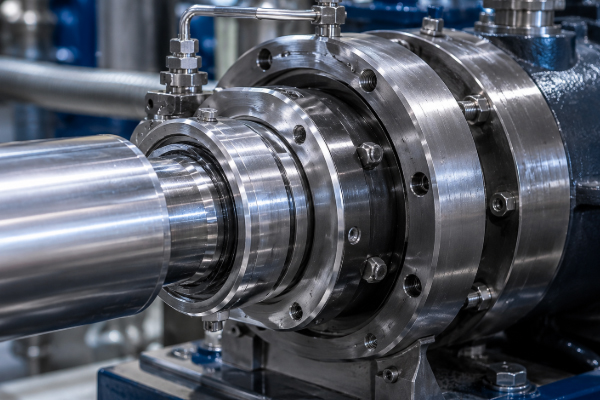
A mechanical seal is a sealing device that relies on the close contact between rotating and stationary seal faces. Springs, bellows, or hydraulic auxiliary devices maintain the contact pressure between these faces, thereby preventing process media from leaking.Compared with traditional packing seals, mechanical seals belong to the category of face seals.
Their core operating principle is to create an extremely thin liquid or gas film between two precision-machined sealing faces. Leakage is controlled through a microscopic clearance, enabling highly effective sealing performance.Because mechanical seals offer low friction losses and excellent sealing capability, they are widely used in petrochemical, pharmaceutical, power generation, food processing, metallurgy, and environmental protection industries.
What Does It Mean Not to Use a Mechanical Seal?
When equipment does not utilize a mechanical seal, it typically relies on packing seals, rubber sealing rings, or other simple sealing structures.Although these sealing methods feature simple designs and lower initial investment costs, their sealing performance often struggles to meet modern industrial requirements under conditions involving:
- High rotational speeds
- High pressures
- Elevated temperatures
Corrosive mediaAs operating time increases, sealing clearances gradually enlarge, making leakage problems increasingly apparent and creating a chain reaction of negative effects throughout the production system.
What Happens During Equipment Operation Without Mechanical Seals?
Increased Leakage Risk During Startup
When equipment starts up, the shaft and sealing components experience instantaneous vibration and thermal expansion.Without the automatic compensation capability of mechanical seals, traditional sealing structures may develop uneven sealing conditions.As a result, process media may leak through the shaft sealing area, especially when handling:
- High-temperature liquids
- Volatile liquids
- High-pressure fluids
For ordinary industrial water, such leakage may simply result in waste. However, for chemicals, fuels, or toxic media, it can create significant safety hazards.
Increased Wear During Continuous Operation
Once the equipment reaches normal operating conditions, continuous friction occurs between the shaft and the sealing components.To maintain sealing effectiveness, traditional packing seals generally require relatively high compression forces. Excessive compression can lead to:
- Accelerated sleeve wear
- Increased motor load
- Higher energy consumption
- Shortened seal life
- Increased maintenance frequency
Over time, grooves may develop on the shaft surface, further degrading sealing performance and creating a vicious cycle of wear and leakage.
Significantly Higher Maintenance Frequency
Because conventional sealing methods wear out more quickly, companies must regularly adjust packing glands, replace sealing materials, or repair shaft sleeves.
Frequent shutdowns can result in:
- Reduced production efficiency
- Increased labor costs
- Higher spare parts consumption
- Greater downtime losses
- Reduced equipment utilization
For continuous-process industries, frequent shutdowns often generate higher overall costs than the purchase of mechanical seals.
What Technical Risks May Result From Not Using Mechanical Seals?
Environmental Pollution Caused by Media Leakage
Modern industry faces increasingly strict environmental regulations.
If the process media include:
- Acidic or alkaline chemicals
- Petroleum products
- Volatile organic compounds (VOCs)
- Toxic liquids
- Corrosive fluid scontinuous
leakage may not only pollute the surrounding environment but also violate environmental regulations.Many countries and regions impose severe penalties for industrial leakage incidents.Compared with environmental fines and remediation expenses, installing mechanical seals is often a far more cost-effective risk-control solution.
Increased Probability of Safety Incidents
For flammable and explosive media, leakage risks directly affect personnel and equipment safety.
Examples include:
- Gasoline
- Diesel fuel
- Liquefied gas
- Hydrogen
- Natural gas
- Chemical solvents
If these media leak and encounter hot surfaces, electrical sparks, or static electricity, fires or explosions may occur.Mechanical seals can reduce leakage to extremely low levels, whereas conventional sealing structures often cannot achieve the same safety standards.Therefore, in hazardous media transfer systems, not using mechanical seals may significantly increase the likelihood of major accidents.
Reduced Equipment Operating Efficiency
Sealing systems influence not only leakage rates but also operational efficiency.
When traditional sealing structures are excessively tightened, rotational resistance increases.The consequences may include:
- Increased power losses
- Higher electricity consumption
- Greater equipment temperature rise
- Reduced rotational speed stability
- Lower overall operating efficiency
Over the long term, the cost of wasted energy may far exceed the purchase cost of a mechanical seal.
Shortened Equipment Service Life
Seal failure is rarely an isolated problem; it often affects the entire equipment system.
Leaking media may enter:
- Bearing systems
- Coupling areas
- Motor components
- Lubrication systems
This can cause:
- Bearing damage
- Lubrication failure
- Accelerated corrosion
- Increased vibration
Higher equipment failure ratesTherefore, not using mechanical seals can shorten the service life of the entire machine, not just the sealing components.
How Can the Risks of Not Using Mechanical Seals Be Reduced?
Select an Appropriate Sealing Solution Based on Operating Conditions
Not every piece of equipment requires a high-end mechanical seal, but companies should carefully evaluate their operating conditions.
Key considerations include:
- Operating pressure
- Operating temperature
- Rotational speed range
- Medium characteristics
- Environmental requirements
- Safety classifications
For high-risk applications, mechanical seals are generally the more reliable choice.
Establish a Comprehensive Seal Maintenance ProgramEven when traditional sealing structures are used, a standardized maintenance program should be implemented.
Key measures include:
- Regular leakage inspections
- Monitoring shaft wear
- Replacing aged sealing components
- Measuring equipment vibration
- Recording operational data
Preventive maintenance can significantly reduce the likelihood of unexpected failures.
Use Mechanical Seal Designs Suitable for the Application
Mechanical seals are not a single product type but rather a family of sealing solutions.
Examples include:
- Single mechanical seals
- Double mechanical seals
- Cartridge mechanical seals
- Bellows mechanical seals
- Dry gas sealing systems
Only by selecting a design that matches the specific medium and operating conditions can the full value of mechanical seals be realized.
Frequently Asked Question
Does Not Using Mechanical Seals Really Save Money?
Many companies believe that mechanical seals are expensive and therefore choose lower-cost traditional sealing solutions.However, from a total lifecycle perspective, procurement cost represents only a portion of the overall expense.
If the absence of mechanical seals results in:
- Product loss through leakage
- Frequent shutdowns
- Increased maintenance labor
- Higher energy consumption
Equipment damagethe resulting costs often far exceed the initial savings.This is particularly true in industries such as petrochemicals, power generation, natural gas, and pharmaceuticals, where a single unplanned shutdown can cause economic losses far greater than the cost of several mechanical seals.Therefore, sealing solutions should not be evaluated solely based on initial investment. Operating costs, safety costs, and maintenance costs must also be considered.
Although a mechanical seal is only a small component within industrial equipment, it has a significant impact on equipment safety, production efficiency, energy utilization, and environmental protection.Not using a mechanical seal may not cause immediate equipment failure, but as operating time increases, problems such as leakage, wear, rising energy consumption, frequent maintenance requirements, and safety risks often become increasingly apparent.A mechanical seal is not merely a sealing device—it is also an important technical solution for reducing equipment failure rates, ensuring continuous production, and controlling operating costs.For equipment handling high-temperature, high-pressure, flammable, explosive, corrosive, or high-value media, mechanical seals have become an indispensable part of modern industrial operations.