Mechanical seals are commonly used sealing devices in industrial equipment, primarily to prevent liquid or gas leakage. They act like a protective sleeve for the machine’s ‘joints,’ ensuring no leakage of fluid or gas during operation. However, prolonged operation can cause friction, heat, and even blockage of the sealing surface by impurities. This is where a ‘flushing solution’ comes in. Simply put, a flushing solution is a method of ‘cooling down’ the mechanical seal by using flowing liquid or gas to remove heat and impurities, keeping the seal clean, cool, and extending its service life. There are many types of flushing solutions, the most common being external flushing, internal flushing, self-flushing, and circulating flushing. External flushing is like giving the sealing surface an ‘artificial shower,’ introducing clean liquid or gas from the outside to directly flush the sealing surface. For example, water pumps commonly used in factories might use clean cooling water piped from the outside to the seal, flushing away debris and heat generated by friction. This method provides rapid cooling and thorough cleaning, but requires additional flushing medium and piping, resulting in slightly higher costs.
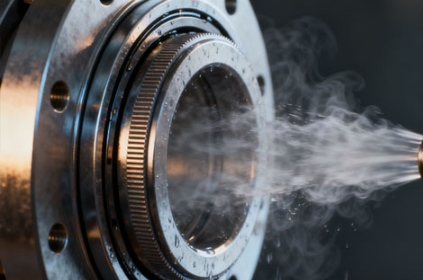
Internal flushing utilizes the internal working medium of the equipment for flushing. For example, the chemical liquid in a chemical pump, already flowing in the pipeline, can be partially guided to the seal, providing both cooling and lubrication. This method eliminates the need for external piping, resulting in low cost, but the properties of the medium must be considered—if the medium itself contains impurities or is corrosive, it may actually accelerate seal wear.
Self-flushing is a self-sufficient method, relying on the pressure difference generated by the equipment’s own operation to allow the medium to flow naturally to the seal. For example, a high-speed rotating agitator creates a low-pressure zone near the impeller, attracting surrounding media to the sealing surface, forming natural flushing. This method is simple in structure and requires no additional equipment, but the flushing effect is greatly affected by the rotation speed and medium viscosity; low speeds or highly viscous media may not clean effectively.
Circulating flushing is a closed-loop operation, recovering, filtering, and then returning the flushed liquid to the seal, forming a circulation system. For example, after flushing the seal with cooling water, the water is not directly discharged but is processed through a filter and cooler before being returned to the seal. This method is water-saving and environmentally friendly, suitable for equipment operating for extended periods, but requires the installation of filters, coolers, and other equipment, resulting in a significant initial investment.
The main characteristics of flushing solutions revolve around ‘cooling, cleaning, and lubrication.’ Cooling reduces frictional heat damage to sealing materials, preventing aging and deformation caused by high temperatures; cleaning removes metal shavings, dust, and other impurities, preventing them from getting stuck between sealing surfaces and causing scratches; lubrication keeps the sealing surfaces smooth, reducing wear from direct friction. In addition, different flushing solutions have their own ‘additional features’: external flushing is suitable for high-temperature, high-impurity environments, providing rapid cooling and slag removal; internal flushing is suitable for clean, non-corrosive media, offering economic practicality; self-flushing is suitable for high-speed, simple-structure equipment, eliminating the need for additional piping; and circulating flushing is suitable for applications with high environmental requirements and large water consumption, saving resources.
When selecting a flushing solution, the specific operating conditions of the equipment must be considered—such as the cleanliness of the medium, its temperature, rotational speed, and cost budget. For example, a high-temperature pump may require external flushing for enhanced cooling, while a clean pump may only need internal flushing.