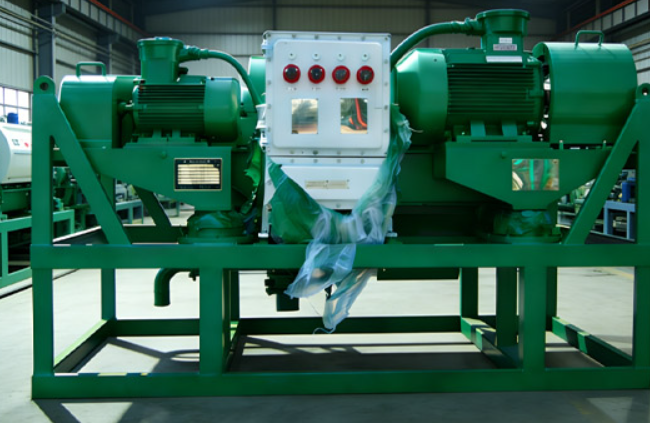
Decarbonization centrifuges are high-efficiency separation equipment commonly used in oil drilling, natural gas extraction, tunnel construction, and wastewater treatment. They can rapidly separate solid particles from mud or suspensions, thereby recovering usable liquids and reducing waste. Because decarbonization centrifuges operate at extremely high speeds and with tremendous centrifugal force, improper operation can damage the equipment and pose safety risks to operators. Therefore, establishing a standard operating procedure (SOP) is essential. Standardized procedures not only ensure efficient equipment operation but also effectively prevent accidents and extend equipment life.
Start-up Procedures
Before starting, the equipment should be inspected: ensure the rotor, housing, and seals are intact and free of cracks, the power supply is reliably grounded, the machine is stable, and the surrounding area is free of debris. Operators must wear personal protective equipment, including goggles, protective gloves, and protective clothing. After inspection, confirm that the speed setpoint, processing load, and flow control parameters meet the requirements of the mud properties. Then, start the main motor and auxiliary motor, and observe whether the equipment is operating normally and whether there is any abnormal vibration, noise, or leakage. Initial operation should begin with a short period under no-load conditions to ensure mechanical balance and electrical system stability. If any abnormality is detected, the machine should be stopped immediately for inspection, and operation should only resume after the fault has been rectified. Proper start-up procedures reduce safety hazards during subsequent feeding and high-load operation.
Feeding Operation Procedure
Feeding can only begin after the decarbonization centrifuge has stabilized after startup. Before feeding, confirm that the flow rate and viscosity of the slurry or suspension are within the equipment’s allowable range, and slowly feed it into the centrifuge using a qualified conveying pipeline or pumping system. During feeding, operators should closely observe the equipment’s vibration, sound, and rotor condition to ensure even load distribution and stable equipment operation. If the equipment is equipped with a flow monitoring device, the feeding speed should be adjusted as needed to prevent rotor overload or liquid backflow. Avoid rapid, one-time feeding to prevent impact on the container or slurry overflow. Feeding operations must be carried out in strict accordance with safety regulations to ensure efficient equipment operation and extend its service life.
Shutdown Operation Procedure
Shutdown operations also require standardized procedures. First, stop feeding and allow the equipment to idle for a period of time to ensure complete separation of any remaining slurry within the container. Then, turn off the main motor and auxiliary motor sequentially. Only open the machine cover after the rotor has completely stopped. Avoid sudden stops or forcibly opening the machine cover during shutdown to prevent accidents caused by the high-speed rotating rotor. Operators should ensure all power is disconnected, warning signs are intact, and site safety is guaranteed. Proper shutdown procedures not only ensure personnel safety but also facilitate smooth restarts and reduce mechanical wear.
Slag Removal Procedure
Slag removal is a crucial step after the decarbonization centrifuge has completed operation. After shutdown, wait for the rotor to completely stop before opening the slag removal device or discharge port to safely collect the separated solid slurry. Use appropriate tools and containers during operation to avoid direct hand contact with slurry that may contain chemical additives or harmful substances. After collection, clean the container and surrounding environment to ensure no residual blockages remain, ensuring smooth operation next time. Reusable slurry or solid components should be properly stored according to processing requirements. Standardized slag discharge procedures help maintain equipment cleanliness, extend rotor life, and ensure a safe operating environment.
The standard operating procedure for a decarbonization centrifuge covers four core stages: start-up, feeding, shutdown, and slag discharge. Each stage directly impacts the equipment’s operating efficiency and safety. Start-up emphasizes inspection and no-load pre-running to ensure mechanical, electrical, and safety protection measures are in place. Feeding focuses on flow control and load balancing to prevent bowl impact and overflow. Shutdown requires idling and orderly power disconnection to ensure personnel safety. Slag discharge focuses on solid collection and equipment cleanliness to maintain long-term high-efficiency operation. Strict adherence to these procedures not only maximizes the separation efficiency of the decarbonization centrifuge but also reduces equipment wear, extends its service life, and significantly reduces operational risks. In practice, it is recommended to compile the standard operating procedure into a pre-shift checklist or operation manual and provide training and regular drills for operators to cultivate a “safety first, standardized operation” work habit, thereby achieving efficient, safe, and reliable operation in slurry or suspension treatment processes.