
In modern drilling engineering systems, many people focus on the overall performance of equipment, but one of the key components that truly determines rock-breaking efficiency and operational stability is the “crown block.” As the core structure of the drill bit that directly contacts the rock formation, it undertakes the primary tasks of cutting and crushing, playing an irreplaceable role in complex geological conditions.
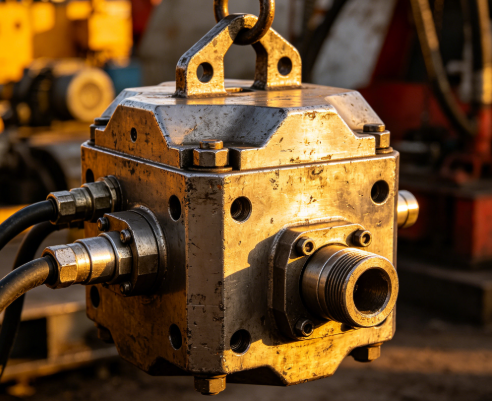
Basic Role of the Crown Block in Drill Bit Structure
The crown block is the core component that directly interacts with the rock formation and determines the fundamental drilling capability.
- The crown block uses hard cutting teeth to directly break rock formations
- During rotation, it forms a stable rock-breaking surface for continuous drilling
- Its structural design distributes impact forces and reduces overall drill bit wear
- It provides the basic cutting ability that enables penetration into different formations
It is clear that the crown block determines whether a drill bit can effectively drill and perform well.
A Key Factor in Improving Drilling Efficiency
The performance of the crown block directly affects drilling speed and energy consumption, making it a critical factor in efficiency optimization.
- High-strength crown blocks maintain stable cutting performance in hard rock formations
- Optimized tooth geometry reduces repeated crushing and improves penetration efficiency
- Proper debris discharge channels prevent cuttings buildup and drilling obstruction
- Reduced friction improves mechanical energy utilization efficiency
- Stable drilling in complex formations reduces downtime and adjustments
Therefore, better crown block performance leads to more controllable project progress.
Impact on Drill Bit Lifespan and Project Cost
The crown block not only affects efficiency but also directly influences tool lifespan and overall construction costs.
- Wear-resistant materials significantly extend service life
- Fewer replacements reduce labor and downtime costs
- Improved stability reduces the risk of unexpected equipment failure
- In deep drilling operations, maintenance frequency is significantly reduced
- Helps achieve long-term cost optimization in engineering projects
In large-scale projects, these cost differences are especially significant.
Key Design for Complex Geological Adaptability
The structure and material design of the crown block determine the drill bit’s adaptability to different geological conditions.
- Soft formations use high-cutting-efficiency designs to increase drilling speed
- Hard rock environments require wear-resistant materials for durability
- Fault zones demand stable rock-breaking capability to avoid jamming
- Multi-tooth configurations adapt to complex geological variations
- High-temperature and high-pressure environments require structural stability
This adaptability makes the crown block a critical safeguard in complex engineering conditions.
In modern drilling engineering, the crown block may be only one component of the drill bit, but it undertakes the most direct and essential rock-breaking function. From improving efficiency and reducing costs to extending equipment lifespan and adapting to complex geology, it profoundly influences overall engineering performance. As drilling technology advances toward deeper and more intelligent systems, crown block materials and structures continue to evolve, enabling stable and efficient operation under increasingly complex conditions while providing continuous technical and economic value for modern engineering.