Product Description
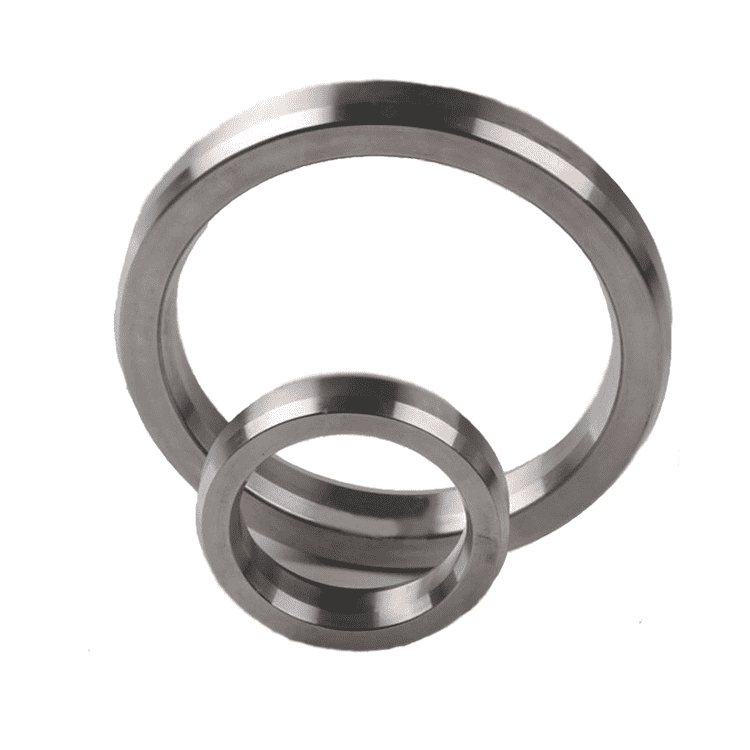
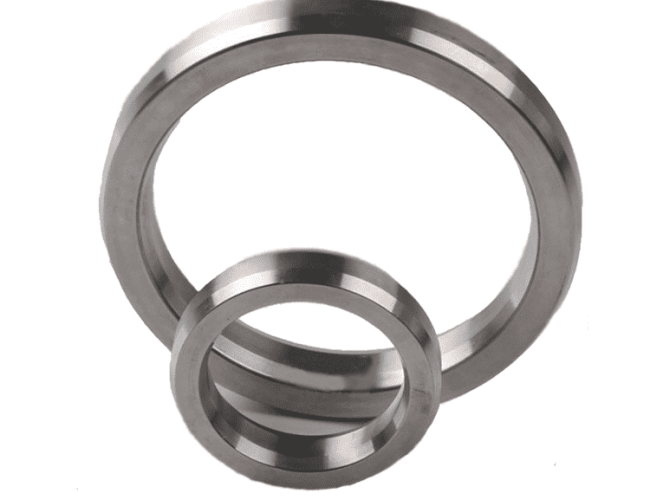
Our 316SS ring joint gaskets are precision-engineered to meet the strict dimensional and material requirements of ASME B16.20 (standard for metallic gaskets for pipe flanges) and API 6A (specification for wellhead and tree equipment). Available in three primary configurations—R (octagonal/oval basic ring joint), BX (high-pressure wellhead-specific), and RX (pressure-energized wellhead)—each gasket is CNC-machined to tight tolerances (±0.02mm for critical sealing surfaces) to ensure perfect fit with standard flanged connections. Unlike low-grade generic gaskets that warp, corrode, or fail under pressure, these 316SS gaskets offer uniform compression, excellent creep resistance, and compatibility with crude oil, natural gas, brine, and refined petroleum products. This product lineup eliminates the risk of seal misalignment and leakage, providing a cost-effective, compliant sealing solution for both scheduled maintenance and emergency repair projects.
Functional Performance Attributes
- Pressure Sealing Capacity: R series gaskets support operating pressures up to 5,000 PSI; RX and BX series gaskets are rated for high-pressure applications up to 15,000 PSI, with pressure-energized design that enhances sealing force as internal pressure increases.
- Temperature Resistance: Operates reliably in a wide temperature range of -200°F (-129°C) to 800°F (427°C), suitable for cryogenic and high-temperature industrial processes.
- Corrosion Resistance: 316SS molybdenum-alloyed construction delivers superior resistance to pitting, crevice corrosion, and chloride stress corrosion, ideal for offshore saltwater and sour gas (H2S) environments.
- Compliance & Compatibility: Fully interchangeable with API 6A wellhead equipment and ASME B16.5 flanged systems, requiring no flange modification for installation.
Structural Characteristics
Each ring joint gasket features a precision-formed profile tailored to its series: R series gaskets feature octagonal/oval cross-sections for standard flange faces; BX series gaskets have a non-welding, solid ring design for high-pressure wellhead hubs; RX series gaskets incorporate a pressure-energized self-sealing contour that amplifies sealing efficiency with rising system pressure. The smooth, defect-free sealing surface eliminates micro-leakage paths, while the uniform wall thickness ensures even compression distribution across the flange joint. All gaskets are deburred and pass non-destructive testing (NDT) to detect surface flaws, ensuring structural integrity under extreme mechanical stress and thermal cycling.
Applicable Operating Conditions
These 316SS ring joint gaskets are engineered for the harshest industrial and oilfield scenarios, including:
- Offshore drilling rigs, wellhead Christmas trees, and manifold systems (API 6A equipment)
- Onshore oil/gas production facilities, refineries, and petrochemical processing plants
- High-pressure pipeline flanges, pressure vessels, and compressor stations
- Sour gas (H2S) and brine environments with high corrosion risk
- Extreme pressure and temperature cycling in upstream and midstream oilfield operations
Maintenance & Installation Best Practices
- Pre-Installation Inspection: Verify gasket size matches flange rating (R/RX/BX series) and inspect sealing surfaces for scratches, dents, or corrosion; discard gaskets with surface defects to prevent leakage.
- Flange Preparation: Clean flange sealing faces thoroughly, remove old gasket residue, and ensure parallel alignment (maximum misalignment ≤ 0.05mm) to distribute compression evenly.
- Torque Protocol: Tighten flange bolts in a cross-pattern to the specified torque value (per ASME PCC-1 guidelines) to achieve optimal gasket compression; avoid over-torquing to prevent gasket deformation.
- Post-Installation Testing: Conduct pressure testing (1.5x operating pressure) per API 6A standards to verify leak-free sealing; monitor for temperature-induced leaks during system startup.
- Replacement Schedule: Replace gaskets during every major flange disassembly; schedule preventive replacement every 3-5 years in high-pressure/corrosive environments to avoid unexpected failures.
We supply the following spare parts:
| 1. | GASKET, RING JOINT, R 24, 316SS to ASME B16.20 / API 6A | EA |
| 2. | GASKET, RING JOINT, R 35, 316SS to ASME B16.20 / API 6A | EA |
| 3. | GASKET, RING JOINT, R 31, 316SS to ASME B16.20 / API 6A | EA |
| 4. | GASKET, RING JOINT, R 37, 316SS to ASME B16.20 / API 6A | EA |
| 5. | GASKET, RING JOINT, R 39, 316SS to ASME B16.20 / API 6A | EA |
| 6. | GASKET, RING JOINT, R 45, 316SS to ASME B16.20 / API 6A | EA |
| 7. | GASKET, RING JOINT, R 53, 316SS to ASME B16.20 / API 6A | EA |
| 8. | GASKET, RING JOINT, R 73, 316SS to ASME B16.20 / API 6A | EA |
| 9. | GASKET, RING JOINT, R 74, 316SS to ASME B16.20 / API 6A | EA |
| 10. | GASKET, RING JOINT, R 50, 316SS to ASME B16.20 / API 6A | EA |
| 11. | GASKET, RING JOINT, R 46, 316SS to ASME B16.20 / API 6A | EA |
| 12. | GASKET, RING JOINT, R 27, 316SS to ASME B16.20 / API 6A | EA |
| 13. | GASKET, RING JOINT, R 54, 316SS to ASME B16.20 / API 6A | EA |
| 14. | GASKET, RING JOINT, R 57, 316SS to ASME B16.20 / API 6A | EA |
| 15. | GASKET, RING JOINT, R 44, 316SS to ASME B16.20 / API 6A | EA |
| 16. | GASKET, RING JOINT, R 49, 316SS to ASME B16.20 / API 6A | EA |
| 17. | GASKET, RING JOINT, BX 160, 316SS to ASME B16.20 / API 6A | EA |
| 18. | GASKET, RING JOINT, BX 152, 316SS to ASME B16.20 / API 6A | EA |
| 19. | GASKET, RING JOINT, BX 154, 316SS to ASME B16.20 / API 6A | EA |
| 20. | GASKET, RING JOINT, BX 155, 316SS to ASME B16.20 / API 6A | EA |
| 21. | GASKET, RING JOINT, BX 158, 316SS to ASME B16.20 / API 6A | EA |
| 22. | GASKET, RING JOINT, BX 159, 316SS to ASME B16.20 / API 6A | EA |
| 23. | BX-165 316SS | EA |
| 24. | BX-168 316SS | EA |
| 25. | R 95 316SS | EA |
| 26. | GASKET, RING JOINT, RX 24, 316SS to ASME B16.20 / API 6A | EA |
| 27. | GASKET, RING JOINT, RX 35, 316SS to ASME B16.20 / API 6A | EA |
| 28. | GASKET, RING JOINT, RX 31, 316SS to ASME B16.20 / API 6A | EA |
| 29. | GASKET, RING JOINT, RX 37, 316SS to ASME B16.20 / API 6A | EA |
| 30. | GASKET, RING JOINT, RX 39, 316SS to ASME B16.20 / API 6A | EA |
| 31. | GASKET, RING JOINT, RX 45, 316SS to ASME B16.20 / API 6A | EA |
| 32. | GASKET, RING JOINT, RX 53, 316SS to ASME B16.20 / API 6A | EA |
| 33. | GASKET, RING JOINT, RX 73, 316SS to ASME B16.20 / API 6A | EA |
| 34. | GASKET, RING JOINT, RX 74, 316SS to ASME B16.20 / API 6A | EA |
| 35. | GASKET, RING JOINT, RX 50, 316SS to ASME B16.20 / API 6A | EA |
| 36. | GASKET, RING JOINT, RX 46, 316SS to ASME B16.20 / API 6A | EA |
| 37. | GASKET, RING JOINT, R X27, 316SS to ASME B16.20 / API 6A | EA |
| 38. | GASKET, RING JOINT, RX 54, 316SS to ASME B16.20 / API 6A | EA |
| 39. | GASKET, RING JOINT, RX 57, 316SS to ASME B16.20 / API 6A | EA |
| 40. | GASKET, RING JOINT, RX44, 316SS to ASME B16.20 / API 6A | EA |
| 41. | GASKET, RING JOINT, RX49, 316SS to ASME B16.20 / API 6A | EA |
Field Sealing Failure Repair Cases
Case 1: Offshore Wellhead R Series Gasket Leak
An offshore production platform experienced severe brine leakage from a wellhead flange fitted with a substandard R35 gasket, causing safety hazards and production halts. Technicians replaced the faulty gasket with a 316SS R35 ring joint gasket compliant with ASME B16.20/API 6A, eliminating leakage immediately. Post-installation pressure testing confirmed zero leaks at 7,500 PSI operating pressure, restoring full production within 4 hours.
Case 2: Refinery Pipeline RX Series Gasket Degradation
A refinery high-pressure oil pipeline suffered chronic leakage due to a corroded RX45 gasket in a sour gas environment. The carbon steel original gasket failed from chloride corrosion, so maintenance crews installed a 316SS RX45 gasket. The corrosion-resistant upgrade eliminated ongoing leaks and extended the seal service life from 1 year to 4 years, reducing maintenance downtime significantly.
Case 3: Drilling Rig BX Series Gasket Pressure Failure
A land drilling rig reported pressure loss and fluid leakage from a BX160 wellhead hub gasket during high-pressure drilling operations. The original gasket had insufficient hardness and deformed under 10,000 PSI pressure. Installing a cold-worked 316SS BX160 gasket restored sealing integrity, withstanding full operating pressure and preventing costly rig downtime.
Frequently Asked Questions (FAQ)
| Question | Answer |
| What is the difference between R, RX, and BX series ring gaskets? | R series are standard octagonal/oval gaskets for medium-pressure flanges; RX series are pressure-energized wellhead gaskets that seal tighter as pressure rises; BX series are heavy-duty high-pressure gaskets designed exclusively for API 6A wellhead hubs and manifolds. |
| Are these 316SS gaskets suitable for sour gas (H2S) environments? | Yes, the 316 stainless steel material contains molybdenum that resists H2S-induced stress corrosion cracking, making these gaskets fully compliant with NACE MR0175 standards for sour oil and gas applications. |
| Can these gaskets be reused after flange disassembly? | No, ring joint gaskets are single-use only. Compression during installation causes permanent deformation, and reusing gaskets greatly increases leakage risk; always replace with a new gasket during flange reassembly. |
Procurement Guidance & Closing Statement
For industrial procurement teams, oilfield maintenance supervisors, and engineering professionals seeking reliable, compliant high-pressure sealing solutions, this ASME B16.20/API 6A 316SS ring gasket list provides a complete, standardized sourcing reference for R, RX, and BX series gaskets. Backed by strict quality control, precision manufacturing, and industry-leading material specifications, these gaskets serve as both a trusted procurement benchmark and a technical guide for resolving sealing failures in critical oil, gas, and process systems. Whether stocking for routine maintenance, emergency repairs, or new equipment installation, these ring gaskets ensure regulatory compliance, minimize operational downtime, and enhance workplace safety. Secure the exact R/RX/BX series 316SS ring gaskets your project requires, aligned with your flange specifications and operating conditions, to maintain uninterrupted, leak-free performance of your critical high-pressure systems.