In drilling operations, the solids control system is a core component for maintaining stable drilling fluid performance and ensuring safe and efficient drilling. Through the coordinated work of multiple stages of equipment, it achieves the graded separation and recycling of solid particles in the drilling fluid. This avoids equipment wear caused by solid accumulation, reduces drilling fluid waste, and lowers operating costs. Solids control equipment does not operate in isolation but rather forms an organic whole through a logic of ‘graded treatment and step-by-step purification.
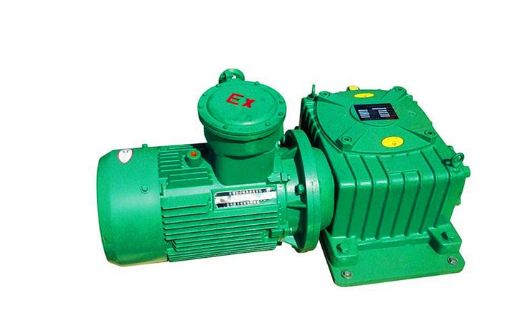
Equipment Division of Labor
A solids control system typically consists of four stages of equipment: a vibrating screen, a desander, a desilter, and a centrifuge. Each stage separates solid particles of different sizes, forming a gradient treatment chain of ‘coarse screening – fine removal – precision separation’:
Vibrating Screen: Primary Coarse Screen
As the ‘first line of defense’ in the solids control system, the vibrating screen rapidly separates coarse particles (such as drill cuttings and rock fragments) larger than the screen aperture in the drilling fluid through high-frequency vibration (1200-1800 times/minute) and a screen with a specific mesh size (usually 40-200 mesh). It has a large throughput (up to 200-500 L/s) and can intercept more than 70% of the solid phase, reducing the load on subsequent equipment.
Desander: Secondary Fine Removal
The desander utilizes the principle of cyclone separation, separating solid particles with a diameter of 40-74 μm through centrifugal force generated by high-speed rotation (usually 1200-1800 rpm). Its processing capacity is smaller than that of a vibrating screen (approximately 50-150 L/s), but its separation accuracy is higher, removing fine sand that a vibrating screen cannot intercept.
Desilter: Three-stage fine separation
The desilter works on a similar principle to the desander, but with a smaller cone angle and higher rotation speed (typically 1800-2500 rpm), specifically targeting the separation of microparticles with a diameter of 15-40 μm. Its throughput is further reduced (approximately 20-80 L/s), but it can significantly reduce the content of fine particles in the drilling fluid, avoiding its negative impact on the rheological properties of the drilling fluid.
Centrifuge: Four-stage ultimate purification
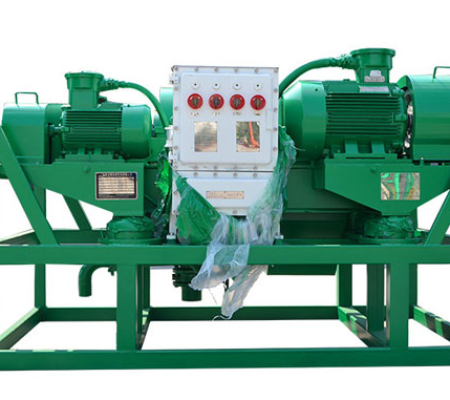
The centrifuge uses the powerful centrifugal force generated by high-speed rotation (drum speed can reach 3000-4000 rpm) to separate ultrafine particles with a diameter of less than 15 μm (such as clay and drilling fluid additive residues). Its separation factor is high (up to 3000 g or more), achieving deep separation of the solid and liquid phases, bringing the drilling fluid properties close to their original state.
Collaborative Logic: The four-stage equipment is connected in series in a ‘coarse to fine’ order. Each stage of equipment ‘reduces the load’ for subsequent stages, and subsequent stages ‘fill in the gaps’ for earlier stages, creating a synergistic effect of ‘ensuring quantity with coarse screening and quality with fine removal.’
Process Serialization
The collaborative work of the solids control equipment is not only reflected in the graded processing but also in the formation of a closed-loop circulation system through process serialization, ensuring the dynamic stability of drilling fluid performance:
Drilling Fluid Circulation Path
After returning to the surface from the well bottom, the drilling fluid first enters a vibrating screen for coarse screening. The separated coarse solids are directly discharged to the waste slurry pool. The screened drilling fluid flows into a desander for further separation of fine sand; then it enters a desilter to remove fine particles; finally, after deep purification by a centrifuge, it returns to the drilling fluid storage tank for reuse.
Solids Discharge Path
Solids separated from each stage of equipment are discharged through independent sand discharge ports. The sand discharge port of the vibrating screen is directly connected to the waste slurry tank; the sand discharge ports of the desander and desilter transport the solids to the waste slurry tank via screw conveyors or pneumatic sand discharge devices; the sand discharge port of the centrifuge compresses the solids into dry slag via a screw conveyor for easy transportation and disposal.
Drilling Fluid Replenishment Path
During the circulation process, if the drilling fluid volume decreases due to evaporation, leakage, or treatment losses, clean water or chemical treatment agents can be added through the water replenishment device on the storage tank to maintain stable drilling fluid performance. If the solids content is too high, the centrifuge running time can be increased or the screen mesh size adjusted to enhance the separation effect.
Collaborative Logic: Through a closed-loop path of ‘circulation-separation-discharge-replenishment,’ the solids control system achieves dynamic balance of the drilling fluid, avoiding equipment wear caused by solids accumulation and reducing drilling fluid waste, thereby lowering operating costs.
Parameter Matching
The coordinated operation of solids control equipment requires parameter matching to achieve efficient operation and avoid low processing efficiency or equipment damage caused by parameter mismatch:
Processing Capacity Matching
The processing capacity of each stage of equipment must match the drilling fluid return rate. For example, if the drilling fluid return rate is 300 L/s, then the processing capacity of the vibrating screen should be ≥300 L/s, and the processing capacity of the desander should be ≥150 L/s (assuming a vibrating screen separation efficiency of 50%), and so on, ensuring that the amount of drilling fluid separated by the preceding equipment does not exceed the processing capacity of the following equipment.
Particle Size Matching
The particle sizes separated by each stage of equipment must form a gradient coverage. For example, the mesh size of the vibrating screen must be matched with the separation particle size of the desander and desilter to avoid ‘particle size gaps’ (e.g., if the mesh size of the vibrating screen is too large, some fine sand will directly enter the desilter, increasing its load).
Operating Time Matching
The operating time of the equipment should be dynamically adjusted according to the solid content of the drilling fluid. For example, when drilling through sandstone formations, the solids content increases, requiring extended operation time for vibrating screens and desanders; when drilling through mudstone formations, the solids content decreases, allowing for reduced centrifuge operation time and lower energy consumption.
Collaborative Logic: Through parameter matching, the solids control system achieves ‘tailor-made’ operation, avoiding equipment overload-induced failures and preventing performance degradation due to insufficient processing, maximizing overall efficiency.
Intelligent Control
With the development of intelligent drilling technology, solids control equipment has gradually achieved intelligent collaborative control. Through data acquisition, analysis, and feedback, operating parameters are automatically adjusted to improve collaborative efficiency:
Sensor Monitoring
Flow meters, pressure sensors, particle size analyzers, etc., are installed on equipment at all levels to monitor drilling fluid flow rate, pressure, solids content, and other parameters in real time, providing a data foundation for intelligent control.
Central Control System
A central control platform is built using a PLC (Programmable Logic Controller) or DCS (Distributed Control System) to integrate operating data from all levels of equipment and automatically adjust equipment parameters according to preset logic. For example, when the solid content at the vibrating screen’s sand discharge port increases sharply, the system automatically increases the vibrating screen’s frequency; when the water content in the solid phase at the centrifuge’s sand discharge port exceeds the standard, the system automatically adjusts the differential speed.
Remote Operation and Maintenance Platform
Through IoT technology, the solids control system is connected to a remote operation and maintenance platform, enabling real-time monitoring of equipment status, fault early warning, and remote diagnosis. For example, if a parameter of a certain level of equipment is abnormal, the system automatically sends an alarm to the technician’s mobile phone and pushes troubleshooting suggestions, shortening downtime.
Collaborative Logic: Intelligent control, through a closed-loop logic of ‘data acquisition – analysis and decision-making – parameter adjustment,’ realizes the transformation of solids control equipment from ‘passive operation’ to ‘active collaboration,’ significantly improving system stability and efficiency.
The collaborative work of solids control equipment is a four-in-one system engineering project of ‘hierarchical processing, process serialization, parameter matching, and intelligent control.’ From the coarse screening of the vibrating screen to the fine separation of the centrifuge, from the dynamic balance of the closed-loop cycle to the precise regulation of intelligent control, every level of equipment and every link is closely connected, jointly constructing a ‘purification barrier’ for drilling fluid.