In pump equipment, a mechanical seal is a high-precision dynamic sealing device used to prevent medium leakage between the pump shaft and the pump casing. It achieves stable sealing during rotation by forming an extremely thin liquid film between the rotating ring and stationary ring, making it one of the most common shaft sealing methods in modern industrial pumps. Traditional pump sealing methods mainly use packing seals (gland packing), which rely on compression friction between the packing and the shaft to achieve sealing. Although this structure is simple, it usually requires a certain amount of leakage for lubrication and cooling, which results in wear, frequent maintenance, and reduced efficiency.
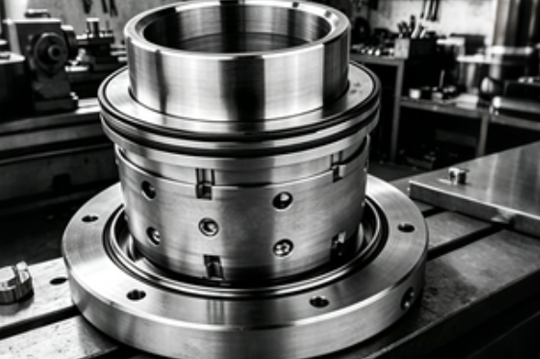
Mechanical seals are different. They form a liquid film through high-precision sealing face contact, greatly reducing leakage and friction loss during operation. In simple terms, a mechanical seal does not merely “block leakage,” but controls the balance between friction and liquid film in a more scientific way to achieve long-term stable operation. As industrial equipment develops toward higher efficiency, environmental protection, and safety standards, mechanical seals have gradually become the mainstream sealing solution in chemical pumps, centrifugal pumps, petroleum pumps, and pharmaceutical equipment.
How do mechanical seals provide advantages in pumps?
Mechanical seals achieve overall efficient equipment operation throughout the entire process of “installation — operation — maintenance.”
· Installation stage
Mechanical seals usually adopt standardized structural designs. For example, cartridge mechanical seals can be pre-assembled and positioned before leaving the factory. Compared with traditional packing seals, which rely heavily on on-site experience and adjustment, mechanical seals offer more standardized installation and lower error rates, effectively reducing leakage risks caused by improper installation.
In addition, mechanical seals cause extremely low shaft wear and do not continuously rub against the shaft surface like packing seals, thereby reducing wear on core equipment components.
· Operation stage
During pump operation, mechanical seals work through the micron-level liquid film formed between the rotating and stationary faces. Most of the time, they operate under fluid lubrication conditions. This operating method greatly reduces friction heat and energy loss while maintaining extremely low leakage rates.By comparison, packing seals rely on continuous contact friction, which consumes more power and generates more heat. Therefore, their efficiency in high-speed pumps is significantly lower than that of mechanical seals.
· Maintenance stage
Traditional packing seals require regular tightening or replacement of the packing material, while mechanical seals can operate stably for long periods under normal conditions without frequent adjustment. For continuously operating equipment, this low-maintenance characteristic can significantly reduce downtime and improve equipment utilization.
· System operation stage
One of the greatest system advantages of mechanical seals is their extremely low leakage rate, which is especially important for pumps transporting chemical media, flammable liquids, or high-value fluids. Mechanical seals not only reduce medium loss, but also minimize environmental pollution and safety risks.
Core technologies behind the advantages of mechanical seals
The reason mechanical seals have become the mainstream sealing method in modern pump equipment is essentially due to their significant technical advantages over traditional seals in friction control, thermal management, and operational stability.
Liquid film lubrication structure reduces friction:
The most important technical feature of a mechanical seal is “liquid film lubrication.” Between the rotating ring and stationary ring, an extremely thin liquid film forms. This liquid film prevents direct face contact while also carrying away friction heat, changing the friction state from “solid friction” to “fluid friction.”
Compared with traditional packing seals, this structure greatly reduces wear and heat generation, resulting in smoother equipment operation and significantly longer seal life.
Low leakage design:
Traditional packing seals usually require a certain amount of leakage to maintain lubrication, while mechanical seals can control leakage within an extremely low range. This is especially important in the chemical, petroleum, and pharmaceutical industries, where many media are toxic, corrosive, or volatile.Through high-precision face matching, mechanical seals effectively reduce the risk of medium leakage, thereby meeting modern industrial requirements for environmental protection and safety.
Balanced structure:
Modern mechanical seals generally adopt balanced designs, which reduce face pressure by optimizing the load-bearing area. This allows the seal to maintain a stable liquid film state even under high-pressure conditions.As a result, mechanical seals can be used in high-speed, high-temperature, and high-pressure pump equipment, whereas traditional packing seals often struggle to maintain long-term stable operation under such conditions.
Auxiliary systems:
Mechanical seals can usually work together with flushing systems, cooling systems, or barrier fluid systems. These auxiliary systems not only keep the seal chamber clean, but also remove heat and prevent particles from entering the sealing faces, thereby further extending service life.This combination of “seal + auxiliary system” is an important reason why mechanical seals are more reliable than traditional sealing methods.
Frequently Asked Questions
Q: Are mechanical seals completely leak-free?
In theory, they can achieve extremely low leakage, but not absolute zero leakage. The actual performance depends on operating conditions and structural design.
Q: Why do mechanical seals last longer than packing seals?
Because they rely on liquid film lubrication, which creates lower friction and causes less shaft wear.
Q: Are mechanical seals suitable for all pumps?
Most modern industrial pumps are suitable for mechanical seals, but low-pressure and low-speed equipment may still use traditional packing seals.
The greatest advantage of using mechanical seals in pumps is that they make equipment more stable, easier to maintain, and safer. Although traditional packing seals have a simple structure, they rely on continuous friction, which causes wear and leakage and requires frequent adjustment. Mechanical seals, however, operate through a liquid film formed between two high-precision sealing faces, resulting in lower friction, less heat generation, and smoother operation.Mechanical seals not only reduce leakage, but also decrease equipment downtime and maintenance frequency. Especially in chemical, petroleum, or high-value fluid transportation, they can effectively minimize medium loss and safety risks, which is why modern industry increasingly adopts mechanical seals.