
Overheating after installation essentially occurs because the frictional heat from the sealing face isn’t being carried away by the normal liquid film, leading to heat buildup in the sealing cavity. Mechanical seals rely on a very thin liquid lubricating film between the rotating and stationary rings to achieve “controlled friction.” Ideally, this film prevents leakage and removes most of the frictional heat, maintaining thermal equilibrium. However, when the liquid film is unstable or fails, it enters a state of “boundary lubrication” or even “dry friction,” where the coefficient of friction between the facets increases sharply, and heat builds up rapidly.
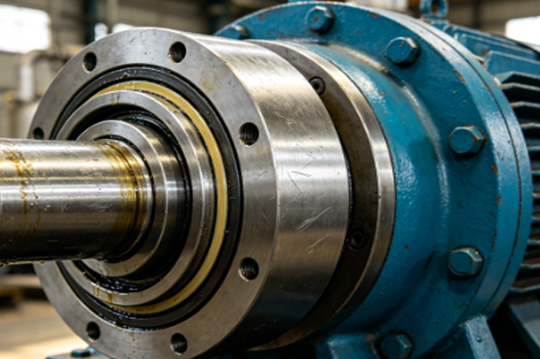
If the cooling system (flushing, circulation, external cooling) cannot remove the heat in time, the sealing cavity temperature will rise rapidly, sometimes accompanied by smoke, abnormal noise, or slight leakage. It’s important to note that slight overheating of a newly installed mechanical seal for a short period is normal during the “run-in” phase in some cases. However, if the temperature rises too quickly, continues to rise, or is accompanied by vibration and leakage, it indicates an installation or operating condition mismatch issue, rather than normal break-in.
Heat Control Process from Installation to Operation
The heat generation problem of mechanical seals is most likely to be exposed during the installation, trial operation, and initial operation stages. Therefore, it is necessary to control the heat generation step by step according to the process, rather than dealing with it at a single point.
Preparation and Cleaning Stage
Before installation, it is essential to ensure that the shaft sleeve, sealing cavity, gland, and sealing surface are completely clean and free of oil, iron filings, or particle residue. Any tiny particles will enter the sealing end face at startup, forming “abrasive wear” and causing localized high temperatures. In addition, it is necessary to confirm that the radial runout and axial movement of the shaft are within the allowable range; otherwise, the end face will continuously be under uneven contact during operation, causing abnormal heat generation.
Installation Compression Control Stage
Mechanical seals require strict control of spring compression. If the compression is too large, the end face contact pressure will be too high, directly increasing frictional heat; if the compression is too small, it may lead to unstable liquid film or even leakage. During installation, positioning must be performed according to the manufacturer’s standard dimensions, rather than relying on “experience-based tightening,” which is one of the common causes of heat generation in newly installed seals.
Trial Operation Start-up Phase
During startup, it is essential to ensure that the flushing system or sealing auxiliary fluid is flowing normally. Otherwise, the end face will experience dry friction for a short period without lubrication, causing a rapid temperature rise. This is especially true in chemical pumps, where high viscosity or particulate matter can exacerbate instantaneous overheating during startup. Therefore, it is crucial to “circulate fluid first, then start” to avoid dry startup.
Stable Operation Phase
In the initial stage of operation, it is important to observe whether the temperature rise curve stabilizes. If the temperature continues to rise without a stable drop, it indicates that the liquid film has not been established or the flushing system is insufficient. Simultaneously, it is necessary to monitor for abnormal vibrations, as vibrations can disrupt the stability of the liquid film, causing periodic fluctuations in heat generation.
Core Causes and Solutions for Heat Generation in Newly Installed Mechanical Seals
· Dry Friction at the End Face and Failure to Establish a Liquid Film
Mechanical seals rely on an extremely thin liquid film to isolate the dynamic and static rings. However, in the initial startup phase, if the flushing system is not established or the medium is insufficient, it will directly enter a dry friction state. The coefficient of dry friction is much higher than that of liquid film friction, resulting in a large amount of heat being generated in a short time. Solutions include: pre-lubricating the sealing cavity before startup, ensuring stable flushing flow, and using double-end face seals or external cleaning flushing fluid in high-risk conditions.
· Uneven stress on the end face due to installation deviation
If the coaxiality deviation between the shaft and the pump body is large, a “local contact” phenomenon will occur on the sealing end face, meaning that the pressure in some areas is too high, while other areas cannot form an effective liquid film. This uneven contact will cause local high-temperature points, which will gradually expand into overall heating. Solutions include using a laser alignment instrument for precise correction and ensuring that shaft runout is controlled within the design range.
· Inadequate flushing system design
Many new equipment heating problems are not due to the seal itself, but rather to an inadequate flushing scheme design, such as insufficient flow, low pressure, or blocked return path. The flushing fluid is not only used for lubrication but also to remove frictional heat; if circulation is not smooth, heat will accumulate. Therefore, it is necessary to select a suitable API flushing scheme (such as Plan 11, Plan 32, etc.) according to the characteristics of the medium and regularly check the pipeline for blockage.
· Poor Thermal Stability Due to Improper Material Matching
If the materials of the dynamic and static rings have low thermal conductivity or insufficient heat resistance, they will accumulate heat more easily under high loads. For example, the combination of ordinary carbon graphite and hard alloy may not perform as stably as the silicon carbide combination under high-temperature conditions. Material selection must be comprehensively evaluated in conjunction with the medium temperature, corrosivity, and rotational speed, rather than simply pursuing the lowest cost.
Frequently Asked Questions
Q: Is it a quality problem if a new mechanical seal gets hot immediately after startup?
Not necessarily. In many cases, it is caused by excessive installation compression, failure to start flushing, or incorrect startup sequence, and does not necessarily indicate a problem with the seal itself.
Q: Can it continue to operate after getting hot?
If the temperature rises slightly and gradually stabilizes, you can observe the operation; however, if the temperature continues to rise or is accompanied by abnormal noise or leakage, you should stop the machine immediately for inspection, otherwise it will accelerate end face damage.
Q: Why do some seals of the same model get hot while others do not?
This mainly depends on the differences in operating conditions and installation quality, including shaft vibration, alignment accuracy, medium conditions, and the status of the flushing system.
A newly installed mechanical seal may overheat upon startup, seemingly indicating equipment malfunction. However, in most cases, the seal itself isn’t faulty; rather, the operating conditions are not perfectly matched. Mechanical seals rely on a very thin liquid lubrication film. If this film doesn’t establish properly, or is insufficiently flushed, misaligned, or damaged by shaft vibration, increased friction occurs, generating heat. A mechanical seal is like two precision surfaces pressed together at high speed; it requires both precise pressure and adequate lubrication. Excessive pressure, insufficient lubrication, and improper installation all cause overheating. Therefore, diagnosing the problem shouldn’t rely solely on temperature but on the overall system’s coordination. By controlling installation accuracy, the flushing system, and the startup process, most overheating issues with new seals can be avoided. On-site, the focus shouldn’t be on “cooling down,” but rather on “finding the cause of the heat” to address the root cause, rather than repeatedly disassembling and replacing the seal.