In elevator door systems and mechanical transmission structures, linkages may seem like minor components, but they directly affect the stability and safety of elevator operation. Currently, the most common types of elevator linkages on the market are weldless elevator linkages and welded elevator linkages. These two types differ significantly in manufacturing processes, structural performance, and suitable application scenarios. Understanding these differences helps make more informed decisions in selection and maintenance.
Fundamental Differences in Manufacturing Processes
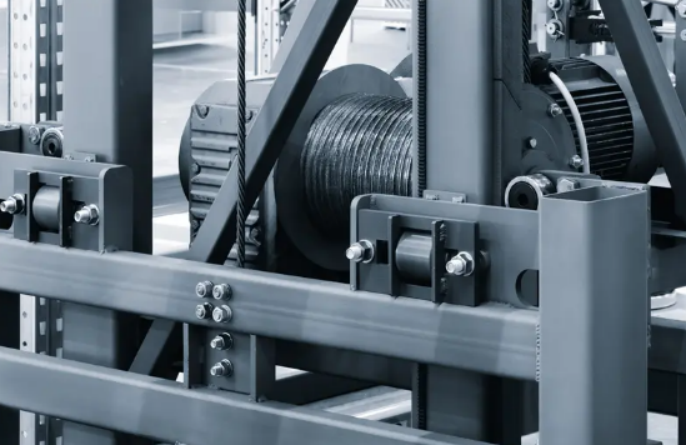
Weldless elevator linkages are typically manufactured through integral forming, precision machining, or cold-press forming. Components are assembled using threads, riveting, or mechanical fitting, without any welding involved. This process emphasizes dimensional accuracy and assembly consistency, placing higher demands on raw materials and machining equipment.
Welded elevator linkages, on the other hand, rely primarily on welding processes. Rod bodies, connecting lugs, or reinforcing parts are fixed together using arc welding, spot welding, or similar techniques. This method is mature and relatively cost-effective, making it suitable for mass production, but the final performance is highly dependent on welding quality.
Differences in Structural Strength and Stability
From a structural perspective, weldless linkages offer a more uniform load path. Without weld seams, the overall structural continuity is better, reducing the risk of stress concentration commonly found at welded joints. Under long-term repeated opening, closing, and vibration, their fatigue performance tends to be more stable.
For welded linkages, strength largely depends on the quality of the welds. If welding parameters are not properly controlled, weld areas can become weak points, potentially leading to cracks or joint failure over time. As a result, they rely more heavily on strict welding procedures and quality inspection.
Dimensional Accuracy and Consistency
Weldless elevator linkages generally show clear advantages in dimensional control. Precision machining and molding processes ensure consistent rod length, hole positioning, and assembly clearances, which contributes to smoother door operation and reduced noise.
Welded linkages are more susceptible to thermal deformation during welding, which can affect dimensional consistency. In high-precision door operator systems, post-weld correction or adjustment is often required to meet installation requirements.
Service Life and Maintenance Characteristics
Thanks to their continuous structure and well-distributed stress, weldless elevator linkages often achieve a longer service life under normal operating conditions and are less prone to structural damage during later use. When replacement is necessary, it is usually done as a complete unit, making maintenance more standardized.
Welded linkages require particular attention to weld fatigue and corrosion during long-term operation, making regular inspection essential. Their advantage lies in repairability—local damage can sometimes be fixed by re-welding—but maintenance quality has a direct impact on safety.
Cost and Application Scenarios
From a cost perspective, welded linkages typically have advantages in material utilization and manufacturing expense, making them suitable for cost-sensitive projects with relatively stable operating conditions. Weldless linkages, although having a higher initial cost, are often chosen for elevator systems with higher requirements for safety, reliability, and operating comfort due to their superior stability and durability.
Conclusion
Overall, the key difference between weldless and welded elevator linkages lies in the manufacturing process and the resulting structural performance. Weldless linkages excel in load uniformity, dimensional accuracy, and long-term reliability, while welded linkages stand out in cost control and process flexibility. Selecting the appropriate type based on operating conditions and performance requirements is essential to achieving an optimal balance between safety and economy.