Of all the factors that cause premature damage to mechanical seals, dry running is perhaps the most insidious yet most fatal. Many users, when troubleshooting leaks or seal burnout, often overlook the impact of occasional dry running or short-term fluid shortages. However, for mechanical seals, even a few tens of seconds without the medium entering the sealing face to form a lubricating film is enough to cause a rapid increase in face temperature, leading to burning, scratches, melting, or even instantaneous failure. Dry running doesn’t take a long time to cause damage; rather, the moment the liquid film disappears, the face is already exposed to high friction and high heat load, and the damage rate is far faster than most people imagine.
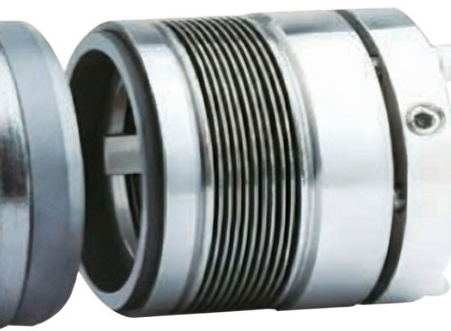
Mechanical seals are essentially precision structures that rely on a ‘liquid film’ for lubrication, cooling, and separating the friction surfaces, unlike ordinary shaft seals which rely on hard contact. When there is no liquid in the pump, the face loses lubrication, the coefficient of friction increases instantaneously by more than ten times, and the local temperature can rise to several hundred degrees within seconds, causing the sealing surface to crack, deform, or stick. This is why it is often said in the industry: ‘Mechanical seals are not afraid of pressure or speed, but they are afraid of the absence of liquid.’ Understanding why mechanical seals are vulnerable to dry running is crucial for minimizing risks and extending seal life during design, installation, commissioning, and operation.
Disappearance of Lubricating Film
The core of a mechanical seal is ‘liquid film lubrication.’ When the liquid film is normal, the end faces maintain a micrometer-level distance, resulting in extremely low friction and controllable temperature. However, once dry running causes the pump chamber to dry out or the liquid level to drop, the liquid film immediately disappears, and the end faces come into direct contact, entering a dry friction state. Dry friction is not minor friction; it is a destructive state of high energy, high temperature, and high wear, rapidly damaging the end faces and causing seal failure.
Temperature Surge
Without liquid film cooling, the frictional heat from the end faces cannot be dissipated, leading to extremely rapid heat accumulation. While the sealing end face material can withstand a certain temperature, it cannot cope with this instantaneous ‘thermal shock.’ Overheating can cause: end face warping, carbonization, thermal cracking, and thermal deformation. Many seals that burn out or stick together are typical results of short-term dry running.
Auxiliary Flushing Failure
Many seals rely on cooling water, flushing fluid, or circulating chambers to stabilize temperature and lubricate. However, these systems can fail during idling. Because there is no medium flow, the temperature inside the seal chamber rises rapidly, and the flushing fluid stagnates or even vaporizes, leaving the seal without additional protection. This effect is more pronounced in high-temperature pumps, chemical pumps, and high-speed pumps.
Gas Entry into the Seal Chamber
Idle running is often accompanied by cavitation, cavitation, and gas entrainment. Gas cannot form a liquid film or carry away heat. When the end face is surrounded by gas, a localized gas film appears, causing some areas to lack liquid and resulting in ‘localized dry friction.’ This semi-dry friction state is more dangerous than complete dry friction because the damage is uneven, making it more prone to end face vibration and thermal collapse.
Thermal Damage to Auxiliary Materials
Even high-hardness materials such as silicon carbide, ceramics, and cemented carbide cannot withstand the high heat and friction generated by dry friction for extended periods. The heat generated during idling far exceeds the material’s limits, causing coating peeling, end face cracking, spring annealing, and even hardening of rubber O-rings. The more delicate the material, the more sensitive it is to idling.
Mechanical seals are highly susceptible to damage from dry running because they are precision seals that rely heavily on liquid film lubrication. Once the liquid film disappears, the seal immediately enters a high-energy destructive state, which is far faster and more irreversible than conventional wear. The dry friction, thermal shock, end-face deformation, material degradation, and flushing failure caused by dry running all contribute to seal failure in a very short time. This is why equipment manufacturers, seal manufacturers, and engineers repeatedly emphasize operational requirements such as ‘no dry running’ and ‘ensuring the pump chamber is completely filled with medium.’
In actual production, many seal failures seem to have no obvious cause, but tracing their root cause often reveals a connection to brief periods of dry running. Examples include failure to prime the pump before starting, low liquid level, air leakage in the suction pipe, valve misoperation, and insufficient system venting. Therefore, avoiding dry running of the seal is a key measure to extend equipment life, reduce downtime, and improve stability. Ensuring sufficient liquid in the pump chamber, stable lubrication flow, and proper operation can significantly improve the reliability of the mechanical seal, minimize the risk of dry running, and bring more continuous and stable operating performance to production.